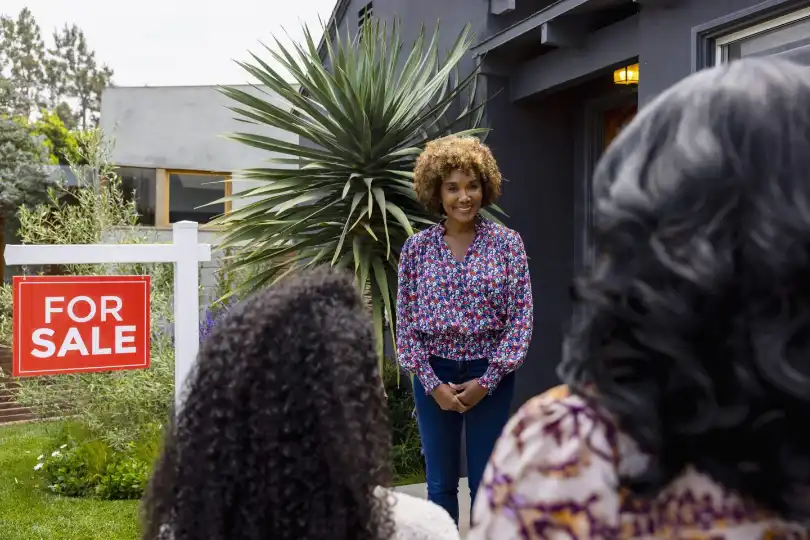
Existing home sales inch up in July on modest pullback in mortgage rates
Sales of previously occupied U.S. homes rose in July as homebuyers were encouraged by a modest pullback in mortgage rates, slowing home price growth and the most properties on the market in over five years.Recommended VideoExisting home sales rose 2% last month from June to a seasonally adjusted annual rate of 4.01 million units, the National Association of Realtors said Thursday.Sales edged up 0.8% compared with July last year. The latest sales figure topped the 3.92 million pace economists were expecting, according to FactSet.Home prices rose on an annual basis for the 25th consecutive month, although the rate of growth continued to slow. The national median sales price inched up just 0.2% in July from a year earlier to $422,400.That was the smallest annual increase since June 2023. Even so, the median home sales price last month is the highest for any previous July, based on data going back to 1999.“The ever-so-slight improvement in housing affordability is inching up home sales,” said Lawrence Yun, NAR’s chief economist. “Wage growth is now comfortably outpacing home price growth, and buyers have more choices.”The U.S. housing market has been in a sales slump since 2022, when mortgage rates began climbing from historic lows. Sales of previously occupied U.S. homes sank last year to their lowest level in nearly 30 years.This year’s spring homebuying season, which is traditionally the busiest period of the year for the housing market, was a bust as stubbornly high mortgage rates put off many prospective homebuyers. Affordability remains a dauting challenge for most aspiring homeowners following years of skyrocketing home prices.First-time homebuyers, who don’t have home equity gains to put toward a new home purchase, accounted for 28% of homes sales last month, down from 30% in June, NAR said. Historically, they made up 40% of home sales.The average rate on a 30-year mortgage has remained elevated this year, although it has been at a nearly 10-month low of 6.58% the last two weeks.Homes purchased last month likely went under contract in May and June, when the average rate ranged from 6.76% to 6.89%. Mortgage rates eased in July, dropping briefly to 6.67%.As home sales have slowed, the number of unsold homes on the market has been rising.There were 1.55 million unsold homes at the end of last month, up 0.6% from June and 15.7% from July last year, NAR said. That’s the most homes on the market since May 2020, early on in the COVID-19 pandemic.Still, the inventory remains well below the roughly 2 million homes for sale that was typical before the pandemic.July’s month-end inventory translates to a 4.6-month supply at the current sales pace, down from a 4.7-month supply at the end of June and up from 4 months in July last year. Traditionally, a 5- to 6-month supply is considered a balanced market between buyers and sellers.Homes are also taking longer to sell. Properties typically remained on the market for 28 days last month before selling, up from 24 days in July last year, NAR said.Home shoppers who can afford to buy at current mortgage rates or pay in cash are likely to benefit from the slower growth in prices and increased supply of properties on the market.It’s not uncommon now for sellers, especially those in Southern and Western markets, to lower their asking price and offer incentives such as money for closing costs or repairs in order to sweeten the deal, real estate agents say.In July, some 20.6% of homes listed for sale had their price reduced, according to Realtor.com. That’s down slightly from June.“One can say that things are a little better today as a buyer, compared to say just a couple of years ago,” Yun said.Join us at the Fortune Workplace Innovation SummitMay 19–20, 2026, in Atlanta. The next era of workplace innovation is here—and the old playbook is being rewritten. At this exclusive, high-energy event, the world’s most innovative leaders will convene to explore how AI, humanity, and strategy converge to redefine, again, the future of work. Register now.
‘Just another nail in the coffin for rural areas’: Affordable housing program faces the axe under Trump’s tax, budget cuts
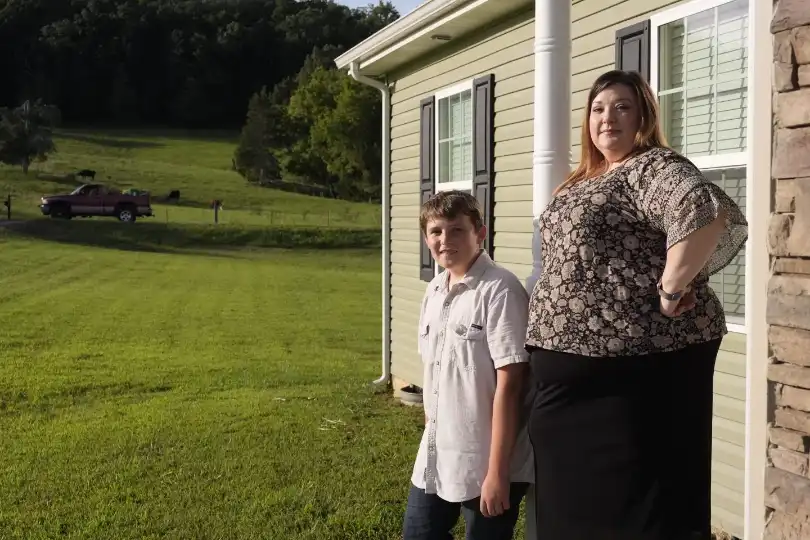
Heather Colley and her two children moved four times over five years as they fled high rents in eastern Tennessee, which, like much of rural America, hasn’t been spared from soaring housing costs.Recommended VideoA family gift in 2021 of a small plot of land offered a shot at homeownership, but building a house was beyond reach for the 45-year-old single mother and manicurist making $18.50 an hour.That changed when she qualified for $272,000 from a nonprofit to build a three-bedroom home because of a grant program that has helped make affordable housing possible in rural areas for decades. She moved in last June.“Every time I pull into my garage, I pinch myself,” Colley said.Now, President Donald Trump wants to eliminate that grant, the HOME Investment Partnerships Program, and House Republicans overseeing federal budget negotiations did not include funding for it in their budget proposal. Experts and state housing agencies say that would set back tens of thousands of future affordable housing developments nationwide, particularly hurting Appalachian towns and rural counties where government aid is sparse and investors are few.The program has helped build or repair more than 1.3 million affordable homes in the last three decades, of which at least 540,000 were in congressional districts that are rural or significantly rural, according to an Associated Press analysis of federal data.“Maybe they don’t realize how far-reaching these programs are,” said Colley, who voted for Trump in 2024. Among those half a million homes that HOME helped build, 84% were in districts that voted for him last year, the AP analysis found.“I understand we don’t want excessive spending and wasting taxpayer dollars,” Colley said, “but these proposed budget cuts across the board make me rethink the next time I go to the polls.”The HOME program, started under President George H. W. Bush in the 1990s, survived years of budget battles but has been stretched thin by years of rising construction costs and stagnant funding. That’s meant fewer units, including in some rural areas where home prices have grown faster than in cities.The program has spent more than $38 billion nationwide since it began filling in funding gaps and attracting more investment to acquire, build and repair affordable homes, HUD data shows. Additional funding has gone toward projects that have yet to be finished and rental assistance.HOME’s future is in political limboTo account for the gap left by the proposed cuts, House Republicans want to draw on nearly $5 billion from a related pandemic-era fund that gave states until 2030 to spend on projects supporting people who are unhoused or facing homelessness.That $5 billion, however, may be far less, since many projects haven’t yet been logged into the U.S. Department of Housing and Urban Development’s tracking system, according to state housing agencies and associations representing them.A spokesperson for HUD, which administers the program, said HOME isn’t as effective as other programs where the money would be better spent.In opposition to Trump, Senate Republicans have still included funding for HOME in their draft budget. In the coming negotiations, both chambers may compromise and reduce but not terminate HOME’s funding, or extend last years’ overall budget.White House spokesperson Davis Ingle didn’t respond to specific questions from the AP. Instead, Ingle said that Trump’s commitment to cutting red tape is making housing more affordable.A bipartisan group of House lawmakers is working to reduce HOME’s notorious red tape that even proponents say slows construction.Some rural areas are more dependent on HOMEIn Owsley County — one of the nation’s poorest, located in the rural Kentucky hills — residents struggle in an economy blighted by coal mine closures and declining tobacco crop revenues.Affordable homes are needed there, but tough to build in a region that doesn’t attract larger-scale rental developments that federal dollars typically go toward.That’s where HOME comes in, said Cassie Hudson, who runs Partnership Housing in Owsley, which has relied on the program to build the majority of its affordable homes for at least a dozen years.A lack of additional funding for HOME has already made it hard to keep up with construction costs, Hudson said, and the organization builds a quarter of the single-family homes it used to.“Particularly for deeply rural places and persistent poverty counties, local housing developers are the only way homes and new rental housing gets built,” said Joshua Stewart of Fahe, a coalition of Appalachian nonprofits.That’s in part because investment is scant and HOME steps in when construction costs exceed what a home can be sold for — a common barrier in poor areas of Appalachia. Some developers use the profits to build more affordable units. Its loss would erode those nonprofits’ ability to build affordable homes in years to come, Stewart said.One of those nonprofits, Housing Development Alliance, helped Tiffany Mullins in Hazard, Kentucky, which was ravaged by floods. Mullins, a single mother of four who makes $14.30 an hour at Walmart, bought a house there thanks to HOME funding and moved in August.Mullins sees the program as preserving a rural way of life, recalling when folks owned homes and land “with gardens, we had chickens, cows. Now you don’t see much of that.”It’s a long-term impactIn congressional budget negotiations, HOME is an easier target than programs such as vouchers because most people would not immediately lose their housing, said Tess Hembree, executive director of the Council of State Community Development Agencies.The effect of any reduction would instead be felt in a fizzling of new affordable housing supply. When HOME funding was temporarily reduced to $900 million in 2015, “10 to 15 years later, we’re seeing the ramifications,” Hembree said.That includes affordable units built in cities. The biggest program that funds affordable rental housing nationwide, the Low Income Housing Tax Credit, uses HOME grants for 12% of units, totaling 324,000 current individual units, according to soon-to-be-published Urban Institute research.Trump’s spending bill that Republicans passed this summer increased LITHC, but experts say further reducing or cutting HOME would make those credits less usable.“It’s LITHC plus HOME, usually,” said Tim Thrasher, CEO of Community Action Partnership of North Alabama, which builds affordable apartments for some of the nation’s poorest.In the lush mountains of eastern West Virginia, Woodlands Development Group relies on HOME for its smaller rural projects. Because it helps people with a wider range of incomes, HOME is “one of the only programs available to us that allows us to develop true workforce housing,” said executive director Dave Clark.It’s those workers — nurses, first responders, teachers — that nonprofits like east Tennessee’s Creative Compassion use HOME to build for. With the program in jeopardy, grant administrator Sarah Halcott said she fears for her clients battling rising housing costs.“This is just another nail in the coffin for rural areas,” Halcott said.___Kramon reported from Atlanta. Bedayn reported from Denver. Herbst contributed from New York City, and Kessler reported from Washington, D.C.___Kramon is a corps member for The Associated Press/Report for America Statehouse News Initiative. Report for America is a nonprofit national service program that places journalists in local newsrooms to report on undercovered issues.Join us at the Fortune Workplace Innovation SummitMay 19–20, 2026, in Atlanta. The next era of workplace innovation is here—and the old playbook is being rewritten. At this exclusive, high-energy event, the world’s most innovative leaders will convene to explore how AI, humanity, and strategy converge to redefine, again, the future of work. Register now.
New home inventory is at its highest level since just before the housing market collapse that led to the Great Recession, but that doesn’t mean it’s the same market
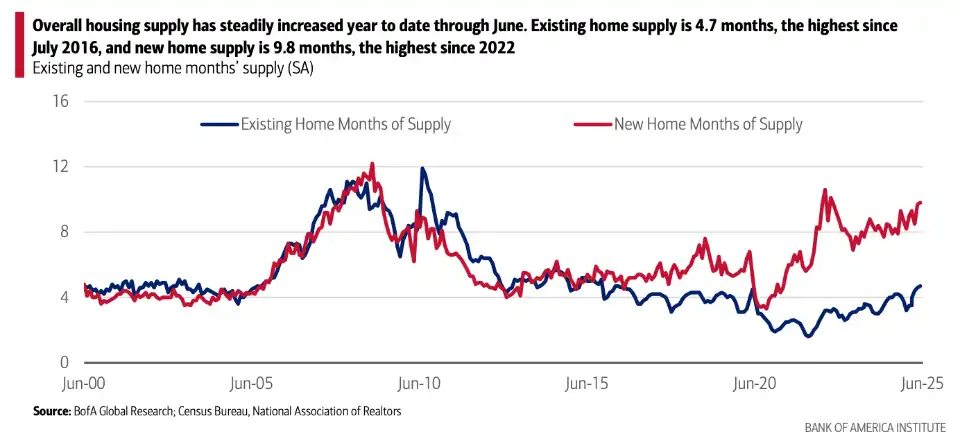
The U.S. housing market’s inventory is growing, putting pressure on prices and slowing new construction, according to fresh research from the Bank of America Institute. As of June, existing-home supply reached 4.7 months, the highest level since July 2016. New-home supply surged even further to 9.8 months—its highest point since 2022—highlighting how quickly inventory is building across the housing market.Recommended VideoThe influx of available homes reflects sluggish demand, with builders citing weak buyer urgency, affordability challenges, and lingering job instability. The Institute noted new-home inventory is now at its highest level since 2007, the year before the housing market collapse that led to the Great Financial Crisis.ResiClub co-founder Lance Lambert toldFortunethat the rising inventory tells us that “homebuyers are gaining leverage” as slack in the housing market is increasing. “The Pandemic Housing Boom saw too much housing demand all at once, home prices overheated too fast in many markets, and underlying fundamentals got too stretched.”Lambert characterized the last few years as a “recalibration period” where the housing market is smoothing out that excess. Mounting inventory sucks out appreciation in more markets—and even causes outright corrections in some markets’ home prices. He said he expects the underlying fundamentals to slowly improve as that happens and incomes keep rising. “It takes time.” This period is different from 2007, he said, because that window saw a far greater weakening of the housing market and upswing in resale inventory, along with unsold, completed newbuild homes.BofA ResearchOne striking shift: The median price of a new home has actually fallen below that of an existing home—a reversal of the usual market dynamic. BofA said this pricing inversion underscores how builders are being forced to discount amid rising supply and softer demand. “Builders are starting to pull back on new home starts in many markets,” Bank of America wrote. While the slowdown is broad-based, conditions vary regionally, with some areas such as the Midwest proving more resilient than others.“Since the Pandemic Housing Boom fizzled out in 2022, and the affordability squeeze was fully felt,” Lambert toldFortune, “the national power dynamic has slowly been shifting from sellers to buyers as homes have a harder time selling and active inventory for sale builds.”Still, Lambert noted the inventory picture varies significantly across the country. For instance, it remains most limited across notable sections of the Midwest and the Northeast, although still growing, he said. On the other hand, active inventory has neared or surpassed pre-pandemic 2019 levels in many parts of the Sun Belt and Mountain West, and he said that is where homebuyers have gained the most leverage.The trend comes as the Federal Reserve has begun trimming interest rates in an effort to support both broader economic growth and housing affordability. Whether those cuts will be enough to reignite demand remains an open question.For now, the data signals a market in transition: high inventory, moderating prices, and builders caught between a cautious consumer and the need to manage supply.For this story, Fortune used generative AI to help with an initial draft. An editor verified the accuracy of the information before publishing. Join us at the Fortune Workplace Innovation SummitMay 19–20, 2026, in Atlanta. The next era of workplace innovation is here—and the old playbook is being rewritten. At this exclusive, high-energy event, the world’s most innovative leaders will convene to explore how AI, humanity, and strategy converge to redefine, again, the future of work. Register now.

30-year mortgage rate holds steady at lowest level in nearly 10 months
The average rate on a 30-year U.S. mortgage held steady this week at its lowest level in nearly 10 months, an encouraging sign for prospective homebuyers who have been held back by stubbornly high home financing costs.Recommended VideoThe long-term rate was unchanged from last week at 6.58%, mortgage buyer Freddie Mac said Thursday. A year ago, the rate averaged 6.46%.Borrowing costs on 15-year fixed-rate mortgages, popular with homeowners refinancing their home loans, edged lower. The average rate dropped to 5.69% from 5.71% last week. A year ago, it was 5.62%, Freddie Mac said.Stubbornly high mortgage rates have helped keep the U.S. housing market in a sales slump since early 2022, when rates started to climb from the rock-bottom lows they reached during the pandemic. Home sales sank last year to their lowest level in nearly 30 years and have remained sluggish this year.For much of the year, the average rate on a 30-year mortgage has hovered relatively close to its 2025 high of just above 7%, set in mid-January. Since last week, the average rate has been at its lowest level since Oct. 24, when it averaged 6.54%.Mortgage rates are influenced by several factors, from the Federal Reserve’s interest rate policy decisions to bond market investors’ expectations for the economy and inflation.The main barometer is the 10-year Treasury yield, which lenders use as a guide to pricing home loans. The yield was at 4.34% at midday Thursday, up from 4.29% late Wednesday.The yield has been mostly rising this month as bond traders weighed how data on inflation and the job market, and the potential economic impact of Trump administration’s tariffs, may influence the Fed’s interest rate policy moves.The central bank has so far been hesitant to cut interest rates out of fear that Trump’s tariffs could push inflation higher, but data showing hiring slowed last month have fueled speculation that the Fed will cut its main short-term interest rate next month.A Fed rate cut could give the job market and overall economy a boost, but it could also fuel inflation, which could push bond yields higher, driving mortgage rates upward in turn.“Even if the Fed cuts the short-term federal funds rate in September, which is largely expected, it is not likely that we will see a big drop in mortgage rates,” said Lisa Sturtevant, chief economist at Bright MLS.Economists generally expect the average rate on a 30-year mortgage to remain near the mid-6% range this year.That may not be low enough to spur a meaningful increase in home sales.While the housing market slowdown is forcing many sellers to lower their asking price and even pay for a buyer’s closing costs, among other incentives, affordability remains a major hurdle for many aspiring homeowners.Home price growth has slowed nationally, but the median sales price of a previously occupied U.S. home remains near the all-time high of $435,300 set in June. And while prices are down from a year ago in many metro areas in the South and West such as Miami, Denver and Austin, they haven’t come down nearly enough to offset years of soaring prices.“Lower mortgage rates and slower price growth — or even year-over-year price declines — is going to be necessary to improve affordability and bring more homebuyers into the market,” Sturtevant said.Join us at the Fortune Workplace Innovation SummitMay 19–20, 2026, in Atlanta. The next era of workplace innovation is here—and the old playbook is being rewritten. At this exclusive, high-energy event, the world’s most innovative leaders will convene to explore how AI, humanity, and strategy converge to redefine, again, the future of work. Register now.
More than half of U.S. homes have dropped in value over the last year—and nearly all houses in these cities have seen losses
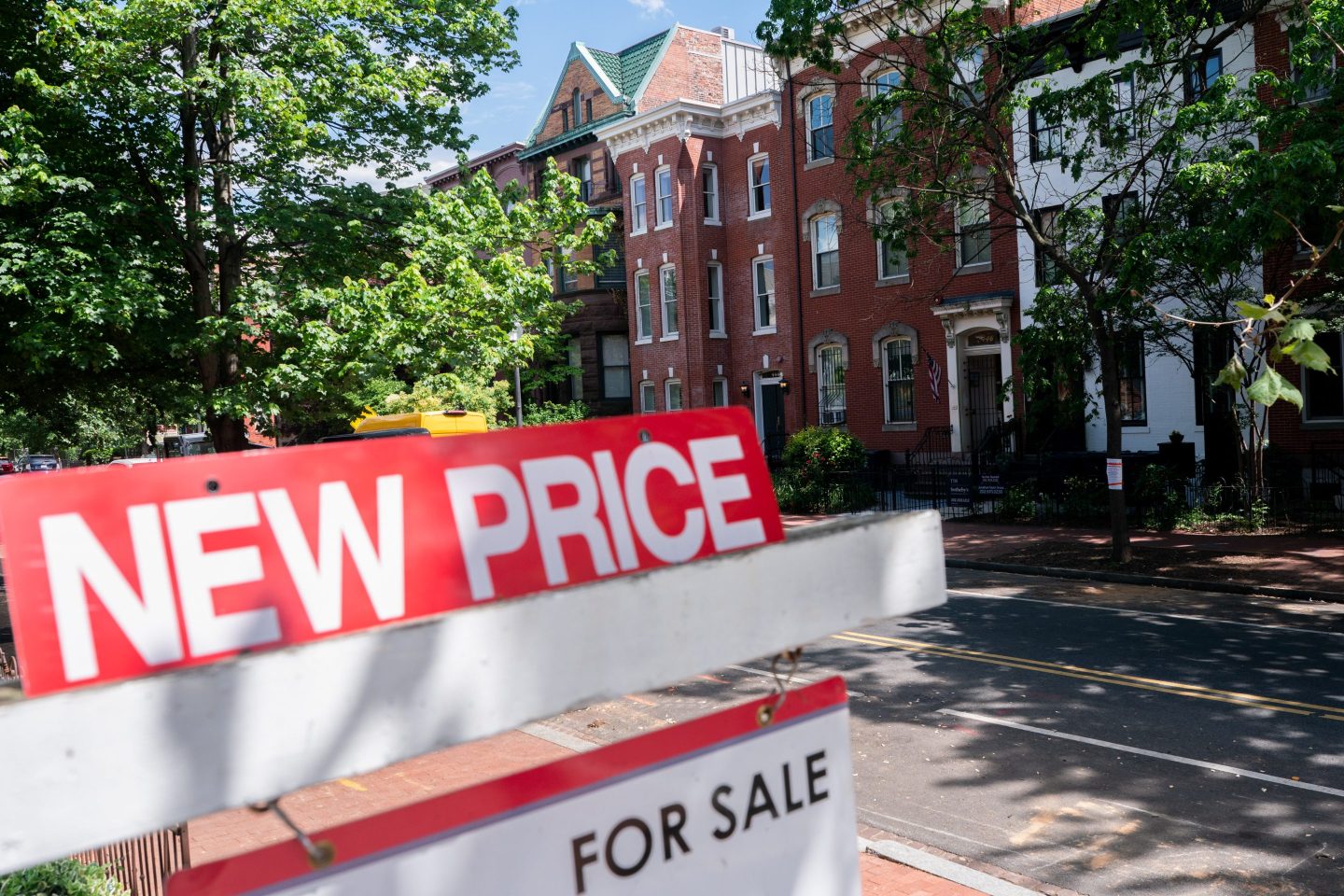
The share of U.S. homes that have lost value in the past year is the highest since the aftermath of the Great Recession, according to Zillow.Recommended VideoIn October, 53% of homes saw their “Zestimates” decline, the most since 2012 and up from just 16% a year earlier. Losses were most widespread in the West and South.In fact, those regions have housing markets where nearly all homes declined in value over the last year. Denver topped the list with 91%, followed by Austin (89%), Sacramento (88%), Phoenix (87%), and Dallas (87%).The Northeast and Midwest, by contrast, have largely avoided such losses, but declines are spreading to more homes in all metros, Zillow said.In addition, most homes also dropped from their peak valuations, with the average drawdown hitting 9.7%. While that has soared from 3.5% in the spring of 2022, it’s still well below the 27% average drawdown in early 2012.To be sure, lower home values are just losses on paper and aren’t realized by homeowners unless actual sale prices undercut their initial purchase prices.By that score, homeowners are still ahead as Zillow data shows that values are up a median 67% since the last sale, and just 4.1% of homes have lost value since their last sale.“Homeowners may feel rattled when they see their Zestimate drop, and it’s more common in today’s cooler market environment than in recent years. But relatively few are selling at a loss,” Treh Manhertz, senior economic researcher at Zillow, said in a statement. “Home values surged over the past six years, and the vast majority of homeowners still have significant equity. What we’re seeing now is a normalization, not a crash.”ZillowThe lower values come as the housing market has been frozen for much of the past three years after rate hikes from the Federal Reserve in 2022 and 2023 sent borrowing costs higher, discouraging homeowners from giving up their existing ultralow mortgage rates.But the dearth of new supply kept home prices high, shutting out many would-be homebuyers who were also balking at elevated mortgage rates.With demand weak, the housing market has been shifting away from sellers and toward buyers. The pendulum has swung so far the other way that delistings soared this year as sellers became fed up with offers coming in below asking prices and just take their homes off the market.But the National Association of Realtors sees a turnaround coming next year. NAR chief economist Lawrence Yun predicted earlier this month existing-home sales will jump 14% in 2026 after three years of stagnation, with new-home sales rising 5%. Those sales will support a 4% uptick in home prices.“Next year is really the year that we will see a measurable increase in sales,” Yun said at a conference on Nov. 14. “Home prices nationwide are in no danger of declining.”

The mortgage rate decline it would take to make an average home affordable is ‘unrealistic,’ Zillow says
Since the pandemic, U.S. mortgage rateshave risen dramatically. This surge, combined with historically high home prices, has tanked housing affordability, with first-time homebuyer rates falling to half the historical average. Even a substantial drop in mortgage rates would not restore housing affordability for most Americans.During the pandemic, one of the few things people enjoyed were low mortgage rates. From spring 2020 through 2021, mortgage rates were around or even below 3%. Rates steadily crept up during 2022 and 2023, peaking at 8% in late 2023.Recommended VideoAt the time, economists warned home buyers to get used to high mortgage rates. Today, mortgage rates are still nearly 7%. High mortgage rates have been just one facet of the housing affordability crisis in the U.S. Home prices are also historically high—up more than 53% since the onset of the pandemic. As a result, the number of first-time homebuyers is half the historical norm. In order for a typical home to be affordable to a buyer, mortgage rates would need to drop to 4.43%, Zillow economic analyst Anushna Prakash reported Tuesday. But “that kind of a rate decline is currently unrealistic,” she said. Meanwhile, not even a 0% interest rate would make a typical home affordable in New York, Los Angeles, Miami, San Francisco, San Diego, or San Jose, according to Zillow.“It’s unlikely rates will drop to the mid-[4% range] anytime soon,” Arlington, Va.-based real estate agent Philippa Main toldFortune. “And even if they did, housing prices are still at historic highs.” With 11 years of experience, Main is also a licensed mortgage loan officer The factors affecting housing affordability in the U.S.Prakash’s analysis holds income, home prices, and all other housing-related costs equal. This gets at the crux of the ongoing issues of the U.S. housing market: There are a variety of factors that affect housing affordability. And even if one were to change drastically, it wouldn’t result in a sudden affordability surge for hopeful home buyers. “While lower rates certainly help, they are just one piece of a far more complex puzzle that includes inventory shortages, wage stagnation, and rising insurance and tax costs,” James Schenck, CEO of PenFed Credit Union, toldFortune. “In other words, housing affordability is about more than just the Fed—it’s about the full ecosystem of access and equity.”Wages haven’t kept up with home prices: Rents and house prices have been rising faster than incomes across most regions of the U.S., according to a 2024 report from the U.S. Department of the Treasury. In turn, Americans need to make more than six figures to afford a median-priced home, according to Realtor.com, but the average salary in the U.S. is only slightly more than half of that. “Even in markets that have seen a heavy correction and have lost 10% [or more] of value, homes are still selling for a higher percentage of people’s average income, making them feel more expensive than they did five years ago,” Main explained. She encourages her clients to look for a home that meets 85% to 90% of their criteria—say living further away or having one less bedroom—to have a shot at actually finding a home that’s affordable for them. That can be frustrating, though, considering that housing is so expensive “people don’t want to compromise because they feel they are committing so much more financially.”Combating deteriorating housing affordabilityEven if you can’t buy your dream home initially, there are other options to make it feel that way after it’s been yours for a while. More people are pouring home equity into renovations and staying in place instead of shelling out for a more expensive home at the start. Plus, being more modest from the outset can put you on a better path for eventually buying a new home.“It’s easier to buy your dream home once you’ve built equity in another home you can sell, than it is to hold out for the perfect fit while still renting,” Main said, who also suggested looking at homes that have been on the market for longer. Sellers might be more willing to negotiate prices or give closing cost credits or mortgage rate buy downs, she added. There are also various mortgage options through smaller banks and credit unions, as well as special VA rates and adjustable-rate mortgages (ARM) that can be more affordable for some borrowers. Because credit unions are structured differently from for-profit mortgage lenders, they can offer lower loan rates and fees, Schenck explained.“We aren’t waiting for the market to change,” he said. Main also said mortgage rates from local banks and credit unions can be more lucrative for some home buyers, but it’s important to know what’s the best fit financially for a home buyer. One of her clients recently got a lower interest rate through a local credit union, but it’s an ARM that will ultimately change to an unknown rate in the future. “It got them in the home they wanted at the monthly payment they can afford, and they plan to refinance into a traditional conventional loan later,” she said.Join us at the Fortune Workplace Innovation SummitMay 19–20, 2026, in Atlanta. The next era of workplace innovation is here—and the old playbook is being rewritten. At this exclusive, high-energy event, the world’s most innovative leaders will convene to explore how AI, humanity, and strategy converge to redefine, again, the future of work. Register now.

Oakley’s billionaire founder is the latest victim of the sluggish luxury housing market—but the profit he could still make shows an underlying problem
James Jannard, the billionaire founder of Oakley, has re-listed his Beverly Hills megamansion for $65 million, down from the original $68 million price listing from June 2024. Despite the price drop, Jannard stands to make a significant profit since he purchased the property for $19.9 million in 2009. This trend of wealthy sellers, including Jannard, dropping prices highlights a broader market correction where luxury buyers prioritize value and long-term security over vanity pricing.Even the wealthiest Americans are contending with today’s housing market. Take James Jannard, the billionaire founder of luxury eyewear and apparel brand Oakley, as an example. Recommended VideoJannard, who’s worth an estimated $1.3 billion according toForbes, just re-listed his Beverly Hills megamansion for an eye-popping $65 million. Still, that’s a drop from the $68 million he originally listed it for in June 2024. Oakley founder James Jannard during Launch of Oakley Thump Digital Audio Eyewear at Oakley Headquarters in Foothill Ranch, Calif. in 2004.Getty Images—Lee Celano/WireImage for OakleyHe’s fallen victim to a challenging trend in the luxury housing market where many of the country’s most lavish and expensive homes are being priced too high when they hit the market. And now, Jannard stands to lose out on the proceeds he was expecting when he first listed the house.For what it’s worth, Jannard paid $19.9 million for the property in December 2009, so even if he manages to find a buyer at the $65 million asking price, he’ll make a pretty penny for the sprawling five-bed, nine-bath concrete megamansion that stretches more than 18,000 square feet and nearly two acres in one of the most sought-after neighborhoods in Los Angeles. Orange County-based luxury real-estate firm The Altman Brothers represented the listing last year.The current listing agent on the property is Aaron Kirman with Christie’s International Real Estate, who has several listings of more than $100 million in the Los Angeles area. Kirman and Jannard didn’t immediately respond toFortune’s requests for comment about the property.Other ultra-rich home sellers have recently been forced to drop their listing prices. In May, Jennifer Lopez and Ben Affleck dropped the price of their $60 million Beverly Hills mansion by $8 million, and last year, billionaire media mogul Rupert Murdoch slashed the price of his Manhattan penthouse by nearly 40% to $38.5 million.The housing market factors affecting sellersWhile we’re not fully out of a seller’s market, the tides have begun turning in favor of buyers as listings stay on the market longer and price cuts become more common, according to Realtor.com.For that reason, price drops aren’t surprising, especially in the saturated Los Angeles luxury market where buyers have more leverage, Anthony Luna, CEO of LA-based real-estate advisory Coastline Equity, toldFortune.“Square footage and celebrity status don’t justify inflated pricing anymore,” he said. “Buyers want smart design, upgraded systems, and long-term value.”The mansion tax in LA, which applies an additional 4% tax to property sales of at least $5 million and a 5.5% tax for properties north of $10 million, further complicates real-estate sales and pricing. The cost of the tax, which is typically paid by the seller, is separate from a home’s sale price and can be a “massive amount of money,”Selling Sunsetstar and Oppenheim Group agent Emma Hernan previously toldFortune. She also described it as a “nightmare” for sellers and agents alike. Hernan said she warns her clients about the mansion tax before they prepare to sell. Take a $5 million home, for example. The seller would have to pay an extra $200,000 they “didn’t really factor in when they bought the home because the mansion tax wasn’t in play,” Hernan said.The trend of luxury-home price drops like that of Jannard, Murdoch, and Lopez say something bigger about the housing market: a larger correction, Luna said. “The luxury market is no longer about vanity. It’s about value and security,” he said. “Buyers are doing the math, and they’re calling the bluff.”Join us at the Fortune Workplace Innovation SummitMay 19–20, 2026, in Atlanta. The next era of workplace innovation is here—and the old playbook is being rewritten. At this exclusive, high-energy event, the world’s most innovative leaders will convene to explore how AI, humanity, and strategy converge to redefine, again, the future of work. Register now.

The August home sales mystery: Top analyst says ‘implausible’ housing market data ‘defies credulity’
The U.S. housing market has delivered plenty of surprises in recent years, but few as puzzling as the data released for August. According to new government figures, new-home sales surged to an annualized 800,000 units last month, up sharply from July’s upwardly revised 664,000 and far above the consensus forecast of 650,000. For a sector weighed down by rising mortgage rates, stretched affordability, and a cooling labor market, the number was so startling that one leading analyst called it “implausible.”Recommended VideoOliver Allen, senior U.S. economist at Pantheon Macroeconomics, isn’t buying it. In a research note titled US New Home Sales: Outlook grim, despite August’s implausible leap in sales, Allen says the data “defies credulity” when set against the broader trends shaping housing. He further questioned whether the headline spike accurately reflects underlying demand, or is destined to be revised away in the coming months. Calculating it as a 20.5% jump, Allen said it’s “inexplicable” that new-home sales would jump to their highest level in more than three years all of a sudden.When reached for comment, Allen toldFortunethat while discussions about the quality of U.S. economic data have “obviously been more prominent than usual this year,” given President Trump’s firing of the chief of the Bureau of Labor Statistics, he doesn’t see the implausible August data fitting into a larger pattern. “Generally speaking, the economic data in the U.S. is very comprehensive, high quality, and the statistical agencies are very clear and open about their methods.” Still, he said the new home sales numbers are a U.S. data series “well towards the lower end of the quality spectrum,” commonly featuring huge margins of error, significant revisions, and high volatility. He said the the picture for new home sales from the National Association of Home Builders (NAHB) is usually a “far more reasonable-looking description of the likely trend.”The NAHB, in fact, largely agreed with Allen in its response to the August data, albeit more restrained. Chairman Buddy Hughes, also a home builder and developer from Lexington, N.C., called it “a significant surge” and said it “may be subject to downward revision.” Still the association expects a general improvement in sales over the coming months, supported by mortgage rates declining somewhat. New-home sales have been buoyed by incentives from homebuilders, the NAHB said, citing recent survey data showing 37% of builders cut prices in August and 66% used some kind of sales incentive.Headwinds still mountingBeneath the data surprise, the structural forces bearing down on the housing market remain clear. Higher mortgage rates, tighter credit availability, and growing signs of labor-market weakness have narrowed the pool of eligible buyers. At the same time, the supply of existing homes on the market continues to recover after years of scarcity, intensifying competition for homebuilders already under pressure to move inventories.The stock of unsold new homes remains historically elevated, hitting its highest point since 2016 as of June, per the Bank of America Institute. New-home supply had surged by that point to 9.8 months—its highest point since 2022. ResiClub co-founder Lance Lambert, who closely follows data releases from public homebuilders and collects his own proprietary housing data, told Fortune in July that rising inventory means homebuyers were gaining leverage.The government report also showed a sharp monthly spike in the median sales price of a new single-family home. But Allen cautions against reading too much into that, noting the series is not seasonally adjusted and is prone to volatility. On a seasonally adjusted three-month basis, median prices continue to trend lower, suggesting discounting pressure is already emerging.Look at the larger trendMost economists now expect August sales to be revised significantly lower. Pantheon Macroeconomics projects the data will track back toward the 650,000 range in coming months—possibly falling below that threshold—as supply and affordability challenges reassert themselves.When reached for comment, Lambert toldFortunehe largely agreed with Allen regarding the August data, saying the data “seems to be suspect,” citing what public homebuilders are reporting and the data that ResiClub is collecting itself. “Most of the monthly Census homebuilder reports have a margin of error around 10% to 20%,” Lambert said. “Often really big one-month swings in that data end up being data noise. The best way to read this data is to take each individual monthly report with a grain of salt and zoom out and observe the trend.”And what trend is that? Lambert says to pay attention to the Sun Belt, which he called “the epicenter of U.S. homebuilding.” Agreeing with the NAHB survey, Lambert said softening in the Sun Belt over the past year has caused many homebuilders to offer bigger incentives and even outright price cuts to prevent a steeper pullback in new-home sales. “New-home sales have been moving sideways this year; however, if you peel back the onion, things are much choppier than headline new home sales data suggests.”[This report has been updated with additional comments from Oliver Allen of Pantheon Macroeconomics and to remove the implication that Lance Lambert saw any potential increase in activity as a result of homebuyers gaining leverage in July.]Join us at the Fortune Workplace Innovation SummitMay 19–20, 2026, in Atlanta. The next era of workplace innovation is here—and the old playbook is being rewritten. At this exclusive, high-energy event, the world’s most innovative leaders will convene to explore how AI, humanity, and strategy converge to redefine, again, the future of work. Register now.

America’s landlords settle claim they used rent-setting algorithms to gouge consumers nationwide for $141 million
Real estate giant Greystar and 25 other property management companies have agreed to collectively pay more than $141 million to settle a class action lawsuit accusing landlords of driving up housing costs by using rent-setting algorithms offered by the software company RealPage.Recommended VideoGreystar, the nation’s largest landlord, would pay $50 million under the proposed settlement agreement, which was filed Wednesday in a Tennessee federal court. The deal would still require a judge’s approval.The companies have also agreed to no longer share nonpublic information with RealPage for its rent algorithm — a key stipulation, since plaintiffs say RealPage used that information to enable landlords to align their prices and push up rents.“This represents a fundamental shift in the multifamily housing industry and will help reverse the type of anticompetitive coordination alleged in the Complaint,” attorneys wrote in the settlement filing.All companies involved in the settlement deny wrongdoing and have agreed to help plaintiffs in the ongoing case against RealPage and more than a dozen other property management firms that have not reached settlements. RealPage and others are also fighting an antitrust lawsuit filed last year by the Department of Justice and several state attorneys general. Greystar reached a settlement in that case in August.The settlement funds from the class action lawsuit would be distributed among millions of tenants included in the settlement class.In a statement, Greystar said these settlements “allow us to move forward and remain focused on serving our residents and clients.” Headquartered in South Carolina, Greystar manages more than 946,000 units nationwide, according to the National Multifamily Housing Council.RealPage has vehemently denied any wrongdoing and argues that the plaintiffs misunderstand how their product works. RealPage, which is based in Texas, has said its software is used on fewer than 10% of rental units in the U.S., and that its price recommendations are used less than half the time.“While the proposed settlements … do not include RealPage, we are encouraged to see this matter move toward closure,” Jennifer Bowcock, RealPage’s senior vice president for communications, said in a statement. “RealPage continues to believe that this litigation is without merit and that our revenue management products, and our customers’ use of them, have always been legal.”RealPage software provides daily recommendations to help landlords and their employees price their available apartments. The landlords do not have to follow the suggestions, but critics argue that because the software has access to a vast trove of confidential data, it helps RealPage’s clients charge the highest possible rent.RealPage argues that the real driver of high rents is a lack of housing supply. It also says that its pricing recommendations often encourage landlords to drop rents since landlords are incentivized to maximize revenue and maintain high occupancy.Among the other defendants, Iowa-based BH Management would pay $15 million, while Denver-based Simpson Property Group would pay $6.5 million. The other companies’ settlements range between $550,000 and $6 million.Join us at the Fortune Workplace Innovation SummitMay 19–20, 2026, in Atlanta. The next era of workplace innovation is here—and the old playbook is being rewritten. At this exclusive, high-energy event, the world’s most innovative leaders will convene to explore how AI, humanity, and strategy converge to redefine, again, the future of work. Register now.

Paris Hilton took out a mortgage on the $63 million mansion she bought from Mark Wahlberg. Here’s why that’s actually a smart financial decision
Despite Paris Hilton’s high net worth,she and her husband reportedly took out a $43.75 million mortgage for their $63 million Beverly Hills mansion, a move more common among ultrawealthy individuals than one may think. Experts say wealthy buyers often keep their cash liquid and use mortgages as a strategic tool to maximize flexibility and invest in higher-yield opportunities.Considering Paris Hilton is worth an estimated $300 million to $400 million, it might seem odd that she reportedly took out a mortgage on her recent home purchase. Recommended VideoHilton, whose vast wealth comes from 19 product lines, real estate, media and entertainment, brand partnerships, and her reality show,The Simple Life,recently bought actor Mark Wahlberg’s former estate in Beverly Hills for a whopping $63 million. But what wasn’t reported at the time was that Hilton and her entrepreneur husband, Carter Reum, reportedly took out a mortgage on the home, which might seem like an unusual move for the 44-year-old hotel heiress. And what’s seemingly even more strange is they reportedly took out the loan after they had already bought the 12-bed, 20-bath home, which shows a $43.75 million mortgage with JPMorgan Chase at an interest rate of 5.25%.But this type of arrangement isn’t as rare as it may seem, real-estate experts say. “It surprises many people, but it’s actually quite common for the mega-wealthy to take out mortgages—even when they could write a check for the full purchase price,” Evan Harlow, real estate agent at Maui Elite Property, toldFortune. In fact, public records show ultrawealthy celebrities including Beyoncé, Jay-Z, Elon Musk, and even Mark Zuckerberg have financed their homes. “The takeaway for the average buyer isn’t to mimic their precise approach, but to understand the principle,” Harlow said. “Sometimes the smartest financial move isn’t paying everything off, but keeping your money flexible and working for you.”Why the ultrawealthy take out mortgagesWhile it may seem counterintuitive to take out a mortgage in today’s market, where rates are still hovering in the 6% range, it can actually be a savvy move for ultrahigh-net-worth individuals. In fact, just because someone has the net worth to buy a home outright, that “doesn’t mean that’s how they want to allocate their cash,” Miltiadis Kastanis, director of luxury sales for Compass, based in South Florida, toldFortune.“Ultrahigh-net-worth individuals think differently about liquidity and leverage; they’d rather keep their money working for them in investments, businesses, or even art, rather than tying it all up in one property,” said Kastanis, who has represented high-profile celebrities in real estate transactions.In other words, using a mortgage helps to free up capital for higher-yield investments or business ventures, according to Harlow. He used the example of one of his clients, the owner of a successful tech business, who recently purchased a $3 million property and decided on a jumbo loan. The client didn’t have to do that, but he wanted to keep his cash in the market, where his portfolio, over the long term, was reaping annualized returns well over the mortgage rate. “For him, buying a house with cash sounded like ‘just parking money in the driveway,’ as opposed to putting it to work,” Harlow said.Both Harlow and Kastanis also said ultrahigh-net-worth individuals see mortgages differently from other people. People like Hilton view it more as a tool instead of a burden. “For many wealthy buyers, a mortgage is just another lever they can pull in their overall wealth strategy,” Kastanis said. “They’re playing chess, not checkers.”Join us at the Fortune Workplace Innovation SummitMay 19–20, 2026, in Atlanta. The next era of workplace innovation is here—and the old playbook is being rewritten. At this exclusive, high-energy event, the world’s most innovative leaders will convene to explore how AI, humanity, and strategy converge to redefine, again, the future of work. Register now.
A gauge of future home sales just turned negative—despite 9 straight weeks of falling mortgage rates
Mortgage rates have been coming down, but there has yet to be a spike in homebuying activity—and one leading indicator has even declined.Recommended VideoPending home sales, or signed contracts leading up to a sale, fell for the first time in nearly three months, slipping about 1% during the four weeks ending Sept. 21 compared to a year earlier, according to a Redfin report on Thursday.That’s despite the weekly average mortgage rate sliding for nine consecutive weeks, hitting an 11-month low of 6.26% after reaching 6.8% at the start of the summer.Meanwhile, separate data from the National Association of Realtors on Thursday showed that sales of existing homes dipped 0.2% in August from the prior month. While they were up 1.8% from a year ago, the recent trend still points to a stagnant housing market.To be sure, lower mortgage rates have sparked a surge in at least one corner of the housing market. Redfin pointed out that mortgage applications to refinancehomes jumped 58% in the second week of September from the prior week.But mortgage-purchase applications edged up just 3%, and the anemic sales data are dashing hopes that cheaper borrowing costs will quickly jump start the housing market.Redfin highlighted four factors weighing on housing demand: still-elevated home prices, would-be buyers waiting for mortgage rates to go below 6%, muted supply of new listings, and economic uncertainty.Those waiting for mortgage rates to fall further may have already missed their chance, as borrowing costs have started to tick higher again.According to Mortgage News Daily, top-tier 30-year fixed rates were in the high 6.3% range on Friday, flat from the previous Friday but up from 6.1% range in the first half of last week.That’s as recent economic data have come in hot, lowering expectations for aggressive rate cuts from the Federal Reserve. As a result, Treasury yields have rebounded, lifting borrowing costs elsewhere, including mortgage rates.Meanwhile, job growth hasn’t been as robust as other indicators have been, casting gloom over the housing market. In addition, uncertainty about President Donald Trump’s tariffs and recession fears still linger, according to Redfin.“A lot of buyers are hesitating because they’re worried about potentially losing their jobs, losing money in their stock portfolio, and the economy in general,” said Josh Felder, a Redfin Premier agent in San Francisco, in a statement. “Many of the buyers who are moving forward are making offers with contingencies, and are willing to walk away during the inspection period if they don’t get the concessions they want.”Join us at the Fortune Workplace Innovation SummitMay 19–20, 2026, in Atlanta. The next era of workplace innovation is here—and the old playbook is being rewritten. At this exclusive, high-energy event, the world’s most innovative leaders will convene to explore how AI, humanity, and strategy converge to redefine, again, the future of work. Register now.

Florida’s housing market was skewed wildly by the pandemic. It’s finally coming to grips with a ‘realistic middle ground’
The housing market in Florida is in the midst of a major change: Inventory is down for the first time in 110 weeks, according to Compass chief economist Mike Simonsen. But it’s not for the reason you might think.Recommended VideoFlorida’s housing market was one of the hottest during the pandemic due to the state’s appeal to remote workers, retirees, and investors who relocated from high-cost states like New York and California seeking more space, lower taxes, and lenient COVID restrictions. Between March 2020 and June 2022, prices rose a whopping 51%. Demand was high, so inventory was low. But now, Florida’s inventory levels are dwindling for a very different reason. Experts say that it’s not revived demand, but rampant delistings and fewer new listings that are causing the change. Home prices are down about 5.4% year over year, according to Zillowdata. “Low prices and low demand are making people who aren’t in a hurry simply withdraw listings rather than sell at a low price,” Alexei Morgado, a Florida real estate agent and founder of real-estate exam prep company Lexawise, toldFortune. “Inventory is down, but not because of big sales, but rather because of [delistings] and slow demand. So it’s all a mixed bag.”Realtor.com data for August show some parts of Florida saw nearly 60 homes delisted for every 100 newly listed homes. Miami had the highest delisting-to-listing ratio with about 59, while Tampa had 33 and Orlando had 28.Overall, the number of single-family homes for sale in Florida fell from more than 100,000 in the spring to about 96,000, after years of rapid growth, according to Simonsen, who is also the founder and president of real-estate analytics firm Altos Research. This downward trend is a signal the market is “clearing out” the would-be sellers, Jenna Stauffer, a Florida-based real-estate broker and global real estate advisor for Sotheby’s International Realty, toldFortune.The ones who needed to sell have most likely already done so, even if it meant lowering prices or offering concessions. Stauffer said the pullback is “healthy,” though, because it helps reset home prices and balances out supply and demand. “It also shows that sellers are becoming more in tune with market conditions,” she said. Is the Florida housing market crashing or correcting?While experts say Florida’s housing market is experiencing some major changes, they aren’t indicative of a crash—which would be a swift and severe decline in prices driven by an imbalance of supply and demand.Rather, experts say the trend of inventory declines is a sign the Florida housing market is correcting itself. “Higher inventory had been putting downward pressure on prices and giving buyers the upper hand,” Stauffer said. “Buyers had so many options, no urgency and plenty of time to negotiate.”But now that inventory is tightening, the dynamic could start to shift, she said, because buyers will lose a little bit of that leverage they had and sellers could regain “a little” power. Stauffer also said it’s “not a crash in Florida, but a reset.” Sellers “have to recognize that this is a different market than a few years ago,” she added. “Demand isn’t the same and supply isn’t the same. It’s forcing everyone to a more realistic middle ground.”And for that reason, it may not be the best time to sell your home in Florida, Morgado said—but it could be the right time to make a purchase.“You can sell if necessary, of course, but wait if you can,” he said. “And for buying: You can get [a] good price, with lower rates and discounts, so take advantage of [that] now.”Join us at the Fortune Workplace Innovation SummitMay 19–20, 2026, in Atlanta. The next era of workplace innovation is here—and the old playbook is being rewritten. At this exclusive, high-energy event, the world’s most innovative leaders will convene to explore how AI, humanity, and strategy converge to redefine, again, the future of work. Register now.

Housing costs are so high some Americans are delaying milestones like getting married, having kids and even adopting a pet
Americans are sacrificing a lot just to be able to afford a roof over their head. Recommended VideoAccording to a recent Redfin survey, more than 44% of U.S. homeowners and renters said they struggle to afford their mortgage or rent payments. And because of that, they’ve been forced to forgo dining out at restaurants and taking vacations. But what’s more alarming is they’re delaying major life milestones like getting married and having children. That’s according to a Redfin-commissioned survey conducted by Ipsos in May of more than 4,000 U.S. homeowners and renters. That curtails with previous reporting fromFortuneshowing how high housing costs and other life expenses have forced Gen Z and millennials to delay the American Dream.“We’re shining a light on [these homeowners and renters] because they speak to the lengths people go to make their housing payments,” according to Redfin.Even though having pets became somewhat of the new craze for Gen Z and millennials who knew they couldn’t afford to have human children, that’s seemingly become too expensive on top of housing costs. Some people even report staying in a marriage or relationship longer than they wanted because they couldn’t afford housing plus a divorce or to live on their own.The following are sacrifices Americans have made in order to afford housing, according to the Redfin report:Moved in with parentsMoved in with other family membersMoved in with roommatesMoved in with a romantic partnerI had to give up my pet(s)Gave up or reduced college savings for their kidsDecided against or delayed having a childEnrolled my child(ren) in a low-rated schoolMoved in with my grown childrenPostponed getting a divorce or separationAnd it shows in more data: The housing market has become so unaffordable for Gen Z and millennials, the number of first-time home buyers shrank to a historic low. The number of first-time homebuyers in 2004 was nearly 3.2 million, according to NAR data shared withFortunein July Tuesday. By late 2024, that number had plummeted to just 1.14 million.“We’re seeing a reshaping of the housing ladder,” Alexandra Gupta, a real estate broker with The Corcoran Group, previously toldFortune. The firm was founded by Shark Tank star, investor, and real estate legend Barbara Corcoran. “Some first-time buyers are turning to long-term renting or even co-living models because the idea of owning a home has become so out of reach,” Gupta added, while others are relying on family support.Meanwhile, Americans continue to struggle with housing payments because the pace of wage growth doesn’t match the clip at which home prices are growing. Home prices in the U.S. are more than 50% higher than they were right before the pandemic, but incomes haven’t increased enough.To combat that challenge, many younger buyers are considering buying (or continuing to rent) with friends or family.“Young buyers are adapting out of necessity and out of determination. They’re willing to do whatever it takes to build equity and stability, even if that means approaching ownership in ways their parents never considered,” Niles Lichtenstein, cofounder and CEO of real-estate platform Nestment, toldFortune. “Co-buying is a reflection of both the constraints of the market and the ingenuity of this generation.”Join us at the Fortune Workplace Innovation SummitMay 19–20, 2026, in Atlanta. The next era of workplace innovation is here—and the old playbook is being rewritten. At this exclusive, high-energy event, the world’s most innovative leaders will convene to explore how AI, humanity, and strategy converge to redefine, again, the future of work. Register now.

Now is the worst time to flip a home. It hasn’t been this bad in nearly two decades
It pays less and less to buy and flip a home these days. From April through June, the typical home flipped by an investor resulted in a 25.1% return on investment, before expenses. That’s the lowest profit margin for such transactions since 2008, according to an analysis by Attom, a real estate data company.Recommended VideoGross profits — the difference between what an investor paid for a property and what it sold for — fell 13.6% in the second quarter from a year earlier to $65,300, the firm said. Attom’s analysis defines a flipped home as a property that sells within 12 months of the last time it sold.Home flippers buy a home, typically with cash, then pay for any repairs or upgrades needed to spruce up the property before putting it back on the market.The shrinking profitability for home flipping is largely due to home prices, which continue to climb nationally, albeit at a slower pace, driving up acquisition costs for investors.“We’re seeing very low profit margins from home flipping because of the historically high cost of homes,” said Rob Barber, Attom’s CEO. “The initial buy-in for properties that are ideal for flipping, often lower priced homes that may need some work, keeps going up.”The median price of a home flipped in the second quarter was bought by an investor for $259,700, a record high according to data going back to 2000, according to Attom.The median sales price of flipped homes was $325,000, unchanged from the first quarter, the firm said.A chronic shortage of homes on the market and heightened competition for lower-priced properties are also helping drive up investors’ acquisition costs.Home flipping profits have declined for more than a decade as home prices rose along with the housing market’s recovery from the housing crash in the late 2000s.Consider, in the fall of 2012, the typical flipped home netted a 62.9% return on investment before expenses, Attom said.Even as home flipping has become less profitable, such transactions remain widespread.Some 78,621 single-family homes and condos were flipped in the April-June quarter, accounting for 7.4% of all home sales during the quarter — a slight decline from both the first quarter and the second quarter of 2024, according to Attom.The U.S. housing market has been in a sales slump since early 2022, when mortgage rates began to climb from pandemic-era lows. Sales of previously occupied U.S. homes sank last year to their lowest level in nearly 30 years. Sales have remained sluggish this year as mortgage rates, until recently, remained elevated.As home sales have slowed, properties are taking longer to sell. That’s led to a sharply higher inventory of homes on the market, benefiting investors and other home shoppers who can afford to bypass current mortgage rates by paying in cash or tapping home equity gains.With many aspiring homeowners priced out of the market, real estate investors — whether those looking to buy and rent or home flippers — are taking up a bigger share of U.S. home sales overall.Some 33% of all homes sold in the second quarter were bought by investors — the highest share in at least five years, according to a report by real estate data provider BatchData.Between 2020 and 2023, the share of homes bought by investors averaged 18.5%.All told, investors bought 345,752 homes in the April-June quarter, an increase of 15% from the first quarter, but a 12% decline from the same period last year, the firm said.Even so, investor-owned homes account for roughly 20% of the nation’s 86 million single-family homes, the firm said.Join us at the Fortune Workplace Innovation SummitMay 19–20, 2026, in Atlanta. The next era of workplace innovation is here—and the old playbook is being rewritten. At this exclusive, high-energy event, the world’s most innovative leaders will convene to explore how AI, humanity, and strategy converge to redefine, again, the future of work. Register now.

The U.S. housing market is in spooky season: 15% of home sellers are getting ghosted by buyers
Halloween is just about a week away, but spooky season started early for the U.S. housing market. Recommended VideoIn September, more than 53,000 home-purchase agreements were canceled—or 15% of all homes under contract, according to Redfin data released Wednesday. That’s nearly a 14% jump from the same time last year. The housing markets with the highest percentage of pending sales that fell out of contract include: Minneapolis (11%)Boston (10%)New York City (9.6%)Seattle (9.5%)Montgomery County, Pa. (9.2%)Buyers are ghosting sellers because—considering high home prices and mortgage rates—they expect homes to be near-perfect to follow through on a contract, according to Redfin. Plus, Jo Chavez, a Redfin Premier agent in Kansas City, Mo., said in a statement he’s seeing “a lot of buyer’s remorse.”“Buyers make an offer, then they start worrying they could have found a better deal or a better home because there are more home sellers than buyers in the market,” Chavez said. “Some other buyers are backing out because they’re concerned about job security.”Americans are so worried about the economy, in fact, a recent Fannie Mae survey showed a whopping 73% of them said it’s a bad time to buy a house. Meanwhile, only 32% of consumers said they expect their personal finances to improve during the next year, and 23% said they think things will get worse. But aside from overall economic anxiety, buyers and sellers are failing to agree on concessions and repairs, according to Redfin. That’s a major shift from the pandemic-era housing market in which many buyers chose to forgo concessions and repairs in hopes of presenting a more favorable offer in a highly competitive housing market. That dynamic has flipped though, with the housing market showing signs its turning in favor of buyers. “For prospective buyers who have been waiting on the sidelines, the housing market is finally starting to listen,” wrote chief economist Mark Fleming in an Aug. 29 First American post. That’s due to home price growth that is mostly flat or slightly declining because of decreasing demand and increasing supply, according to the National Association of Home Builders. Redfin also says it’s a buyer’s market in most of the U.S.—and that’s why so many transaction cancellations are happening. “Those who are still in the market know they have leverage,” according to Redfin. “It’s common to be choosier and ask for repairs, price reductions and other concessions. When sellers push back, or when inspections reveal new issues, many buyers are walking away.” Climate risks in the Sunbelt region have also discouraged some buyers from following through on contracts, according to Redfin. Some sellers are delisting homesWhile many buyers are pulling out of home purchase agreements, some sellers are also pulling their homes off the market. “It’s a clear signal that buyers are holding more of the power right now, especially with inventory climbing and [mortgage] rates staying elevated,” Anthony Djon, founder of Anthony Djon Luxury Real Estate in Detroit, previously toldFortune. That’s because they’re not getting the offers they think they deserve for their homes, and average time on the market is increasing. A recent Realtor.com report shows the typical home has spent 62 days on the market, a week longer than the same time last year. “What we’re seeing nationally is a market that’s gradually rebalancing, with buyers gaining leverage and sellers facing a tradeoff: Adjust to the market and sell for less, or hold out and risk sitting indefinitely,” Realtor.com Senior Economist Jake Krimmel previously toldFortune. “Many sellers still aren’t pricing to sell.”Redfin suggests that to keep home purchase agreements in place, sellers should get a pre-inspection, be realistic and flexible with concessions and repairs, and price the home appropriately. Even though buyers are “in the driver’s seat in much of the U.S.,” according to Redfin, they should still plan to get pre-approved, research insurance costs and HOA fees, and back out only if there are major issues or repairs needed that are unreasonable.Join us at the Fortune Workplace Innovation SummitMay 19–20, 2026, in Atlanta. The next era of workplace innovation is here—and the old playbook is being rewritten. At this exclusive, high-energy event, the world’s most innovative leaders will convene to explore how AI, humanity, and strategy converge to redefine, again, the future of work. Register now.

Cape Cod is considering taxing luxury home sales of $2+ million to raise funds for the housing market’s ‘missing middle’
Cape Cod, one of the priciest housing markets in the U.S., is considering a 2% real-estate transfer fee on luxury homes above $2 million to fund affordable housing. Similar “mansion taxes” in Los Angeles and Rhode Island show how other expensive markets are turning to surcharges on wealthy homeowners to redistribute housing wealth.Cape Cod is one of the most expensive housing markets in the U.S. While the median home price in the beachy region of Massachusetts is about $600,000, waterfront properties and homes in exclusive areas often exceed $1 million, according to Warren Buffett’s Berkshire Hathaway Home Services.Recommended VideoAnd luxury homes in the region might get even more costly as Cape Cod lawmakers consider a tax on wealthy homeowners. The proposal, currently before the Barnstable County Assembly of Delegates, would tack on an extra 2% surcharge on luxury-home sales above $2 million.The goal of the proposed real-estate transfer fee is to generate up to $56 million per year for affordable and year-round housing to make Cape Cod a place where “working families, seniors, and young people can afford to live,” according to the Falmouth Democratic Town Committee.Since housing is so expensive on the Cape, the majority of homeowners there include affluent second-home buyers, pre-retirement couples, high-paid remote and hybrid workers, and investors, according to Massachusetts-based real-estate firm Guthrie Shofield Group. “We’ve always been a place where the wealthy or affluent come to vacation and when they come to vacation, it’s typically service-based employees and that workforce waiting on them,” Alisa Magnotta, CEO of Hyannis, Mass.-based Housing Assistance, said in a statement.Indeed, homeowners for a majority of the towns on Cape Cod need to make about $200,000 to $300,000 or more per year to afford to buy a home there, according to Housing Assistance. Meanwhile, Cape Cod workers’ wages are much lower when compared to the rest of the state: While the median household income in Massachusetts is about $101,000, according to Housing Assistance, the median income in many Cape towns is just about $70,000 to $80,000.“A transfer fee is not a tax on regular people—it’s a way to reallocate some of the wealth from second or third home buyers to support the people who make this community what it is,” Ella Sampou, a community organizer with the Lower Cape Community Development Partnership, said in a statement.Therefore, the property exchange fee could help build for the “missing middle,” or a range of housing options like duplexes, townhomes, or apartment complexes that are often more affordable than single-family homes for the average wage earner.Other expensive cities with extra real-estate taxesCape Cod isn’t the first expensive housing market to introduce an extra real-estate tax on the wealthy. Similarly, the so-called “mansion tax” in Los Angeles tacks on an additional 4% tax to property sales of at least $5 million and a 5.5% tax for $10 million-plus properties. The cost of the tax is typically paid by the seller, and is something separate from a home’s sales price, but can be a “massive amount of money,”Selling Sunsetstar and Oppenheim Group agent Emma Hernan previously toldFortune. On the flipside of the argument about a real-estate tax on luxury properties, Hernan also described it as a “nightmare” for both sellers and agents. In LA, for example, someone selling a $5 million home would have to pay an extra $200,000 they “didn’t really factor in when they bought the home because the mansion tax wasn’t in play,” Hernan said.There’s also a mansion tax in Rhode Island targeting luxury second homes and non-owner-occupied properties. It’s commonly referred to as the “Taylor Swift Tax” since the pop star owns a $17 million mansion there. Beginning next year, Rhode Island will slap a surcharge on vacation homes in the state that are worth at least $1 million. Mansion owners will have to pay $2.50 for every $500 of assessed value above the first million. For Swift, that would be an extra $136,000 in property taxes. (A Cape Cod home previously owned by Swift just recently went up for sale for $14.5 million). Join us at the Fortune Workplace Innovation SummitMay 19–20, 2026, in Atlanta. The next era of workplace innovation is here—and the old playbook is being rewritten. At this exclusive, high-energy event, the world’s most innovative leaders will convene to explore how AI, humanity, and strategy converge to redefine, again, the future of work. Register now.

AI startups are leasing luxury apartments in San Francisco for staff and offering large rent stipends to attract talent
The AI boom is bringing a wave of startups to San Francisco, and employees are receiving generous benefits in one of the country’s priciest housing markets. Recommended VideoRoy Lee, CEO of AI tech startup Cluely, which makes software for job interviews and work calls, toldThe New York Timesthat he leased eight apartments for employees in a recently-built luxury complex situated just a one-minute walk away from the office. The rents in the 16-story building range from $3,000 to $12,000 a month. “Going to the office should feel like you’re walking to your living room, so we really, really want people close,” Lee toldThe Timeson Thursday.Flo Crivello, CEO of Lindy, another AI startup, said he offers his approximately 40 employees a $1,000 rent stipend every month if they live within a 10-minute walk of the company’s office.“People are so much happier and healthier when they live close to work,” he toldThe Times. “This makes them stick around for longer, perform better and work longer hours.”The AI boom has drawn a flood of money and talent to San Francisco, inflating rent in the process. The Bay Area has attracted 70% of AI venture capital funding nationwide since 2019, according to data from Pitchbook. Across the U.S. and Canada, the pool of tech workers with AI skills jumped more than 50% to 517,000 from mid-2024 to mid-2025, according to a September CBRE report. The San Francisco Bay Area, New York metro and Seattle are the top U.S. markets for AI-specialty talent, accounting for 35% of the national total, the report said.Meanwhile, fully remote working arrangements for open positions have declined, and more employers are adopting hybrid arrangements requiring tech talent to spend three or more days in the office. In San Francisco alone, 1 out of every 4 square feet of office space was leased by an AI company over the last two and a half years, according to CBRE.Tightness in the office market is also seen in the residential sector. Over the past year, apartment prices in San Francisco rose 6%, on average, more than twice the 2.5% increase experienced in New York City and the highest rate in the nation, according to real estate tracker CoStar data cited byThe Times. In hot spots like Mission Bay, near OpenAI’s headquarters, rents climbed 13% recently.Average rent for a San Francisco apartment is now $3,315 a month, just below New York City’s, the nation’s highest at $3,360.A September report from real estate tech company Zumper said San Francisco’s housing market bucked the national trend of flat or falling prices and instead saw the strongest annual growth across the country for two-bedroom rent, which surged 17.1%. One-bedroom rent climbed 10.7%, the third-highest increase in the nation, the report said.The report points to a “perfect storm” of tech-sector hiring and stricter return-to-office mandates driving more renters into the city as well as supply-chain constraints. The city’s vacancy rate has fallen back to pre-pandemic levels, and new housing construction is at its weakest pace in a decade, the report added.Will Goodman, a principal at Strada Investment Group, which developed the luxury complex where Cluely leased its eight apartments, toldThe Timesthat half of the 501 units in the complex were leased within two months of its May opening.“Honestly, I’ve never seen anything like it before,” he saidJoin us at the Fortune Workplace Innovation SummitMay 19–20, 2026, in Atlanta. The next era of workplace innovation is here—and the old playbook is being rewritten. At this exclusive, high-energy event, the world’s most innovative leaders will convene to explore how AI, humanity, and strategy converge to redefine, again, the future of work. Register now.
The housing market is no longer a wealth-building engine as home prices continue to slump
Home prices aren’t keeping up with inflation, representing a drag on wealth in real terms, according to S&P Global. That’s as home prices have been falling on a monthly basis, while President Donald Trump’s tariffs have kept inflation sticky and still-high mortgage rates have weighed on demand.High home prices and mortgage rates have created unaffordable conditions for many Americans, but the housing market’s ability to create more wealth has sputtered.Recommended VideoThat’s because even as home prices continue to hover around record levels, they are also edging lower and lagging behind the rate of inflation, which has heated up amid President Donald Trump’s tariffs.“For the first time in years, home prices are failing to keep pace with broader inflation,” said Nicholas Godec, head of Fixed Income Tradables & Commodities at S&P Dow Jones Indices, in a statement on Tuesday. The last time that happened was mid-2023.The latest S&P Cotality Case-Shiller home price data showed that the 20-city index fell 0.3% in June from the prior month, marking the fourth consecutive monthly decline.On an annual basis, the 20-city composite was up 2.1%, down from a 2.8% increase in the previous month, and the national index saw a 1.9% yearly gain, down from 2.3%. Meanwhile, the consumer price index rose 2.7% in June from a year ago.“This reversal is historically significant: During the pandemic surge, home values were climbing at double-digit annual rates that far exceeded inflation, building substantial real wealth for homeowners,” Godec added. “Now, American housing wealth has actually declined in inflation-adjusted terms over the past year—a notable erosion that reflects the market’s new equilibrium.”Weak prices suggest underlying housing demand remains muted, he said, despite the spring and summer historically being the peak period for homebuying.In fact, this year’s selling season has been a bust. While sales of existing homes have ticked up recently, they are still subdued and prices are flat. In addition, sales of new homes are slumping with prices down.Conditions have been so dire that Moody’s Analytics chief economist Mark Zandi sounded the alarm on the housing market even louder last month.In Godec’s view, the recent shift in the housing market could represent a new normal—but one that also has a positive angle.“Looking ahead, this housing cycle’s maturation appears to be settling around inflation-parity growth rather than the wealth-building engine of recent years,” he said.That’s as pandemic-era hot spots in the Sun Belt have cooled off with demand increasingly tilting toward established industrial centers that enjoy sustainable fundamentals like employment growth, greater affordability, and favorable demographics.“While this represents a loss of the extraordinary gains homeowners enjoyed from 2020-2022, it may signal a healthier long-term trajectory where housing appreciation aligns more closely with broader economic fundamentals rather than speculative excess,” Godec added.Meanwhile, analysts at EY-Parthenon sounded gloomier about the housing market in a report that also came out on Tuesday, predicting that home prices will turn negative on an annual basis by year-end due to low demand and rising inventories.Home listings are up 25% from a year ago, and inventories have risen for 21 consecutive months. Homebuilders are also cautious given that demand is under pressure and construction costs are still elevated.“Looking forward, the housing market is expected to stay stagnant, as slowing income growth and persistently high borrowing costs continue to limit demand,” the EY report said. “While proposed changes to the regulatory environment can help improve builder sentiment, elevated construction costs due to higher tariffs along with ample inventories will continue to constrain construction activity.”Join us at the Fortune Workplace Innovation SummitMay 19–20, 2026, in Atlanta. The next era of workplace innovation is here—and the old playbook is being rewritten. At this exclusive, high-energy event, the world’s most innovative leaders will convene to explore how AI, humanity, and strategy converge to redefine, again, the future of work. Register now.

‘Oracle of Wall Street’ says boomers control the housing market, and their enormous equity will keep them in place — ‘There will be no quick fixes’
Baby boomers now own a majority of U.S. homes and have the financial means to stay where they are, keeping the housing market stuck for the foreseeable future, according to top Wall Street analyst Meredith Whitney.Recommended VideoThe CEO of Meredith Whitney Advisory Group, whose prediction of the Great Financial Crisis earned her the moniker “Oracle of Wall Street,” pointed out in aFinancial Timesop-ed that more than 54% of homes are owned by seniors, up from 44% in 2008.She added that 79% of seniors own their homes, and three-fourths of them don’t have a mortgage, meaning they have an enormous amount of equity that can help cover rising homeownership costs, such as insurance.“This has made it easier for seniors to hold on to their homes by tapping into some of this built-up equity,” Whitney explained. “And growth in such funding will be a major theme for the US economy in the next three to four years.”The cheapest and fastest-growing form of consumer debt is now home equity lines of credit, demonstrating how much housing has become a financial resource, and seniors account for 41% of revolving home equity credit outstanding, she said.Other debt products and new forms of credit are also available to homeowners who want to squeeze some cash out of their properties. The upshot is that housing inventory will remain limited as boomers are less inclined to downsize to smaller homes and have the financial means to stay put.“That means the housing market will continue to be very different from before. There will be no quick fixes,” Whitney warned. “Even as 30-year mortgage rates decline, don’t expect existing home sales to pick up materially. Seniors control the proverbial chessboard, and with so many options, they aren’t moving anytime soon.”That’s bad news for millennials and Gen Zers trying to enter the housing market. In fact, the housing market has become so unaffordable for these buyers, the number of first-time home buyers shrank to a historic low.In May, Whitney also noted that many boomers can’t afford to move out and have been borrowing against their homes to stay where they are.To be sure, boomers collectively have $75 trillion of wealth. But that’s not distributed evenly, and Whitney estimated that just one in 10 seniors can afford assisted-living facilities.“Seniors are living paycheck to paycheck,” she told Bloomberg TV. The drag from boomers on the housing market is just one of several. As President Donald Trump’s tariffs and immigration crackdown hit homebuilders, the supply of new homes is slowing.Meanwhile, economic anxiety and still-elevated home prices are weighing on demand from prospective homebuyers, even as mortgage rates dip, and that’s spilling over to homeowners, who are increasingly pulling listings off the market.The weak housing market even threatens to bring down the overall economy. The economist Ed Leamer, who passed away in February, famously published a paper in 2007 that said residential investment is the best leading indicator of an oncoming recession.In the second quarter, residential investment tumbled 4.7%, accelerating from the first quarter’s 1.3% decline.In July, Moody’s Analytics chief economist Mark Zandi singled out the housing market for concern, escalating it to a “red flare” as home sales, homebuilding, and house prices were getting squeezed by high mortgage rates.At the same time, residential building permits—a key indicator of home construction—have been falling, and Zandi warned earlier this month that they are “the most critical economic variable for predicting recessions.”That data is a major factor in Moody’s leading economic indicator, which estimates the odds of a recession in the next 12 months are now at 48%.Even though it’s less than 50%, Zandi pointed out that the probability has never been that high previously without the economy eventually slipping into a downturn.Join us at the Fortune Workplace Innovation SummitMay 19–20, 2026, in Atlanta. The next era of workplace innovation is here—and the old playbook is being rewritten. At this exclusive, high-energy event, the world’s most innovative leaders will convene to explore how AI, humanity, and strategy converge to redefine, again, the future of work. Register now.

The ‘best time’ to buy a home is right around the corner. Here’s what you need to know
The housing market has been particularly brutal the past couple of years. While the pandemic ushered in an era of sub-3% mortgage rates, those climbed to levels peaking at 8% in October 2023. Current mortgage rates are still hovering around the low-6% range and home prices are 55% higher than they were at the beginning of 2020, according to the Case-Shiller U.S. National Home Price Index.Recommended VideoBut the U.S. housing market is slowly but surely moving in favor of buyers. Mortgage applications surged nearly 30% last week, according to the Mortgage Bankers Association. Home prices are also starting to plateau and even drop in some markets. “For prospective buyers who have been waiting on the sidelines, the housing market is finally starting to listen,” First American chief economist Mark Fleming wrote in an Aug. 29 First American post. Considering those factors, among others, the “best time” to buy a home this year is right around the corner, according to a Realtor.comreport published this week. Realtor.com says the week of Oct. 12-18 will be 2025’s “sweet spot” for home shoppers thanks to a “rare combination” of higher inventory levels, lower home prices, and less competition. For the report, Realtor.com analyzed six supply-and-demand metrics at a national and metro level that follow seasonal patterns using data from 2018 to 2024.“After years of constrained conditions, the 2025 housing market is giving buyers something they haven’t had in a long time: options,” Danielle Hale, Realtor.com chief economist, said in a statement. “I expect this market momentum shift to magnify typical seasonal trends that favor homebuyers in the fall.”While spring is historically considered the peak homebuying season, there is usually more competition and higher prices during that time of the year. Realtor.com data suggests there will be 32.6% more homes for sale than at the beginning of 2025, home prices could be up to $15,000 lower than a median-priced home during peak season, and there’s potential for 30.6% less competition than peak homebuying season during the week of Oct. 12-18.“In addition to the seasonal bump in inventory, it’s also a smart window to go under contract before the holidays,” Steph Mahon, owner of real-estate firm Dwell New Jersey, toldFortune. “By moving now, you can complete inspections, loan paperwork, and other due-diligence tasks ahead of Thanksgiving, avoiding the added stress of juggling it all during the holiday season.”Buying season varies by marketAlthough the overall best week to buy a home in the U.S. is Oct. 12-18, that timing varies some based on geography. The national “best week” applies to many metro areas like Houston, Los Angeles, and Washington, D.C., but some may be earlier or later, according to Realtor.com. Of the 50 largest U.S. metros, 45 will experience their best time to buy within a month of the national average. New York, Philadelphia, Chicago, Atlanta, and Dallas will see more buyer-friendly conditions starting in September.In Manhattan, “September happens to simultaneously be the month that experiences both the highest new supply to come on the market and the lowest contract activity volume being recorded,” Noah Rosenblatt, CEO and cofounder of real-estate analytics firm UrbanDigs, toldFortune. Florida markets including Miami and Tampa, however, can peak as late as December, Realtor.com data shows. In fact, Philadelphia and Milwaukee already had their “best weeks” from September 7-13. In South Florida, buying season “is coming both for seasonal renters who purchase, snowbirds and families who want to be in for the winter,” Jeff Lichtenstein, CEO and broker at Echo Fine Properties in West Palm Beach, toldFortune. “We’ve seen a three-and-a-half-year pent up demand period, so it’s just ripe.”Other early starts include Hartford, Conn., Memphis, Tenn., and Virginia Beach, Va. But for homebuyers looking in Charlotte, N.C., Louisville, Ken., Phoenix, Miami, or Tampa, November will likely be your best bet, according to Realtor.com data. “Get your preapprovals done and understand out-of-state contracts if making a move,” Lichtenstein said. “Expect more competition so the more ready you are, the less likely you are okay to pull the trigger and not lose a house.”Join us at the Fortune Workplace Innovation SummitMay 19–20, 2026, in Atlanta. The next era of workplace innovation is here—and the old playbook is being rewritten. At this exclusive, high-energy event, the world’s most innovative leaders will convene to explore how AI, humanity, and strategy converge to redefine, again, the future of work. Register now.
The average American homeowner lost $9,200 in home equity during the last year. It’s not a collapse but a ‘long-term market correction’
Owning a home is considered one of the best and most financially savvy a person can make—if you can afford it. After all, it’s the largest asset class in the largest financial market in the world, and the 30-year mortgage is a unique American invention that (theoretically) invites everyone into the American Dream of homeownership.Recommended VideoBuying a house allows people to build equity and wealth over time by making mortgage payments that reduce the loan principal and increase the owner’s stake in the home until, ideally, it’s owned outright. Typically, real estate appreciates, which adds to the homeowner’s wealth. In fact, owning a home during the past several years has been particularly lucrative as home prices spectactularly increased during the pandemic. But since the Federal Reserve hiked interest rates aggressively in 2023, home-price appreciation has been either broadly flat or falling across the U.S., the average American homeowner lost approximately $9,200 in equity during the past year, according to data from information services company Cotality (formerly CoreLogic).“Home equity growth has shifted from a period of explosive gains in the years surrounding 2022, into a plateau,” Leo Pond, a real-estate advisor with Four Seasons Sotheby’s International Realty, toldFortune. He explained the transition is driven by a combination of slowing price appreciation, elevated borrowing costs, and supply imbalances. “This isn’t a collapse, but it is a market digesting several years of unsustainable growth,” he said. “It is a long-term market correction.”Still, the average U.S. homeowner still has about $307,000 in accumulated home equity, according to Cotality. That’s the third-highest figure on record, according to Cotality Chief Economist Selma Hepp.“Even in markets where recent price declines have pulled down average equity, such as the District of Columbia and Florida, borrowers on average hold almost $350,000 and $290,000 in equity, respectively,” Selma said in a statement. Home prices in Washington, D.C. and Florida dropped the most, down $34,000 and $32,000, respectively.“Not to sound dismissive of $9,200, money is money [but] when compared to the six-figure equity many homeowners still hold, $9,200 doesn’t seem as dire,” Jules Garcia, a real-estate agent with Coldwell Banker Warburg, toldFortune.“It’s definitely more of a concern for homeowners who bought at market peaks, are experiencing more pronounced local market declines, and have higher sale urgency.”‘Small haircut on top of a very full head of hair’Zooming out, the total homeowner equity for borrowers with a mortgage totaled $17.5 trillion in Q2 2025, down 0.8% or $141.5 billion year over year, according to Cotality. Meanwhile, the number of homes with “negative equity,” meaning when a homeowner owes more on their mortgage than the current market value of their home, increased 18% year-over-year to 1.15 million homes. “Despite that being a concerning number, it’s not a panic level just yet,” Garcia said. “It’s a big warning sign, but there are still many local markets showing stability.”To put it in perspective, many homeowners added gobs of money to their home equity during the pandemic.“Many households added far more than during the pandemic, so this adjustment is a moderate correction rather than a crisis,” Pond said. “For the majority of owners with healthy loan-to-value ratios, this is a small haircut on top of a very full head of hair.”Still, it’s always important to continue to follow home appreciation—especially in the case the homeowner is looking to sell.“Home prices this year have experienced the slowest rate of growth since the Great Financial Crisis of 2008. As appreciation remains modest and even declines in some markets, home equity accumulation is projected to follow suit,” Hepp said. “With the reduced pace of appreciation, seasonal fluctuations in home prices will have a pronounced impact on equity changes.”Join us at the Fortune Workplace Innovation SummitMay 19–20, 2026, in Atlanta. The next era of workplace innovation is here—and the old playbook is being rewritten. At this exclusive, high-energy event, the world’s most innovative leaders will convene to explore how AI, humanity, and strategy converge to redefine, again, the future of work. Register now.
Gen Zers are flocking to these Midwest housing markets where homes are about 30% cheaper than the coasts
Younger generations are looking to the Midwest for homeownershipbecause of the region’s significantly lower housing costs compared to major coastal cities. Many Midwest metros have median home prices well below the national average, while also offering a lower cost of living. As a result, some Midwest cities have higher rates of young homeowners.Younger generations are typically associated with wanting to live a big-city lifestyle, but the high cost of housing on the coasts is driving Gen Z to consider other options. Recommended VideoThe Midwest is becoming a more attractive place to plant roots, considering housing costs there can be at least 30% cheaper than living in major coastal metros like New York City or Los Angeles. In fact, seven out of the 10 most accessible metros for young homeowners are in the Midwest, according to a ConsumerAffairs’ analysis of U.S. Census Bureau and Federal Financial Institutions Examination Council (FFIEC) data published July 29. The Midwest cities with the highest rates of homeownership under age 35 include: Omaha, Nebraska (18.2%)Grand Rapids, Michigan (21.1%)Des Moines, Iowa (19.8%)Wichita, Kansas (18.4%)Cincinnati, Ohio (17%)Minneapolis, Minnesota (16.5%)Akron, Ohio (14.2%)Minneapolis is also considered as one of the most affordable places to live, according to Zillow, along with other Midwest cities like St. Louis, Detroit, Indianapolis, Cleveland, Cincinnati, and Kansas City. All of these are cities where half or more of the homes for sale are considered affordable, according to Zillow, meaning housing consumes less than 30% of a typical household’s budget. Median home prices in many Midwest cities hover around $200,000 to $275,000, while the national median has crossed $400,000, Danielle Andrews, a realtor with Realty One Group Next Generation, toldFortune.That price gap can cut monthly housing costs by 30% to 50%, even before factoring in lower property taxes and insurance, she added. Why Gen Z is movingDuring the pandemic, many professionals moved to locations with more appealing weather and amenities while working from home. But now that many workers have been forced back to the office and housing costs have continued to rise, those cities don’t always make financial sense for homeowners anymore. Andrews said she’s worked with several Gen Z buyers—especially remote workers and young professionals—who are leaving higher-cost areas like Florida for more affordable housing.“For many, it’s not just about cheaper homes, but about being able to build wealth earlier without drowning in overhead,” Andrews said. She also cited a StorageCafe statistic showing Gen Z and millennials made up nearly 30% of all interstate movers, with states like Indiana and Wisconsin seeing some of the biggest gains. A Realtor.com analysis published Tuesday also shows suburban zip codes in the Midwest are heating up in 2025, meaning they’re getting attention through a mix of lifestyle appeal, relative affordability, and strong ties to nearby economic hubs.“The Northeast and Midwest dominate, driven by buyers from high-cost metros looking for relief without sacrificing access to jobs and amenities,” Realtor.com chief economist Danielle Hale said in a statement. “Many of these neighborhoods also offer newer homes than the surrounding areas, highlighting the critical role of new and infill construction in meeting today’s buyer demand—even in a tough market.”In its analysis of interest in areas that offer more space, more access to jobs, and better value, Realtor.com found that three of the 10 hottest zip codes are in the Midwest cities of Ballwin, Mo.; Strongsville, Ohio; and Bexley, Ohio. While these three cities have higher prices than their respective larger metro areas, their price points remain moderate on a national scale. Although home prices in the Midwest are rising, the region continues to be the most affordable homebuying region in the country, according to Redfin. Take Detroit, which has the lowest median sales price of any major metro at $180,000, Redfin data shows, or Cleveland at about $217,000. Both of these cities’ median home prices are roughly half of the overall U.S. figure. “Importantly, the cost of living [in the Midwest], especially for essentials like groceries, gas, and health care, is better aligned with local wages, allowing Gen Z buyers to not just get by—but actually get ahead,” Andrews said. “The Midwest is no longer just affordable: It’s aspirational for a generation redefining success.”Join us at the Fortune Workplace Innovation SummitMay 19–20, 2026, in Atlanta. The next era of workplace innovation is here—and the old playbook is being rewritten. At this exclusive, high-energy event, the world’s most innovative leaders will convene to explore how AI, humanity, and strategy converge to redefine, again, the future of work. Register now.
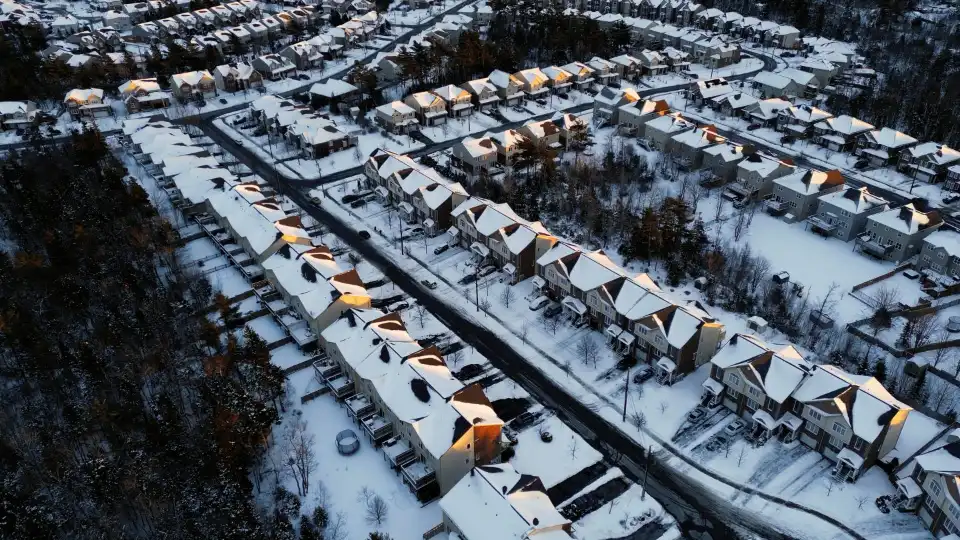
Even a 1% mortgage rate drop could be enough to ‘unlock’ the frozen housing market, Oxford Economics says
Mortgage ratesare currently in the high 6% range, and a drop back to the pandemic-era sub-3% levels is considered unrealistic by economists. However, a modest decline in rates to below 6% could motivate some homeowners to sell, potentially thawing the frozen housing market constrained by homeowners holding onto low-rate mortgages.If you’re waiting for mortgage rates to fall to around 3% to buy a home, don’t hold your breath. The likelihood mortgage rates will drop anywhere near those pandemic-era levels is “unrealistic,” a Zillow economist recently said.Recommended VideoBut not all hope is lost on the U.S. housing market, at least according to one economist. Bob Schwartz, a senior economist with Oxford Economics, toldFortunewhile there’s “no quantifiable rate” that would trigger more home sales, just a 1% drop in mortgage rates to lower than 6% should be “enough of an incentive” for at least some current homeowners to sell their homes and “trade up.”One of the prime factors keeping the U.S. housing market frozen is mortgage rates. During the pandemic, buyers locked in at a sub-3% mortgage rate. But now that mortgage rates are hovering between 6% and 7%, current homeowners have little incentive to sell their current homes and either “trade up,” as Schwartz puts it, or downsize. New buyers are also resistant to higher mortgage rates than they’ve witnessed in recent memory. In fact, the percentage of mortgages outstanding with a rate higher than 6% has more than doubled since 2021, according to Schwartz, but that figure is still less than 20%. More than 50% of outstanding mortgages have rates in the 3% to 4% range. While Schwartz toldFortunemortgage rates would have to “drop significantly” from the current 6.63% to move the masses of homeowners off the sidelines and put their homes up for sale, a smaller drop could encourage enough people to do so.“The housing market would be the biggest beneficiary of lower rates as they would unlock frozen sales by homeowners who are reluctant to give up the low-rate mortgages taken out in the decade following the Great Recession,” Schwartz wrote in an Aug. 8 note. Other recent reports have also illustrated how little faith there is in mortgage rates dropping to pandemic-era levels and how other housing market factors play into housing affordability concerns in the U.S. A recent Zillow report showed a 0% mortgage rate in some U.S. cities wouldn’t be enough to make housing affordable because home prices still remain too high; they’re up more than 50% since the start of the pandemic.High home prices “are the bigger hurdle,” Michelle Griffith, a luxury real-estate broker with Douglas Elliman, based in New York City, previously toldFortune.“Inventory is tight and competition is high, so the cost of the property itself is what keeps most buyers on the sidelines,” Griffin said.Refinancing and future mortgage predictionsWhile a drop in mortgage rates could encourage outright sales, Schwartz toldFortuneanother likely scenario would be current homeowners refinancing to a lower rate. Although that may not thaw the frozen housing market as much as Americans may hope, it could be good for the economy in other ways. “A significant increase in refis could have a significant impact on spending, particularly if a good chunk is of the cash-out variety,” Schwartz said. “Homeowners are sitting on $34.5 trillion of housing equity, which could be tapped into for spending purposes.”To be sure, mortgage rates would have to “fall pretty drastically” for that to happen, which Oxford Economist doesn’t see in their outlook at this point, he added. In relation to mortgage rates, all eyes have been on the Federal Reserve’s upcoming Federal Open Market Committee (FOMC) meeting in September that will determine interest rates. On Tuesday, the Consumer Price Index summary reported inflation notched up just 0.2% in July, bringing headline inflation to 2.7%, better than many expected. Still, it’s ahead of the Fed’s 2% target. While the CPI report had little impact on the 10-year Treasury rate, which is the benchmark for mortgage rates, it shouldn’t prevent the Fed from cutting rates in September, Schwartz said. “Although with inflation still sticky and well above the Fed’s 2 % target … we still believe the Fed will wait until December to cut,” he added. “However, if the upcoming jobs report for August is a dud, similar to the July one, odds are the Fed will cut in September.”Join us at the Fortune Workplace Innovation SummitMay 19–20, 2026, in Atlanta. The next era of workplace innovation is here—and the old playbook is being rewritten. At this exclusive, high-energy event, the world’s most innovative leaders will convene to explore how AI, humanity, and strategy converge to redefine, again, the future of work. Register now.

Not even a 0% mortgage rate would make buying a house affordable in these 6 U.S. cities
Housing affordability in the U.S.remains at crisis levels due to a combination of stubbornly high mortgage rates and home prices. Even if mortgage rates dropped substantially, the core problem is persistently high prices, particularly in major metro areas. Affordable inventory remains tight as current homeowners hold onto low-rate mortgages.There are several factors affecting housing affordability in the U.S.—and stubbornly high mortgage rates are something felt across the country. Recommended VideoDuring the pandemic, buyers enjoyed sub-3% mortgage rates, which ushered in a wave of first-time homeowners. But by late 2023, mortgage rates had peaked at 8%, and today still remain near 6.5% to 7%. That—in combination with home prices that are more than 50% higher than 2020—has locked out new home buyers from entering the market and current homeowners from selling. Zillow reported this week it would take mortgage rates dropping to about 4.43% to make an average home affordable for a typical buyer. But Zillow economic analyst Anushna Prakash said this was “unrealistic” considering the massive dip required to get there. But even if mortgage rates dropped to 0%, Prakash said, an average home would remain unaffordable in some major metro areas, according to Zillow. Those include: New YorkLos AngelesMiamiSan FranciscoSan DiegoSan JoseThat’s because high home prices “are the bigger hurdle,” Michelle Griffith, a luxury real-estate broker with Douglas Elliman based in New York City, toldFortune.“The reality is that buying into the market especially in Manhattan or prime Brooklyn still requires a significant amount of cash upfront,” Griffith said. “Inventory is tight and competition is high, so the cost of the property itself is what keeps most buyers on the sidelines.”Between May 2020 and May 2025, the Case-Shiller Home Price Index, which is widely used to measure U.S. residential real estate prices, jumped more than 51%. While mortgage rates certainly make monthly payments more expensive, Griffith said, affordability “is more about the overall price tag.” “Buyers care about rates, of course, but what really matters is having enough for the down payment and closing costs,” she added. “A small shift in rates doesn’t suddenly make that million-dollar apartment feel attainable.”Another issue contributing to the housing crisis is a lack of lower-priced inventory. Salim Chraibi, founder and CEO of homebuilding company Bluenest Development, toldFortunehe sees pre-approved and motivated buyers in Miami, but there just aren’t enough homes available in their price range. Chraibi’s company focuses on building homes for lower- and middle-income families.“For sellers, many are holding onto homes because they don’t want to lose the lower interest rates they locked in years ago, which keeps inventory tight and the cycle going,” he said. “The biggest issue is inventory of the types of homes that are considered affordable for middle-income families.”Dealing with sticker shockWhen it comes to the U.S. market, tipping one scale doesn’t necessarily fix the housing affordability problem.Even buyers who pay in all cash have to “contend with sticker shock,” Alexander Kalla, a realtor with Keller Williams Bay Area Estates in California, toldFortune. The median home price in San Jose has hovered consistently above $1.6 million, he said, which significantly strains most households before mortgage financing costs are even considered. So even if mortgage rates dropped to 0%, a median-priced home in San Francisco, San Jose, or anywhere else in the Bay Area would still require an extremely high down payment and monthly payments, he explained. While “many buyers here are extremely rate-sensitive, running numbers at every shift in the market,” Kalla said, “the main barrier is that house prices have massively outpaced local incomes since before rates rose.”Rents and home prices have been rising faster than incomes across most regions of the U.S., according to a 2024 report from the U.S. Department of the Treasury. Americans now need to make more than six figures to afford a median-priced home, according to Realtor.com, but the average U.S. salary is only slightly more than half of that.“Until we tackle prices, supply, and local wage growth, affordability will remain a challenge, no matter what happens with rates,” Kalla said. Join us at the Fortune Workplace Innovation SummitMay 19–20, 2026, in Atlanta. The next era of workplace innovation is here—and the old playbook is being rewritten. At this exclusive, high-energy event, the world’s most innovative leaders will convene to explore how AI, humanity, and strategy converge to redefine, again, the future of work. Register now.

Mark Zuckerberg gifted noise-canceling headphones to his Palo Alto neighbors because of the nonstop construction around his 11 homes
Billionaire Mark Zuckerberg has been rankling his neighborsin Palo Alto as he works on expanding and modifying the 11 homes that he has purchased in the area. To smooth over tensions, theNew York Timessays Zuckerberg gifted his next-door neighbors noise-canceling headphones as a peace offering.Mark Zuckerberg, the billionaire cofounder of Facebook and CEO of Meta, reportedly gave noise-canceling headphones to his neighbors in the Crescent Park neighborhood of Palo Alto in an effort to address years of frustration over ongoing construction and disruption surrounding his expanding residential compound, according to theNew York Times.Zuckerberg has spent more than $110 million purchasing at least 11 homes on Edgewood Drive and Hamilton Avenue over the past 14 years, transforming this once-idyllic neighborhood of lawyers, business executives, and Stanford University professors into a zone dominated by construction equipment, surveillance, and frequent lavish parties.Some of these properties that were recently purchased sit unoccupied, despite being in a region known for its acute housing shortage, while others have been converted into guest homes, lush gardens, a pickleball court, a pool with a hydrofloor, and—at least for a time—a private school for Zuckerberg’s children and several others (a use that appears not to comply with local zoning ordinances).Underneath the compound, Zuckerberg added 7,000 square feet of space described as “basements,” which to area residents are more akin to “bunkers” or a “billionaire’s bat cave.” Zuckerberg similarly added a 5,000-square-foot underground structure to his compound in Hawaii, which he insists is not a “doomsday bunker.”Much of the discontent centers on the nearly eight years of continual construction. Several neighbors cited street blockages, debris, and relentless noise as ongoing issues.A spokesperson for Mark Zuckerberg provided the following statement toFortune:“Mark, Priscilla and their children have made Palo Alto their home for more than a decade. They value being members of the community and have taken a number of steps above and beyond any local requirements to avoid disruption in the neighborhood.”Not Zuckerberg’s first property controversyThe noise-canceling headphones were among several gifts extended by Zuckerberg’s staff to appease neighbors during particularly loud periods, along with bottles of sparkling wine and boxes of Krispy Kreme doughnuts. These gestures, however, have not always been effective. Some of his neighbors say their community has been transformed—and not in a good way—by absentee ownership, strict privacy barriers, and heavy security presence, including cameras overlooking adjacent properties and frequent patrols by private security guards.Meta didn’t immediately respond to a request for comment.This is not Zuckerberg’s first clash with neighbors over real estate projects. In 2016, Palo Alto officials rejected a proposal to demolish four homes and replace them with smaller houses and large basements as part of a wider compound. While the city denied the specific application, Zuckerberg ultimately proceeded gradually, undertaking similar work in a piecemeal fashion to avoid further regulatory hurdles. The Palo Alto City Council and some residents have since criticized what they describe as the exploitation of zoning loopholes and the city’s regulatory inaction.Zuckerberg’s residential portfolio extends far beyond Palo Alto. He owns a 2,300-acre estate in Kauai, Hawaii, where his land acquisitions and building plans have at times provoked local controversy as well. He also owns homes at Lake Tahoe and a mansion in Washington, D.C.For this story, Fortune used generative AI to help with an initial draft. An editor verified the accuracy of the information before publishing. Join us at the Fortune Workplace Innovation SummitMay 19–20, 2026, in Atlanta. The next era of workplace innovation is here—and the old playbook is being rewritten. At this exclusive, high-energy event, the world’s most innovative leaders will convene to explore how AI, humanity, and strategy converge to redefine, again, the future of work. Register now.
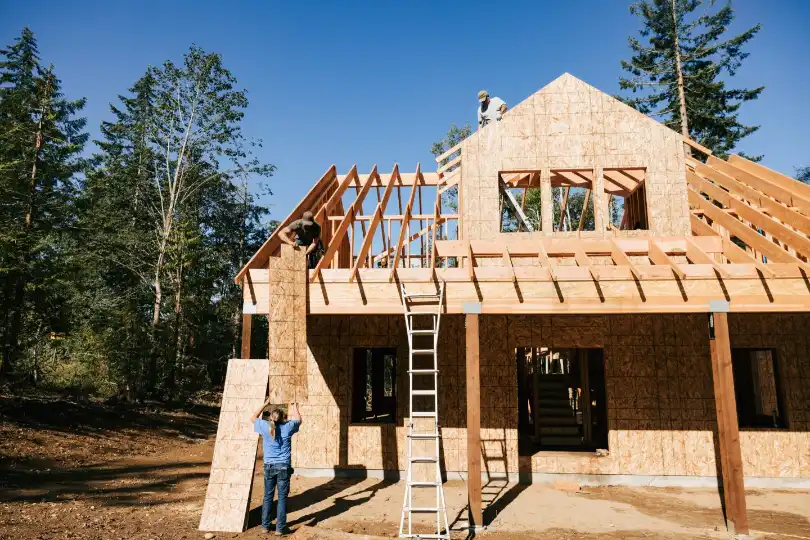
The price premium on new-construction homes is dissolving. New-home prices dropped in 30% of large U.S. cities last quarter
Housing costs have surged more than 50% since the pandemic,but the traditional price gap where new-construction homes cost significantly more than existing homes has narrowed. There are notable price drops and incentives, especially in the South and West, making new homes more affordable. Furthermore, new homes often provide better value per square foot, and builders tend to offer incentives.No matter the type of home you buy, housing has become more expensive over the years. Just since the pandemic, home prices are up by more than 50%, and mortgage rates continue to hover near 7%. Recommended VideoWhile new-construction homes have historically been more costly than buying an existing house, that trend is changing in some markets. Last quarter, year-over-year median listing prices for new builds dropped in 30 of the largest U.S. metros, according to an Aug. 7 Realtor.com report. Historically, the price premium of new-construction homes has largely been driven by costly modern amenities and customization, rising materials and labor expenses, and strong demand for more housing. The median listing price for a new home in the second quarter of 2025 was about $450,000, while the median existing-home price was roughly $418,000, according to Realtor.com. But price drops have been prominent in the South and West as builders try offering more affordable options through incentives. Meanwhile, increased competition on existing homes and weaker buyer demand has driven down new-construction prices, according to Realtor.com.“In a market still grappling with a shortage of nearly 4 million homes, affordable new construction plays a critical role in restoring balance,” Realtor.com chief economist Danielle Hale said in a statement. “Even with recent slowdowns in starts and permits, builders continue to deliver new homes to the market at a healthy pace.”Although the overall home price for a new build is higher than an existing home, buyers can get a better price per square foot, Realtor.com data shows. Nationally, new builds typically list for about $218 per square foot, compared with $226.56 for existing homes, according to Realtor.com.The top five markets where new-construction home prices dropped year over year last quarter, according to Realtor.com:Little Rock, Ark. (-15.6%)Austin, Texas (-8.5%)Wichita, Kans. (-7.9%)Jacksonville, Fla. (-7.8%)Cape Coral, Fla. (-7.4%)Shrinkflation is also a factor at play making new homes more affordable in some markets. Builders are making homes smaller, and therefore more affordable, for new buyers. A July 2024 report from John Burns Research & Consulting showed about a quarter of new homes were downsized to cut costs. To make smaller homes more enticing and practical, builders have cut the number of hallways and increased flex space in the home.“Instead of shrinking rooms to reduce overall home size, a common tactic among our architectural designers was to eliminate unnecessary circulation space,” JBREC wrote in itsU.S. Residential Architecture and Design Surveyreport. “Essentially, we’re Tetris-ing the functional rooms together, avoiding wasted square footage on nonfunctional areas like hallways.”Builders offering incentivesTo entice homebuyers to go with a new home, builders are offering incentives like mortgage-rate buydowns and design upgrades to offset drops in demand from inflated costs. Devyn Bachman, chief operating officer with John Burns Research and Consulting, previously toldFortunethese enticements were the “number one” driver for the rising new-home sales.The mortgage-rate buydown, the industry term for discounted mortgage rates, is the most “desired and most effective” incentive offered in the new-home market today, she said. There are several types of mortgage-rate buydowns, including full-term buydowns and temporary buydowns. With a buydown, builders prepay the difference in interest between the market mortgage rate and the mortgage rate they’re offering. A full-term buydown would last the entirety of the loan, while temporary buydowns may last for only a few years. A May 2025 report from the National Association of Home Builders shows 61% of builders are using sales incentives like buydowns.Buydowns are an enticing option for eager prospective homebuyers who are closely monitoring mortgage rates but have been disappointed by the stubbornness of high interest. TheICE Mortgage Monitorreport for July showed more than 8% of borrowers financed homes with adjusted-rate mortgages (ARMs) or temporary buydowns last year, which reduced monthly payments in the first years of the loans. However, ICE Mortgage warned that “while these loans provide short-term relief, they may introduce future payment shock, particularly if interest rates remain elevated or reset higher.”Join us at the Fortune Workplace Innovation SummitMay 19–20, 2026, in Atlanta. The next era of workplace innovation is here—and the old playbook is being rewritten. At this exclusive, high-energy event, the world’s most innovative leaders will convene to explore how AI, humanity, and strategy converge to redefine, again, the future of work. Register now.

The housing market’s fall surprise: Buyers are back, and Zillow says the momentum isn’t over yet
Zillow’s September 2025 housing market report reveals an unexpected surge of activity during what is typically real estate’s slow season. A dip in mortgage rates—combined with a strong stock market—sparked renewed energy among both buyers and sellers after a sluggish August.Recommended VideoNew listings climbed 3% year over year in September, reversing the 3% decline a month earlier. On a monthly basis, listings dipped 2%, outperforming the historical average of a 9% tumble heading into the fall.Total inventory slipped just 1% from August to September but sits 14% higher than last year’s levels.The report also shows a shifting balance of power: 15 of the nation’s 50 largest metros are now buyer’s markets, up from six last year.Zillow’s heat index names the top buyer-friendly metros:Miami, FloridaNew Orleans, LouisianaAustin, TexasJacksonville, FloridaIndianapolis, IndianaIn contrast, seller-leaning markets remain hot due to limited housing supply and restrictive land-use laws.The best seller’s markets named by Zillow include:Buffalo, New YorkHartford, ConnecticutSan Jose, CaliforniaSan Francisco, CaliforniaNew York, New YorkRecent nationwide data reinforces Zillow’s message of resilience. According to Freddie Mac, the average 30-year fixed mortgage rate has dropped to about 6.19%, its lowest point of 2025. Meanwhile, existing-home sales rose to a seven-month high in September as affordability began to improve. And even as 15% of pending sales were canceled amid nervous buyers, Redfin’s numbers show that sellers are adjusting expectations—making price cuts and accepting slower deals.Together, these trends suggest the housing market is thawing rather than overheating. Zillow’s economists expect this “unseasonably active” fall to carry into the holidays, powered by easing borrowing costs and pent-up demand. For buyers who’ve been waiting for a window, this may be the first real opening in nearly three years.For this story, Fortune used generative AI to help with an initial draft. An editor verified the accuracy of the information before publishing. Join us at the Fortune Workplace Innovation SummitMay 19–20, 2026, in Atlanta. The next era of workplace innovation is here—and the old playbook is being rewritten. At this exclusive, high-energy event, the world’s most innovative leaders will convene to explore how AI, humanity, and strategy converge to redefine, again, the future of work. Register now.

Would-be homebuyers are getting cold feet and backing out of deals at a record pace as some sellers have a ‘hard time adjusting’ to new reality
It’s a buyer’s market, and that means house hunters are walking away from contracts more frequently, according to data from Redfin. Sellers outnumber buyers in the housing market by about 500,000, the real estate firm said, as it found that buyers are wielding more negotiating leverage and asking sellers to cover the cost of any repairs that need to be done and demanding price cuts.Recommended VideoAt the same time, many sellers are not accommodating the concerns of would-be buyers, who have become pickier and are seeking more concessions.About 56,000 U.S. purchase agreements were canceled in August, representing 15.1% of homes that went under contract. That’s the highest share for August deals falling through in records dating back to 2017. It’s also up from 14.3% in August 2024 and well above the post-pandemic housing frenzy’s rate of 11.4% in August 2021.“Home purchases are falling through more frequently because buyers and sellers oftentimes aren’t on the same page and aren’t willing to compromise,” Redfin said in its report.In a survey of Redfin’s real estate agents, 70.4% said home inspection or repair issues were the cause of canceled contracts—by far the top reason.That was followed by 27.8% who said buyer financing fell through, 21% who said buyers were unable to sell their current homes, 14.9% who cited changes in a buyer’s financial situation, and 12.9% who said a buyer had found another house they preferred.Courtesy of RedfinIn addition, many of the cities with the highest cancellation rates were in Florida and Texas, which have seen a surge in housing supply after a pandemic-era exodus to those states triggered a building boom.Meanwhile, sellers still think their homes will command high asking prices as they did during the housing bonanza in 2020 and 2021, or they paid so much for their properties and aren’t willing to budge on the price.A new reality for sellers“Some are having a hard time adjusting to the reality that it’s no longer a seller’s market, because it seems like just yesterday that homes were getting dozens of offers and fetching tens of thousands of dollars over the asking price,” Redfin said.The report also pointed out that lower-priced homes are in greater demand because overall homeownership costs have jumped in recent years, and those homes are more likely to have issues come up during inspections.Insurance premiums have surged in states like Florida and California that have seen more natural disasters, contributing to the increase in ownership costs.Meanwhile, mortgage rates remain high despite coming down since the Federal Reserve lowered benchmark borrowing costs.In fact, pending home sales actually fell in September, the first time in nearly three months, even as the weekly average mortgage rate dropped for nine consecutive weeks.Amid the weak demand, home sales are headed for their worst year since 1995 as economic concerns spread from buyers to sellers. A Fannie Mae survey earlier this month showed nearly 70% of Americans believe the economy is headed in the wrong direction, and 73% think it’s a bad time to buy a house. Given all the anxiety, sometimes sellers who are willing to accommodate buyers’ demands still can’t overcome their cold feet.“I worked with one seller who received 78 repair requests from a buyer following the inspection, and that was after the seller had already agreed to lower their $375,000 asking price by $25,000 because the house needed some improvements,” said Dawn Liedtke, a Redfin real estate agent in Tampa. “The buyer came back and said they would handle the cost of the repairs, but only if the seller was willing to lower the price by another $100,000. The deal didn’t work out.”Join us at the Fortune Workplace Innovation SummitMay 19–20, 2026, in Atlanta. The next era of workplace innovation is here—and the old playbook is being rewritten. At this exclusive, high-energy event, the world’s most innovative leaders will convene to explore how AI, humanity, and strategy converge to redefine, again, the future of work. Register now.
Home sales are headed for their worst year since 1995 as ‘economic jitters’ spread from buyers to sellers, Redfin says
There’s recently been a little bit of breathing room in the U.S. housing market as mortgage rates have slightly declined and home price increases have started to steady. But both buyers and sellers are still cautious. Recommended VideoFewer homeowners are putting their homes on the market: Active listings fell 1.4% in August, which represents the biggest monthly decline since 2023, according to a Monday report from Redfin. “High housing costs and economic jitters have rattled buyers, and that unease has spilled over to sellers,” Chen Zhao, Redfin’s head of economics research, wrote in the report. “We currently expect existing-home sales to end the year at around 4.05 million, or roughly flat compared to 2024, which was the worst year for sales since 1995.”The housing market is stuck in an unending circle of gridlock: Buyers aren’t inclined to purchase a home because mortgage rates and home prices are too high (they’re up 1.7% year over year at $440,004, according to Redfin). And homeowners don’t want to sell their homes to trade for a higher mortgage rate and out of fear they won’t get what they think their home is worth. That gridlock has forced some sellers to slash asking prices or pull their listings off the market altogether. Delistings—or taking a home off the market—jumped 47% nationally in June from a year ago, according to Realtor.com, and are up 34% year to date. “What we’re seeing nationally is a market that’s gradually rebalancing, with buyers gaining leverage and sellers facing a tradeoff: Adjust to the market and sell for less, or hold out and risk sitting indefinitely,” Realtor.com Senior Economist Jake Krimmel previously toldFortune. “Many sellers still aren’t pricing to sell.”Redfin data shows sellers have been pulling back because homebuyer demand is sluggish. In fact, sales are still far lower than even pre-pandemic levels, and the slight drop in mortgage rates hasn’t proven to be effective yet. “But that may change if rates continue declining; if we get a stronger-than-expected fall housing market, existing-home sales could end this year a little higher than last year,” Chen wrote.Redfin’s figures show mortgage rates fell to 6.59% in August, the lowest monthly average in 10 months. According to Mortgage News Daily, the 30-year fixed rate mortgage as of Monday is 6.35%, down from 7% in May.There is debate about the magic number it would take for buyers to be inclined to take out a mortgage. While Beth Behling, a Redfin Premier real estate agent in Chicago, said in a statement she thinks the magic number is 6%, others have said closer to 5% would make more of a meaningful difference. Zillow reported in early August it would take mortgage rates dropping to about 4.43% to make an average home affordable for a typical buyer—although the real estate site’s economic analyst Anushna Prakash said this was “unrealistic” considering the huge drop required to get there. “It’s unlikely rates will drop to the mid-[4% range] anytime soon,” Arlington, Va.-based real estate agent Philippa Main previously toldFortune. “And even if they did, housing prices are still at historic highs.”Join us at the Fortune Workplace Innovation SummitMay 19–20, 2026, in Atlanta. The next era of workplace innovation is here—and the old playbook is being rewritten. At this exclusive, high-energy event, the world’s most innovative leaders will convene to explore how AI, humanity, and strategy converge to redefine, again, the future of work. Register now.

Nearly 70% of Americans think the economy is on the ‘wrong track’ and even more think it’s a bad time to buy a home, Fannie Mae survey shows
A growing sense of economic pessimism is taking hold in the U.S., as new Fannie Mae survey data reveals nearly 70% of Americans believe the economy is headed in the wrong direction. An even higher percentage (73%) say it’s a bad time to buy a house. Coupled with mounting concerns about the housing market, the findings underscore the challenges facing would-be homebuyers, and paint an increasingly bleak picture for consumer sentiment as autumn begins.Recommended VideoAccording to Fannie Mae’s September 2025 Home Purchase Sentiment Index, using data from the National Housing Survey, only 32% of respondents said the economy is on the “right track,” compared to a striking 67% who believe it’s going the “wrong track.” These numbers have shifted little during the past year, signaling a stubborn lack of faith in the nation’s economic trajectory, and the “wrong track” percentage ticked up from 64% in August. The steady majority express pessimism about the economy reflects ongoing turbulence from inflation, high borrowing costs, and the continued impacts of global events on U.S. households.This broad-based skepticism transcends the headline figures. Just 32% of consumers expect their personal finances to improve over the next year, while 23% anticipate things will get worse. Most people—45%—expect little change, which aligns with a record high share (77%) saying their household income has remained about the same as it was a year ago. Only 14% report significantlyhigher income, suggesting that wage gains are failing to keep pace with higher living costs and financial pressures, and yet only 8% report significantly lower income, indicating stability.Apollo Global Management Chief Economist Torsten Sløk weighed in on another explanation of the economy’s stagnancy on Tuesday, noting both the hiring rate and the quits rate are low, even at recessionary levels, with a declining number of job openings, rising unemployment, and slower job growth, to boot.“The bottom line is that the labor market is at a standstill, where workers are not getting hired or voluntarily changing jobs,” Sløk wrote.A bad time to buyFor aspiring homeowners, the outlook is especially grim. When asked whether it’s a good time to buy a home, just 27% said yes, while a resounding 73% think it’s a bad time. The net share of respondents who view buying conditions as favorable fell two percentage points month-over-month to negative 46%—a level that has persisted since the summer.Homebuyers’ attitudes toward the housing market today stem from stubbornly high mortgage rates and home prices. During the pandemic, buyers enjoyed sub-3% mortgage rates, which ushered in a wave of first-time homeowners. But by late 2023, mortgage rates had peaked at 8%, and today still remain near in the 6% range. And even a 0% mortgage rate wouldn’t make housing affordable for Americans in several major metro areas.Still, home prices are “the bigger hurdle,” Michelle Griffith, a luxury real-estate broker with Douglas Elliman based in New York City, previously told Fortune. Indeed, home prices are 51% higher than they were five years ago, according to the Case-Shiller Home Price Index.“The reality is that buying into the market especially in Manhattan or prime Brooklyn still requires a significant amount of cash upfront,” Griffith said. “Inventory is tight and competition is high, so the cost of the property itself is what keeps most buyers on the sidelines.”Recent HPSI data confirms Americans’ skepticism. Throughout 2025, the portion of those saying it’s a bad time to buy has hovered around 70%, several times higher than the share who feel now is a good time. Persistently rising home prices and steep mortgage rates have contributed to these negative perceptions, making affordability an ever-greater challenge for most buyers.Still a seller’s marketIn stark contrast to buyers, home sellers remain moderately optimistic. Fannie Mae found that 57% believe it’s a good time to sell their home, with only 41% saying it’s a bad time. This sentiment has declined compared to the previous year, where the net share of those seeing it as a good time to sell topped 30%; September’s figure stands at just 17%. Still, the “good time to sell” contingent outnumbers the buyers—reflecting continued seller’s market dynamics, even as perceptions soften.Looking ahead, 40% of survey participants expect home prices to rise in the next 12 months, while 22% believe they’ll fall, and 38% foresee stability. The net share predicting price increases is 18%—unchanged from August. Meanwhile, opinions are split on mortgage rates, with roughly a third expecting rates to go down and another third bracing for further increases. Notably, just 2% now believe mortgage rates will decline—down five percentage points from the previous month—indicating that expectations for relief on borrowing costs remain low.To be sure, there are some subtle signs the housing market could be shifting toward favoring buyers. Mortgage applications have slightly increased, and home prices are starting to plateau or even drop in some markets. “For prospective buyers who have been waiting on the sidelines, the housing market is finally starting to listen,” First American chief economist Mark Fleming wrote in an Aug. 29 First American post. Even if that’s true, Fannie Mae’s survey shows American homebuyers still feel as if the market isn’t in their favor.Plunging into rentalsOutside of the ownership market, the survey indicates renters believe costs will climb, with consumers expecting a 6% average increase in rental prices over the year ahead—a 1.1 percentage-point monthly jump. Employment confidence remains solid, with 75% of working respondents not concerned about job loss in the next year.The survey also found a slight rise in renting preference: if moving, 33% would choose to rent, up one point, while 67% would opt to buy. Additionally, 57% report that obtaining a mortgage today would be difficult—up slightly from the prior month—further confirming the affordability squeeze.The Fannie Mae data points to a sustained period of uncertainty and challenge for Americans. With most consumers wary about both the broader economy and their personal financial prospects, and with homebuying seen as increasingly out of reach, it is clear that deep anxieties about the nation’s financial trajectory are shaping everyday decisions and dampening optimism as fall gets underway.For this story, Fortune used generative AI to help with an initial draft. An editor verified the accuracy of the information before publishing. Join us at the Fortune Workplace Innovation SummitMay 19–20, 2026, in Atlanta. The next era of workplace innovation is here—and the old playbook is being rewritten. At this exclusive, high-energy event, the world’s most innovative leaders will convene to explore how AI, humanity, and strategy converge to redefine, again, the future of work. Register now.

Why boomers keep winning in the housing market as ‘investors and second-home buyers’ continue to dominate
All-cash offers have cemented their place as a formidable force in the U.S. housing market, accounting for nearly one in three home purchases in the first half of 2025, according to the latest analysis from Realtor.com. The data reveals that about 32.8% of home sales so far this year were completed fully in cash—a figure only slightly lower than last year, but significantly above pre-pandemic norms. These transactions are “especially common at the extreme ends of the price spectrum,” writes senior economic research analyst Hannah Jones, who notes that they vary dramatically across regions.Recommended VideoCentral to this phenomenon is the growing role of two groups, Jones concludes: investors and second-home buyers. Institutional investors, in particular, have continued to leverage their financial heft, making swift, uncompromising offers—often without the need for financing. Jones’s analysis of deed data suggests to her that LLC and corporate entities make up a “disproportionate share” of cash transactions, she says, followed by second-home buyers, particularly in vacation markets. Jones cited her previous research that the share of investors who paid all cash in 2024 was nearly double the share of overall cash sales. Zooming out over the past several years, Jones found the cash share rising from 27.5% in 2019 to a recent peak of 34% in 2023, easing both of the past two years to the current level. Jones concluded this decline likely reflects fewer large investors and less intense buyer competition, with a housing market shifting, slowly, toward more balance.“After dominating some markets during the pandemic, large investor activity has retreated, giving way to smaller investors who more often use financing.” She warns that investor presence remains elevated, with many non-investor buyers sidelined, and cash purchases still representing a sizable part of the market. In other words, hopeful millennial and Gen Z first-time homebuyers are up against deep-pocketed boomers and deep-pocketed Wall Street types.ResiClub co-founder Lance Lambert toldFortunethat investors and second-home buyers have “always been a big chunk of the all-cash market,” but given the current higher-mortgage-rate environment, “we’re seeing all-cash buyers also include more Baby Boomers who are more likely right now to roll over their equity into that next home.” He added that in absolute terms, every category of homebuyer has contracted since mortgage rates surged in 2022 and U.S. existing home sales fell to multidecade lows, but all-cash buyers haven’t retreated as sharply, so their share of the market has been boosted. Lambert said that some repeat buyers who are still moving forward with plans to sell and relocate are either tapping into their substantial home equity or liquidating investments to pay all-cash and avoid today’s higher mortgage rates.Geographical disparities in cash salesThe new data also highlight stark regional disparities. States like Mississippi (49.6%), New Mexico (48.8%), Montana (46.0%), Hawaii (44.9%), and Maine (44.4%) lead the nation in cash sales, driven by a mix of affordable prices, out-of-state interest, and older demographics. These areas contrast sharply with high-cost, mortgage-dependent hubs such as Washington (21.1%), Washington, D.C. (23.4%), and Maryland (24.0%), where younger buyers and stronger lending infrastructure prevail.At the metro level, Miami (43.0%), San Antonio (39.6%), and Kansas City (39.2%) top the charts, combining both investor activity and, in some cases, significant luxury or international demand. Meanwhile, cities like Seattle (17.9%) and San Jose (20.6%) see the lowest proportions of cash deals, reflecting higher reliance on traditional mortgages because of high local incomes and younger populations.Jones proposes a pattern to the data: a U-shaped phenomenon of lower and upper-end transactions being particularly cash-sensitive.The pattern behind the dataThe high volume of cash transactions partly reflects an environment marked by elevated mortgage rates and fierce buyer competition. In many markets, cash offers are viewed as the fastest and simplest way to close a deal—bypassing financing contingencies and offering sellers greater certainty. During 2021’s record housing frenzy, the number of cash sales soared to roughly 2 million, the highest in any dataset available to Jones from Realtor.com. While the number dropped to about 1.4 million in 2024, reflecting a slower sales pace and retreating large investor activity, the cash share remains historic by long-term standards.Behind these numbers is a striking U-shaped pattern: Cash buying surges at both the low end—where as many as two-thirds of homes under $100,000 are sold without loans—and the high end, with over 40% of homes above $1 million changing hands in cash. The result is a marketplace where first-time and lower-income buyers, often reliant on financing, are outflanked by older, equity-rich, and wealthier competitors.Join us at the Fortune Workplace Innovation SummitMay 19–20, 2026, in Atlanta. The next era of workplace innovation is here—and the old playbook is being rewritten. At this exclusive, high-energy event, the world’s most innovative leaders will convene to explore how AI, humanity, and strategy converge to redefine, again, the future of work. Register now.

Zillow is the target of a massive infringement lawsuit that could force it to pay north of $1 billion in damages
The owner of Homes.com is suing Zillow for allegedly infringing more than 46,000 copyrighted photos. The suit seeks “a substantial award of damages,” which could top $1 billion. CoStar’s CEO also threatened Realtor.com and Redfin with similar suits.CoStar Group, the owner of Homes.com, Apartments.com, and several other real-estate websites, is suing Zillow, alleging the company has displayed tens of thousand of copyrighted photos on its sites.The suit, filed in U.S. District Court in the Southern District of New York, claims Zillow has displayed nearly 47,000 CoStar-copyrighted images on Zillow.com. CoStar is asking for permanent injunctive relief as well as “a substantial award of damages,” which could top $1 billion.“Zillow’s theft of tens of thousands of CoStar Group’s copyrighted photographs is nothing short of outrageous,” Andy Florance, CoStar’s founder and CEO, said in a statement. “Zillow is profiting from decades of CoStar Group work and the billions of dollars we have invested. … We are committed to stopping this systematic infringement and holding the wrongdoers to account.”Zillow, which was sued earlier this month for antitrust, did not immediately reply toFortune‘s request for comment on the suit.CoStar says it has, for decades, employed thousands of professional photographers to take pictures of residential and commercial real estate, licensing those photos to brokers, property owners and more. The photos, it says, are registered with the U.S. Copyright Office and watermarked.Zillow, the company alleges, has been using those without paying for them. Rental listings seem to be at the heart of the complaint. Because many photos appear on multiple listings and pages, CoStar says they were displayed more than 250,000 times.The suit also alleges the photos appear on Realtor.com and Redfin, which are owned by separate companies. CoStar accused Zillow of distributing the photos to those sites via a syndication agreement. (Neither of those sites is included in the suit, but Florance said “if these other sites do not immediately remove our images, we will have no choice but to sue them as well.”)“Zillow has unlawfully published and used tens of thousands of CoStar’s copyrighted images to attempt to increase its standing in the online rental listings market,” the suit reads. “While Zillow may try to blame its customers, it is Zillow itself that is using CoStar’s images to build its products and earn revenue.”CoStar has prevailed in this battle before. In 2019, it secured a $500 million judgment from the bankruptcy estate of Xceligent, a now-defunct real-estate listing platform, over the use of 38,489 copyrighted photos. The $1 billion estimate is drawn from the larger number of photos and appearances in the allegations.Join us at the Fortune Workplace Innovation SummitMay 19–20, 2026, in Atlanta. The next era of workplace innovation is here—and the old playbook is being rewritten. At this exclusive, high-energy event, the world’s most innovative leaders will convene to explore how AI, humanity, and strategy converge to redefine, again, the future of work. Register now.

Americans say $74,000 a year is the ‘perfect salary.’ But that would make buying a house affordable in only two states
A $74,000 salaryis above the national median and enough to comfortably cover rent in most U.S. cities, but it still falls short of affording a median-priced home in nearly every state. Monthly mortgage payments often exceed the one‑third income threshold, even for households earning nearly double that “ideal” salary. Experts say the bigger obstacle isn’t just today’s mortgage rates, but persistently high home prices fueled by tight inventory and homeowners holding on to their low-rate mortgages.All things considered, $74,000 per year doesn’t sound like a bad salary. It’s about $12,000 more than the average salary in the U.S. and enough to afford $1,800 in rent in most major U.S. cities.Recommended VideoAmericans consider that amount of money to be the “perfect salary,” according to a recent survey of more than 2,000 U.S. adults by Talker Research. This is the average amount respondents said they would need in order to be happy, and half of respondents said the current amount of money they make isn’t enough to support their lifestyle, even beyond housing.While the average amount was $74,000, that’s not nearly enough to afford to buy a home in all but two U.S. states: West Virginia and Louisiana, according to Realtor.com—and even doubling that “perfect salary” to $148,000 won’t get you a house in every state.“Earning the ‘perfect salary’ may still fall short of affording a median-priced home in most states,” Hannah Jones, senior economic research analyst at Realtor.com, said in a statement.The median-priced new home in the U.S. costs more than $410,000, and an existing home will set you back more than $422,000, U.S. Census Bureau and National Association of Realtors data shows. And in states like California, Hawaii, Massachusetts, Colorado, and Washington, buyers can expect to shell out well over $600,000 to buy just a median-priced home.Assuming you purchase a home for $422,000, put down a conventional 20%, and your mortgage rate is about 6.5%, that means you’d end up spending nearly $2,500 on your monthly mortgage payment. That would be well over one-third of a monthly gross salary, which is generally discouraged. Most real estate experts warn against spending more than one-third of your salary on housing. But assuming a $148,000 salary, that $2,500 payment wouldn’t feel as overbearing—that is, if you have the ability to shell out on the down payment and can even find a home that meets your needs within that median price range. The biggest hurdles for U.S. homebuyersWhile much of the housing-market conversation has been focused on mortgage rates—which continue to hover in the mid-6% range—a sticky problem is home prices remain historically high. “It’s really the home prices that are the bigger hurdle,” Michelle Griffith, a luxury real-estate broker with Douglas Elliman in New York City, toldFortune. “Even if mortgage rates dropped to zero, the reality is that buying into the market … still requires a significant amount of cash upfront. Inventory is tight, and competition is high, so the cost of the property itself is what keeps most buyers on the sidelines.”Still, mortgage rates are a barrier for some buyers—especially those who recall the sub-3% mortgage rates of the pandemic era. It’s also the reason many current homeowners are staying in place and refusing to sell. “Many homeowners are reluctant [to] put their homes on the market and give up the low mortgage rates they already have,” according to Warren Buffett’s Berkshire Hathaway HomeServices. “To them, high price gains won’t mitigate their ability to pay more for another home at significantly higher interest rates.”Torsten Sløk, chief economist for Apollo Global Management, wrote in a Thursday note that housing supply is holding steady because current homeowners don’t want to sell and take on higher mortgage rates. Meanwhile, demand is slowing because home prices and mortgage rates remain relatively high. That could be somewhat good news about home prices.“The bottom line is that there is downward pressure on home prices coming from falling demand and rising supply,” Sløk wrote.While not by much, mortgage rates are also trending slightly lower during the past few months, and home-price growth is mostly flat or slightly declining. Improving housing affordability “will take time, likely years, [but] the balance of power is no longer as one-sided as it was during the pandemic frenzy,” wrote Mark Fleming, chief economist for financial services firm First American. “For those prospective buyers who have been waiting on the sidelines, the housing market is finally starting to listen.”Join us at the Fortune Workplace Innovation SummitMay 19–20, 2026, in Atlanta. The next era of workplace innovation is here—and the old playbook is being rewritten. At this exclusive, high-energy event, the world’s most innovative leaders will convene to explore how AI, humanity, and strategy converge to redefine, again, the future of work. Register now.

‘Quiet luxury’ is coming for the housing market, The Corcoran Group CEO says. It’s not just the Hamptons, Aspen, and Miami anymore
Today’s luxury housing marketis expanding from grand, extravagant mansions toward “quiet luxury,” emphasizing understated comfort, according to Pamela Liebman, CEO of The Corcoran Group. This trend includes smaller, high-end homes and with buyers favoring places that offer meaningful features over sheer size or clout.While people have different definitions for luxury, the word typically elicits extravagance, grandeur, and exclusivity. And in the housing market, it usually prompts visions of a massive mansion dripping with amenities. Recommended VideoBut the definition of today’s luxury housing is changing, according to Pamela Liebman, CEO of The Corcoran Group, the real estate firm founded byShark Tankstar Barbara Corcoran in 1973. In fact, many wealthy buyers are leaning into the trend of understated “quiet luxury” when purchasing a home.“When it comes to home buying, quiet luxury doesn’t have to be the biggest estate on the block,” Liebman toldMansion Global.“It could be a place that makes you so happy and it may have all your favorite bells and whistles, which could be something like a beautiful porch where you sit and have tea or a cocktail at the end of the day versus being a major estate that everyone drives past and wants to know who lives there.”“Quiet luxury is luxury that makes you happy,” she continued. “Luxury in your face might be spitting it out to the rest of the world.”In fact, a recent report from vacation-home co-ownership platform Pacaso shows smaller homes are becoming more luxurious and are gaining popularity among high net-worth individuals. The average new-home size dropped from 2,314 square feet in Q4 2022 to 2,169 square feet in Q4 2024, U.S. Census Bureau data shows. “Affluent buyers are prioritizing convenience and financial flexibility, seeking homes that require less maintenance without sacrificing those high-end finishes we all love,” according to Pacaso. Plus, they’re choosing smaller homes because they’re easier to purchase in cash instead of taking out a mortgage while rates are still high.Where ‘quiet luxury’ buyers are lookingQuiet luxury is also about where you buy. While the major luxury housing markets include the Hamptons, New York City, Los Angeles, Miami, Palm Beach, and Dallas, there are several emerging markets now on the radar. On the West Coast, Liebman noted Sonoma County, specifically Healdsburg, Calif., “is an interesting spot” where luxury home sales have surged 150% year-over-year and 20% of homes have received multiple offers. According to Zillow, the average home price there is $1.1 million, about a 17% increase during the past five years. And as of late July, the average listing price was more than $1.5 million. Sonoma County has become a hot spot for buyers from urban areas like San Francisco and Los Angeles, according to Daniel Casabonne of Sotheby’s International Realty, because of its vineyard views and smaller-town vibe.Park City, Utah, has also become a popular destination to buy a luxury home, particularly for people seeking a skiing destination, Liebman said—and it’s easier to get to than Aspen via a commercial flight.“You know, not everybody has a private plane,” she said. Still, the average home price in Park City is a cool $1.5 million, according to Zillow. Namely, the Park City new-construction luxury condo market has been growing, and median sales prices rose 23% in Q2 to $1.85 million, data from Park City Investor shows.On the East Coast, Lake Burton, Ga.; Asheville, N.C.; parts of South Carolina, and Florida’s panhandle have also become popular for luxury homebuyers, Liebman said. In Lake Burton, many 2024 listings exceeded $5 million, and Mayfair International Realty recently exclusively listed a $10 million private island there. Meanwhile, the luxury market in Florida’s panhandle is continuing to grow and inventory levels are on the rise. Specifically, Inlet Beach, Santa Rosa Beach, and Destin all are emerging as luxury markets with new upscale beachfront properties boosting overall prices. The average home price in Inlet Beach is $1.7 million, according to Zillow.“Legacy destinations remain as timeless as ever, [but] Florida’s panhandle is solidifying its status as a favorite for vacationers,” Pacaso CEO and cofounder Austin Allison wrote in the company’s list of the top 20 luxury vacation home markets of 2024. Join us at the Fortune Workplace Innovation SummitMay 19–20, 2026, in Atlanta. The next era of workplace innovation is here—and the old playbook is being rewritten. At this exclusive, high-energy event, the world’s most innovative leaders will convene to explore how AI, humanity, and strategy converge to redefine, again, the future of work. Register now.

Escape from New York: Impending election of a democratic socialist mayor has the wealthy fleeing to the suburbs
The wealthy in New York City are on the move, spurred by what some are calling the “Mamdani effect”—a sudden surge of outward migration in anticipation of Zohran Mamdani, a democratic socialist, likely taking the reins as mayor this November.Recommended VideoAs polls point ever more decisively to a Mamdani victory in the fast-approaching Nov. 4 election, Manhattan’s elite are quietly packing their bags and setting their sights on the rolling lawns and leafy streets of Westchester County as well as other suburban enclaves.Real estate agents in Westchester, directly north of the city’s border, say the torrent began shortly after Mamdani’s surprise win in the Democratic primary in June. Zach and Heather Harrison, who represent the Harrison Team at Compass, told Realtor.com they’ve experienced “a spike in Manhattan residents reaching out about suburban properties.” Nearly every city-based buyer they’ve shown homes to in Westchester since summer has brought up the mayoral race as a prime factor driving their suburban search.Since Mamdani seized the primary, home sales entering contract in Westchester County have jumped 15% compared with last year, according to Harrison data. Local agents now speak freely of the “Mamdani effect,” a shorthand for the collective anxiety—and strategic thinking—rippling through affluent New Yorkers who fear the prospect of increased taxes and sweeping socialist housing reforms.Manhattan realtors are feeling the heat, too. Alexandra Carter, a licensed real estate salesperson with the Corcoran Group in Manhattan, toldFortunethat the reaction to Mamdani’s surprise primary win has been unlike anything witnessed in recent memory.“I have never seen this type of reaction to a mayor,” she said. “It’s been pretty drastic. After he won the primary we had a companywide call on implications for business because of the ‘rent freezes.’” Describing the Mamdani effect, she said, “People are afraid it will be bad for business.”Mamdani’s campaign did not respond to requests for comment.Policies ignite an exodusMamdani’s proposed housing plan is ambitious—and, for many high earners, unsettling. The centerpiece is a $100 billion investment over 10 years to construct 200,000 new publicly subsidized, rent-stabilized apartments. He also vows to freeze rents on stabilized units citywide for multiple years and double the capital budget for the city’s public housing authority. Another plank would “fast-track” approval for any project that is 100% affordable housing, cutting through bureaucratic delays that have traditionally slowed such developments.To foot the bill, Mamdani plans a new 2% tax targeting New Yorkers earning more than $1 million annually—a move his campaign says could generate $4 billion per year for early child care, public housing, and more. While working-class and immigrant communities hail these policies as overdue relief, higher earners are calculating their exit strategies.Taxes are the number one priority, said Zach Harrison. New York City’s local resident income tax already ranges from 3.078% to 3.876%, layered atop state and federal burdens. “One of the great things about Westchester County is that, unlike in the city, nearly all of our towns (with the exception of Yonkers) have no resident income tax,” Harrison notes.John Boyd, whose corporate site-selection business serves clients in both New York and South Florida, toldFortunethat he could see Mamdani’s election kick-starting a “second wave of relocations and wealth migration,” with the first wave being the flight from New York to Florida that took place during the pandemic.He said his clients are “paying close attention” to the New York mayoral race, noting data that shows hundreds of New Yorkers switching driver licenses to Miami-Dade County. The first half of 2025 saw a 33% surge in New York licenses converting, per Miami Realtors.Boyd said Westchester is well positioned, as are other regional markets like Jersey City across the Hudson River as well as Nassau and Suffolk counties on Long Island, to benefit from the “Mamdani effect” and attract new businesses and people. “I was talking about this the other day with a client of ours. For some NYC companies, Mamdani will be the final straw, and they will relocate to South Florida or Dallas or Nashville. But for many others they will seek a regional alternative,” he recalled.Beyond the suburbs of New York and New Jersey, he sees markets like Miami and Dallas benefiting, too. “It’s not just the taxes and the regulations and concerns about quality of life in New York,” he toldFortune, “but a sense that many of our clients had that they weren’t getting a good return on their tax dollar. The prospect of a Mamdani mayoralty is bringing back a lot of those memories.”Carter said much of what she sees of the Mamdani effect is how heavily taxed New Yorkers are already, noting that wealthy New Yorkers have been known to split their time in Florida for tax reasons. She said she’s heard of people moving, while there’s another subset of people who are going to see how the election turns out. She said one client sold his mother’s apartment over the summer and has been waiting “to see if he wants to reinvest in NYC.”Even if Mamdani does not enact any policy that is remotely quasi-socialist, his reputation is preceding him with the federal government, which has made ominous noises about its future relationship with the country’s largest city. President Donald Trump has repeatedly threatened to withhold federal funding from Mamdani (while conceding that it “looks like he’s going to win”), and Treasury Secretary Scott Bessent said that he would repeat a famous phrase if Mamdani ruins municipal finances and seeks help: Drop dead.Will the exodus become a flood?Suburban living, it should be noted, is hardly cheap. Westchester’s median home list price hit $729,999 in August—far above the national median of $429,990. And median household incomes in Westchester overall exceed New York state and national averages. The county is home to some of the richest zip codes in the U.S., including its single wealthiest suburb, Scarsdale.While income taxes in Westchester are lower than those in New York City, the county has some of the highest property taxes in the country, money that helps fund Westchester’s competitive public schools and public amenities.Some commentators, especially conservative ones, warn of a full-blown exodus. Fox News host Sean Hannity, a former New Yorker now based in Florida, famously said on air, “If they want to go with Mamdani as the mayor of New York City, I invite you all to come and broadcast your show as I do, originate your show in the free state of Florida. Because there is going to be a mass exodus out of the state of New York, the likes of which we have never seen.”Still, despite the headlines (and articles like this one), New York City’s housing market continues to show surprising resilience. Home prices slipped 1.2% nationwide in August, but New York’s edged up 0.3% month over month, per Realtor.com data. Nationally, homes are sitting longer on the market, but New York homes averaged 58 days compared to the national 60-day average.Carter said Mamdani might be campaigning on a very progressive platform, but there are going to be limits on what he can actually accomplish. “Freezing rent and turning NYC socialist overnight will not happen.”As for herself, she won’t be one of the people leaving New York, tellingFortunethat she, her husband, and her two young boys have moved to a townhouse in the Park Slope section of Brooklyn.“We definitely are not going anywhere—we love it.” There’s just a lot of bad vibes, she added. “I do think people are genuinely scared of the unknown.”Join us at the Fortune Workplace Innovation SummitMay 19–20, 2026, in Atlanta. The next era of workplace innovation is here—and the old playbook is being rewritten. At this exclusive, high-energy event, the world’s most innovative leaders will convene to explore how AI, humanity, and strategy converge to redefine, again, the future of work. Register now.

In a frozen luxury housing market, buyers are asking to ‘try before you buy’ and having sleepovers in multimillion-dollar mansions
Luxury homeownersare increasingly struggling to sell at desired prices, prompting a rise in creative tactics like sleepover trials and steep price cuts. New taxes in areas like Los Angeles and Cape Cod make luxury transactions even more costly, forcing sellers to be more mindful and flexible with pricing strategies.In today’s luxury housing market, it’s become increasingly difficult to sell for what the homeowner might think the home is worth—and even high-profile sellers have been forced to drop prices on their megamansions. Recommended VideoBecause home prices and mortgage rates remain elevated, buyers are scrutinizing their purchases now more than ever. Plus, in several luxury housing markets, extra “mansion taxes” are tacked on, making purchasing costs even more expensive. So to woo prospective buyers, sellers are trying a new tactic: offering up sleepovers in their mansions to help seal the deal. Julian Johnston, a real estate agent with The Corcoran Group in Miami, said this is a trend he’s seeing more frequently in today’s luxury market as sellers and agents are forced to become more open to creative strategies like pricing adjustments and unique marketing campaigns to stand out. “In the luxury sector, where buyers often have the means and the time to wait for the right property, anything that sparks fresh attention and differentiates a home from its competition can help move the market forward,” Johnston toldFortune. The Wall Street Journalfirst reported about this trend earlier this week, offering the example of a $60 million mansion where the owner allowed an overseas couple to stay at the home for two months at $250,000 per month before putting in an offer. Eric Albert, the homeowner, toldWSJthe potential buyers wanted to be sure the home was comfortable for them and make sure it was a good size and layout for them.“For $60 million, you should try it before you buy it,” Albert toldWSJ.“It’s a smart thing to do.”While Johnston toldFortunehe’s not seeing it with the majority of listings yet, “it’s certainly gaining traction in high-end markets where buyers are more selective.”Other real estate experts, however, see this as potentially a move of desperation for sellers—and a signal some luxury homes are overpriced at the start. “Sleeping in the house to get a feel for it is one of the oddest concepts I’ve ever heard of,” Simon Isaacs, founder of Palm Beach, Fla.-based luxury firm Simon Isaacs Real Estate, toldFortune. “That doesn’t mean it won’t happen. Stranger things have happened.”The frozen luxury housing marketDuring the past couple of years, there have been several notable cases of high-profile people being forced to drop the price on their lavish luxury homes. In April 2024, billionaire media mogul Rupert Murdoch majorly slashed the price of his Manhattan penthouse by 40% to $38.5 million. Not only did that mean he ended up listing it for far less than he wanted, but he also ended up losing money because he bought the property for $57.9 million in 2014. Then this May, Jennifer Lopez and Ben Affleck slashed the price of their $60 million Beverly Hills megamansion by more than $8 million. Most recently, the billionaire founder of Oakley sunglasses became the latest victim of the sluggish luxury housing market by relisting his Beverly Hills mansion for $65 million, down from the original $68 million price listing from June 2024.These few examples go to show that while not fully out of a seller’s market, the tides are turning in favor of buyers as listings stay on the market longer and price cuts become more common, according to Realtor.com.“Square footage and celebrity status don’t justify inflated pricing anymore,” Anthony Luna, CEO of LA-based real-estate advisory Coastline Equity, toldFortune. “Buyers want smart design, upgraded systems, and long-term value.”Meanwhile, luxury buyers and sellers also have to contend with mansion taxes in some markets. The mansion tax in LA, for example, applies an additional 4% tax to property sales of at least $5 million and a 5.5% tax for properties north of $10 million, further complicating real-estate sales and pricing. The tax, which is typically paid by the seller, is separate from a home’s sale price and can be a “massive amount of money,” Selling Sunset star and Oppenheim Group agent Emma Hernan previously toldFortune. She described it as a “nightmare” for sellers and agents alike. One of the more recent examples of municipalities considering mansion taxes is Cape Cod. Already one of the most expensive housing markets in the U.S. where homes often exceed $1 million, according to Warren Buffett’s Berkshire Hathaway Home Services, it’s about to get more expensive for luxury homeowners. Cape Cod lawmakers are considering a tax on wealthy homeowners that would tack on an extra 2% surcharge on luxury-home sales above $2 million.Considering those factors, luxury homeowners will have to be more mindful than ever when pricing their properties. The reason there are so many price drops in the luxury sector is “they were mispriced in the first place,” Issacs said. “Everybody has an expectation of what their home is worth, and real estate brokers who are on the ground showing people every day have a better understanding of what people want, what people’s appetite is, and what things are spent on,” he said. “Some things they’re willing to spend [on], and some things they’re not.”Join us at the Fortune Workplace Innovation SummitMay 19–20, 2026, in Atlanta. The next era of workplace innovation is here—and the old playbook is being rewritten. At this exclusive, high-energy event, the world’s most innovative leaders will convene to explore how AI, humanity, and strategy converge to redefine, again, the future of work. Register now.

The 10 hottest ZIP codes of 2025, according to Realtor.com
Beverly, Massachusetts is the nation’s hottest ZIP code, according to a study by Realtor.com. Houses in the area sell in just 16 days. The Northeast boasts seven of the 10 hottest ZIP codes this year.While the housing market, overall, has seen better days, some areas are still doing well.Realtor.com has issued its study of the country’s hottest ZIP codes—and if you’re looking to sell and live in the Northeast, things could be a lot worse.Beverly, Mass. is the country’s hottest area, particularly houses in the 01915 ZIP code, with houses only staying on the market for an average of 16 days (and selling for an average of $746,000). The Boston suburb has commuter rail access, appealing livability and its houses, while $250,000 higher than the national norm are 16% cheaper than the rest of the Boston metro area.Seven of the 10 ZIP codes is in the Northeast, in fact. And none of the ZIP codes featured has a median days on market over 3.5 weeks.Here’s how the 2025 list lines up.Beverly, Mass. (01915)Marlton, NJ (08053)Leominster, Mass. (01453)Ballwin, Mo. (63021)Wayne, NJ (07470)Strongsville, Ohio (44149)Trumbull, Conn. (06611)Cumberland, R.I. (02864)South Windsor, Conn. (06074)Bexley, Ohio (43209)National housing inventory was 28.9% higher year-over-year in June of this year, but even with that boost, listings were 12.9% below where they were before the pandemic. In the hottest ZIPs, however, inventory averaged 58.9% below the 2019 levels.This year marks the third consecutive year that the South and West did not make the list. The addition of Strongsville marks the first time a Cleveland suburb has made the list.“Buyers are moving fast, thinking big, and choosing communities that offer the right blend of value, access, and quality of life,” wrote Realtor.com. “As mortgage rates remain high and inventory levels gradually recover, expect these kinds of high-performing, value-driven suburban areas to remain at the forefront of market activity.”Join us at the Fortune Workplace Innovation SummitMay 19–20, 2026, in Atlanta. The next era of workplace innovation is here—and the old playbook is being rewritten. At this exclusive, high-energy event, the world’s most innovative leaders will convene to explore how AI, humanity, and strategy converge to redefine, again, the future of work. Register now.
The U.S. housing market is ‘finally starting to listen’ to homebuyers plagued by high mortgage rates and home prices, economist says
Housing affordability in the U.S.has improved slightly in 2025 due to mortgage rates trending down and home price growth flattening or declining in some markets, though conditions are still much more difficult than before the pandemic. A First American analysis shows a 3.1% year-over-year gain in affordability. However, most Americans still find homeownership challenging.After years of affordability challenges for buyers in the U.S., the housing market is “finally starting to listen,” according to Fortune 500 financial services firm First American.Recommended VideoHigh mortgage rates and home prices sidelined homebuyers for years, especially in the aftermath of the pandemic housing market that saw sub-3% mortgage rates and more affordable home prices. But ever since then, mortgage rates spiked, peaking at 8% in late 2023. Now that mortgage rates are trending slightly lower during the past few months—currently hovering around 6.5%—some buyers have at least a little bit of breathing room. Meanwhile, home price growth is mostly flat or slightly declining because of decreasing demand and increasing supply, according to the National Association of Home Builders. “For prospective buyers who have been waiting on the sidelines, the housing market is finally starting to listen,” wrote chief economist Mark Fleming in an Aug. 29 First American post. Fleming’s analysis is based on First American’s Real House Price Index (RHPI), which stands out because it accounts for inflation, unlike other home-price indexes. That’s because “just like other goods and services, the price of a house today is not directly comparable to the price of that same house 30 years ago,” according to First American.While a glance at most other home-price indexes would show a stark increase in home prices, First American’s actually shows national housing affordability rose 3.1% year over year in June, marking the fifth consecutive month with an annual gain. However, if one were to look at something like the Case-Shiller Home Price Index, it would show home prices are nearly 50% higher than they were five years ago.The RHPI also differs from other pricing indexes because it measures consumer buying power over time (taking into account the impact of income and interest rate changes), while other indexes like Case-Shiller track home value changes over time.Is housing really becoming more affordable?There are some promising signs housing affordability is improving: Mortgage rates are slightly declining, home-price growth is slowing, and household incomes are somewhat increasing, according to First American. That has led housing affordability to the best point it’s been since September 2024, First American’s analysis shows.Home prices either declined or grew less than 1% annually in more than half of major U.S. metros, and income outpaced home-price appreciation in about 70% of markets, according to First American. Austin saw the sharpest decline at 13% from its June 2022 peak and San Francisco at 10% down from its April 2022 peak. “While sellers may feel the pinch of waning pricing power, slower price growth—paired with rising incomes—is finally giving buyers a much-needed edge,” Fleming wrote.Still, housing affordability, as measured by RHPI, remains more than 70% higher (worse) than the pre-pandemic five-year average. Indeed, another analysis, published by Redfin on Wednesday, shows the U.S. homeowner population actually stopped growing for the first time in nearly a decade because mortgage rates and home prices still feel out of reach, even if they’re considered to be slightly improving.“America’s homeowner population is no longer growing because rising home prices, high mortgage rates, and economic uncertainty have made it increasingly difficult to own a home,” wrote Chen Zhao, Redfin’s head of economics research. “People are also getting married and starting families later, which means they’re buying homes later—another factor that may be at play.”But even a slight rebound can still be considered “an encouraging sign” for potential buyers, Fleming wrote. It’s going to be a more gradual and uneven leveling process for the U.S. housing market, “but the momentum is turning.” It will take more income growth, continued slowing of home price appreciation, and a drop in mortgage rates. Other economists have said the mortgage rate drop it would take to make housing feel affordable in the U.S. again is “unrealistic,” and in some metros even a 0% mortgage rate wouldn’t fix housing affordability.“While this process will take time, likely years, the balance of power is no longer as one-sided as it was during the pandemic frenzy,” Fleming wrote. Join us at the Fortune Workplace Innovation SummitMay 19–20, 2026, in Atlanta. The next era of workplace innovation is here—and the old playbook is being rewritten. At this exclusive, high-energy event, the world’s most innovative leaders will convene to explore how AI, humanity, and strategy converge to redefine, again, the future of work. Register now.