An Affordable Housing and Climate Victory in Sacramento
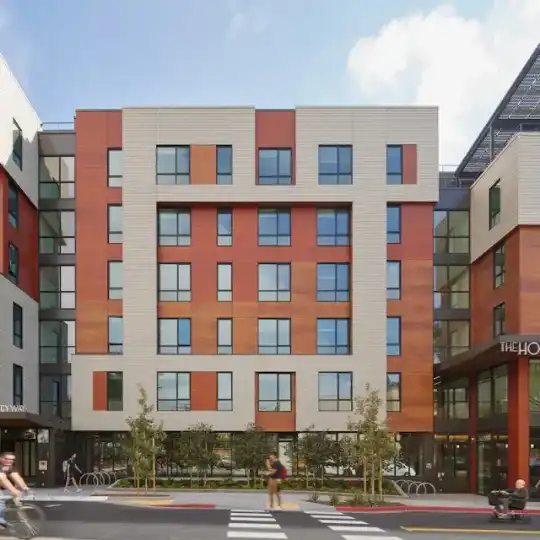
Berkeley Way and the Hope Center. Photo By Bruce DamonteIn a significant policy win with far-reaching implications for housing and climate equity, California lawmakers reauthorized the state’s cap-and-trade program—now renamed cap and invest. The move not only extends the state’s signature climate policy but also guarantees a dedicated stream of funding for affordable housing and sustainable transportation.The legislation ensures that a key program, Affordable Housing and Sustainable Communities (AHSC), will now receive $800 million annually through 2045. This long-term funding commitment provides stability for one of California’s most important housing and climate programs, which to date has invested $4 billion in affordable housing and transit and reduced greenhouse gas (GHG) emissions by 5.7 million metric tons.The Legislature passed the reauthorization through Assembly Bill 1207(link is external) and Senate Bill 840(link is external) on September 13, both of which Gov. Gavin Newsom signed into law on September 19. AB 1207 extends and makes minor adjustments to the cap-and-invest program mechanism, including topics such as free allowances, offsets, price ceilings, climate credits, program administration, and oversight. Meanwhile, SB 840 focuses exclusively on the funding allocation plan for dollars generated by the cap-and-invest auctions, also known as the Greenhouse Gas Reduction Fund (GGRF). Our team is proud to have worked with housing, transportation, and environmental partners up and down the state to advocate for AHSC funding, as well as for funding for two core sustainable transportation programs: the Transit and Intercity Rail Capital Program (TIRCP) and the Low Carbon Transit Operations Program (LCTOP), which will receive $400 and $200 million annually, respectively. Enterprise advocated fiercely for these programs, and our team was thrilled to stand with 50+ partners in support of this funding deal.The Deal DetailsThe final deal struck by the Legislature and the Governor makes several changes to how the cap-and-invest dollars will be spent, detailed in Senate Bill 840, including how funds will flow to the AHSC program. Previously, proceeds from cap-and-trade auctions were allocated to programs through the Greenhouse Gas Reduction Fund (GGRF), and AHSC received a standing 20 percent of the GGRF each year, which fluctuated with annual cap-and-trade proceeds. With this new agreement, AHSC will instead receive a flat amount of $800 million annually, subject to a detailed waterfall of funding. Specifically, beginning in the 2026–2027 fiscal year, the GGRF funds will be allocated in the following priority order.First, to fund a variety of prior legislative commitments related to fire prevention, manufacturing, and legislative oversight of the cap-and-invest program (estimated to be less than $250 million).Second, to provide $1 billion for high-speed rail.Third, to provide $1 billion for Legislature-determined priorities each year.Fourth, to provide specific dollar allocations for the following programs:$800 million for AHSC$400 million for TIRCP$250 million for community air protection programs$200 million for LCTOP$200 million for other fire prevention programs$130 million for safe drinking waterImageAHSC Impact, Rounds 1 - 8 SB 840 also states that if there is a year when the cap-and-trade proceeds are insufficient to cover the full suite of programs, prior legislative commitments, high-speed rail, and legislature priorities – items (a), (b), and (c) – will be funded first, and the other programs – programs under (d) – will receive proportional reductions, as determined by the Department of Finance. There are benefits and drawbacks to this funding structure as it pertains to the AHSC program. AHSC is now lower in the funding order and stands the risk of receiving less funding if the cap-and-invest auctions proceed poorly. Additionally, AHSC will not automatically benefit from a surge in cap-and-invest proceeds if the auctions perform especially well. However, AHSC has always been subject to fluctuations in auctions, and the $800 million allocation is more than AHSC has often received historically.Telling the Story of AHSCImageWinning substantial, sustained funding for AHSC was the result of persistent advocacy from Enterprise and a broad coalition of partners. The advocacy over the past nine months focused on telling the story of the AHSC program, highlighting its significant contributions to greenhouse gas emission reductions, and elevating its impacts on low-income communities across California. With a new cohort of legislators and staff, it was critical to educate members and their teams on the AHSC program, including its purpose, funding, and role in advancing the state’s climate, housing, and equity goals. Each year, Enterprise and the California Housing Partnership(link is external) release an annual AHSC impact report to quantify the program's impact. As discussed in the report, housing and transportation contribute around one-third of California’s GHG emissions. To help mitigate this, AHSC funds infill affordable housing development paired with sustainable transportation and climate investments.These transformative developments encourage residents to take advantage of accessible public transit and bike and pedestrian infrastructure, minimizing the use of cars and reducing greenhouse gas emissions in the process. This shift in development and land use patterns decreases reliance on driving while connecting residents to amenities, services, and economic opportunities. ImageAHSC Awards: Senate District 16 - Senator Melissa Hurtado: This district map shows the awarded AHSC developments within Senate District 16 in the San Joaquin Valley. One powerful advocacy tool developed this year was AHSC profiles for specific legislative districts. These profiles showcased the program’s local impacts and were crucial for educating staff and cultivating champions within the Legislature. Profiles that highlighted completed AHSC developments helped to ground our advocacy by making program investments more tangible.These district profiles also helped highlight how the program benefits communities across the state and is flexible enough to meet the needs of California’s diverse geography – from rural areas of the Central Valley to the urban centers of the Bay Area and Los Angeles. Every meeting, phone call, email, site visit, and social media post from our partners across the state contributed to our mission to make the AHSC program undeniable — and we achieved that goal. We are deeply grateful to our partners who worked with us tirelessly in this effort.What Comes NextAlongside our partners, we will continue to stay engaged in Sacramento as the cap-and-invest agreement moves forward. We will track any potential follow-up legislation and how the cap-and-invest auctions perform once the legislation goes into effect. We will also advocate for any additional funding for AHSC, should that be necessary. In the meantime, we join our partners in celebrating this important win for affordable housing, sustainable transportation, and our broader climate and equity goals for California.Related Topics:Policy Northern CaliforniaSouthern California
A Plan to Simplify Housing in California
The goal of the Governor's Reorganization Plan is to usher in structural changes needed in California to streamline funding programs and to improve coordination across housing and homelessness policies.On July 5, Governor Gavin Newsom’s Reorganization Plan(link is external) (GRP) went into effect with the goal of ushering in the structural changes needed in California to effectively address the affordable housing and homelessness crisis.The GRP divides the California Business, Consumer Services and Housing Agency into two agencies—the California Housing and Homelessness Agency (CHHA) and the Business and Consumer Services Agency—so that housing functions and authorities (such as multifamily affordable housing lending, and homelessness programming) are consolidated into a single agency and consumer services (such as business licensing and cannabis regulation) in another.For housing, the GRP attempts to streamline state housing funding programs, better coordinate homelessness and housing policy, and initiate the cultural changes needed to foster stronger partnerships with housing stakeholders—affordable housing developers, financial institutions, local housing agencies, advocates—to meet the state’s housing goals.“This bold plan shows we are being more aggressive in prioritizing change for the better,” Secretary of the Business, Consumer Services, and Housing Agency Tomiquia Moss said in a news release from the governor’s office(link is external). “This will enable us to better reach our goal of 2.5 million new homes by 2030, with one million of them being affordable housing.”Streamlining the ProcessA recent commentary co-authored by Enterprise Community Partners and the Terner Center for Housing Innovation at UC Berkeley(link is external) outlines how the current affordable housing finance system at the state level is challenged with fragmentation, inefficiency, and duplication because of the multiple agencies and departments awarding affordable housing funding and overseeing compliance.An affordable housing development typically requires four to six funding sources, with each source having unique and separate requirements for applications, scoring/evaluation, compliance/reporting, and inspection.An affordable housing developer often applies for several rounds of funding before all the needed funding is secured including tax credits and bonds awarded at the last step. After construction, the annual monitoring and compliance process is also duplicative with the state often requesting the same information for each funding source. According to the Terner Center, this fragmentation is costly and inefficient,(link is external) adding, on average, a four-month delay to construction and increasing the cost by $20,460 per unit in total development costs for every additional public funding source.Affordable housing developers, the primary users of the system, are seeking a more streamlined process where applying and securing funding for affordable housing developments can happen at once from the various state programs versus the drawn-out process described above. This means fully awarding affordable housing developments with all the needed state funding and then guaranteeing the award of tax credits and bonds. Affordable housing developers are also seeking to eliminate lengthy closings and redundant compliance reporting. The GRP begins to lay the groundwork for full consolidation of the state’s affordable housing finance system, which is necessary for a desired streamlined and predictable process. The GRP first addresses the fragmentation by restructuring the affordable housing finance system so it is more similar to other states where housing finance functions are consolidated into one or two agencies.“Many other states administer their affordable housing financing through their housing finance agency or have otherwise sought to consolidate and streamline their affordable housing funding system. California is somewhat unique in that the responsibility for awarding affordable housing is spread across two separate constitutional officers,” said Sarah Karlinsky, Director of Research and Policy for the Terner Center for Housing Innovation. Key Changes Under the PlanThe main housing components of the GRP outlined in the statute(link is external) include:California Housing and Homelessness Agency (CHHA)–The entities that sit within CHHA will include the Department of Housing and Community Development (HCD), the California Housing Finance Agency (CalHFA), the Civil Rights Department, the California Interagency Council on Homelessness, and the newly created Housing Development and Finance Committee.Housing Development and Finance Committee (HDFC)–The statute creates the HDFC to centralize affordable housing funding programs under the Governor’s purview, which are currently scattered across multiple departments. These programs include but are not limited to:Joe Serna, Jr. Farmworker Housing Grant ProgramMultifamily Housing ProgramInfill Incentive Grant ProgramInfill Infrastructure Grant ProgramTransit-Oriented Development Implementation ProgramHousing for a Healthy California ProgramVeterans Housing and Homeless Prevention ActAffordable Housing and Sustainable Communities (portion currently administered by HCD at the direction of the Strategic Growth Council). The executive director of HDFC reports to an executive committee that consists of the Secretary of CHHA, the HCD Director, and the executive director of CalHFA. The executive director can also appoint a general counsel who can assist with streamlining the awards process, particularly closings. The activities under HDFC’s authority include:Create a consolidated applicationfor multifamily affordable housing funding programs (this is currently underway through the AB 519 Affordable Housing Finance Working Group tasked with creating a “One Stop Shop” for funding programs)Create a process to fund awardsfor the multifamily affordable housing funding programs that includes accepting, reviewing, and scoring applications and providing recommendations on awardsEstablish timelinesfor the allocation of awards to streamline program funding, minimize delays, and facilitate simultaneous awards across state government if possibleDevelop an appeals processfor program qualification and scoring adjustmentsMonitor the administrationof affordable housing finance programs and make recommendations to improve alignment and administration of those programs including recommendations for CalHFAStreamline the compliance monitoringof affordable multifamily rental housing developments that are subject to a regulatory agreement with more than one state entityProduce an annual report(similar to the California Tax Credit Allocation Committee report) that includes the total amount of funding, the total number of units assisted by income level, and the amount of funding awarded to each projectStakeholder Outreach– To implement this restructure, the GRP calls for the outreach to the following stakeholders: Department of Housing and Community Development, the California Housing Finance Agency, TCAC, the California Debt Limit Allocation Committee, nonprofit affordable housing developers, for-profit affordable housing developers, local governments, and tribal governments.Alignment with other Agencies and State Funding– CHHA is directed to coordinate and align with the Transportation Agency and Health and Human Services Agency’s policies, programs, and funding to achieve the state’s housing priorities and maximize public resources. This may eventually include shifting programs with a strong housing component to CHHA. HDFC is specifically empowered to look across all state agencies to identify and align relevant funding opportunities that could fall under CHHA’s authority.The state budget includes $4.2 million in 2025-26 for the restructure and creation of CHHA(link is external) and a commitment of $6.4 million in 2026-27 and $6.2 million in 2027-28. The restructure will go into effect on July 1, 2026.Progress Toward a Simpler SystemIt is important to note that a critical piece to the state’s affordable housing finance system that is not included in the GRP is the consolidation of tax credits and bonds. Tax credits and bonds are issued by the state treasurer and not within the GRP restructure since those authorities are outside of the governor’s powers. Despite not having tax credits and bonds, the GRP will still greatly improve the system in terms of transparency and efficiency while reducing duplication. The next step is to figure out how to incorporate tax credits and bonds into a streamlined awards process.The centralization of the state’s affordable housing funding programs with the oversight of these programs by the Housing Development and Finance Committee begins to lay the ground for full consolidation of the state’s affordable housing finance system as well as brings forth the change management and staff retraining needed for new systems. Most importantly, the restructure will foster partnerships with housing stakeholders who share the common goal of ending housing insecurity and homelessness for everyone in California. Earlier this spring, Enterprise played an active role in advocating for the GRP by organizing and participating in a range of efforts—including focus groups, coalition work, and public testimony before the Little Hoover Commission and Assembly hearings. As implementation moves forward, we remain committed to partnering with the state and housing stakeholders to help shape an effective and streamlined affordable housing finance system for California.Related Topics:Policy Northern CaliforniaSouthern California

A Lifetime of Building Community in New Orleans
Emelda Paul was 23 when she moved to a new apartment just a few blocks and “over the tracks” from her childhood home. She had three young daughters, and Lafitte — the public housing complex in New Orleans’ storied Tremé neighborhood — felt like the perfect place to raise a family. Nearly 70 years later, Paul calls herself a lifetime Lafitte resident, even after the bricks of the original buildings have been replaced with colorful rows of townhomes built to mirror New Orleans architectural style to become Faubourg Lafitte. In August of 2005, Hurricane Katrina upended her life and sent her to Arizona temporarily, but the story of Lafitte and the arc of Paul’s life have continued to intersect to this day. Even after the original Lafitte was demolished and redeveloped, she moved back and continued to play an active role in the community.“People from New Orleans are resilient. We bounce back,” Paul said in a recent interview. “We fall down, but we get up.”Early YearsEmelda Paul was born 91 years ago, not far from her current apartment at Faubourg Lafitte in the Treme neighborhood. Not long after, the first residents moved into newly constructed public housing known as “Lafitte Place.” ImageFamily photos line the walls of Paul's Faubourg Lafitte apartmentPaul and her grandmother had moved to the St. Bernard Housing, where she lived until she started a family of her own. “When I heard I could apply to live at Lafitte, I did just that,” Paul said.Raising a FamilyAt 23, Paul was overjoyed after moving to Lafitte with her three young daughters. “We lived right here on Roman Street in one of the original buildings, and we loved it,” Paul said. “In the early days at Lafitte, we all worked together.”Paul says she and her family spent so much at time at the park (now the Greenway), that people called it “Miss Emelda Park.” She tended to her garden, sat on her porch to socialize with neighbors, and jumped in to help with neighborhood issues whenever she could.ImagePaul returned to the Tremé neighborhood after Katrina“My family used the park at Lafitte all the time,” she said. That continued even after she became a grandmother. “Whenever the lights would go out, my grandson’s friends would say ‘go tell Miss Mel the lights are out in the park.’ In other words, I was the type of person to make sure things in the neighborhood were working.”Up until Hurricane Katrina, 2,000 residents including 800 children lived at Lafitte. Now, construction has begun on the last redevelopment phase.Katrina Hits“I was sitting in the kitchen and my daughter and her friends were out on the porch. The water was rising, but I said, ‘we’re not going anywhere.’” Soon though, cars were floating by outside Paul’s window, and she realized it was time to go. She and her family walked along the Interstate, eventually ending up at her other daughter’s home, and then the airport.ImageLeaving New OrleansPaul flew to Arizona, where she stayed with a granddaughter who lived there. “We were all taken out of our comfort zones and living in strange places where they called us ‘refugees.’ “She ended up spending two years in Arizona, joining a local choir, attending city council meetings, and “getting involved in almost everything,” including organizing a local Mardi Gras celebration. Still, Arizona didn’t feel like home and Paul and her family made plans to return to New Orleans.Demolition of Lafitte While Paul was away, she was upset to find out that the Lafitte was sealed up and slated for demolition. She recognizes though that even before Katrina, the Lafitte buildings had fallen into disrepair. “Maybe it was time for us to move because those bricks were deteriorating and there were a lot of things that needed to be repaired. And they were being neglected.” Once Paul had packed up a U-Haul and ventured home, she moved into a senior community on the West Bank in New Orleans.Redevelopment and rebuildingMy name is Emelda Paul. I was a 30-year resident of Lafitte and I am the president of the Lafitte Residents Council. I am here because I want our people, our families to return home to New Orleans. testimony before Congress in September of 2007After HUD and HANO announced the decision to demolish the “Big Four” New Orleans public housing developments, the agencies selected Enterprise and Providence (L&M Development was eventually added to the team) to redevelop Lafitte. Paul was one resident who spoke out in favor of the plan to rebuild. “I had to do a lot of testifying and a lot of talking,” including a trip to Washington, D. C. to testify before Congress on the need for redevelopment and improvements in the new Lafitte.Enterprise and Providence agreed to three core commitments as they began the redevelopment process: Listening to community voices during the redevelopment process, giving the 865 former Lafitte families and individuals the opportunity and first priority to return home, building 900 subsidized, affordable homes as part of a mixed-income community on and around the site.Back at HomeOn a recent warm and steamy August day, Emelda Paul shared her story at an event where local leaders and community members gathered to celebrate the groundbreaking of the last redevelopment phase on the footprint of the former public housing site at Faubourg Lafitte. This phase will continue to advance the development of the former Lafitte public housing site, a process that began 18 years ago.ImagePaul loves her Faubourg Lafitte apartment where she has lived for over a decade now, a place that is filled with family photos and a lifetime of mementos. “I can look right out on the Mardi Gras from here,” she said. “The only thing I miss is the porch where I used to spend so much time.”At 91, Paul is still active in the community, volunteers at a local hospital, and is in regular contact with management when she sees any problems. “I get along with management and with residents.” There have been some recent disagreements; a younger couple nearby plays loud music and some residents have complained. “I say they can play their music. Look, I was young once too,” she said. “So, I let them play their music and I close my door and it’s fine. What’s important is that we still look out for each other.”Related Topics:Gulf Coast

From Recovery to Resilience in Puerto Rico: Five Key Takeaways
The people of Puerto Rico have endured significant losses in recent years due to climate change- induced disasters, including Hurricanes Maria and Irma. From frequent storms that accelerate flooding to heat waves that make everyday tasks challenging, stakeholders across Puerto Rico continue to pursue innovative strategies to rebuild, recover, and ensure that the lowest-income households are not left behind in the aftermath of extreme weather events.Puerto Rico’s commitment to community-driven solutions was palpable when Enterprise, LISC, and the Federal Reserve Bank of New York capped off 2024 with an event in San Juan that gathered housing and climate experts working on both the Island and the mainland.The event, “Recovery to Resilience: Collaborative Solutions for a Sustainable Puerto Rico,” highlighted strategies and initiatives from the book What’s Possible: Investing NOW for Prosperous, Sustainable Neighborhoods, as well as programs and innovations led by the Puerto Rico Department of Housing, HUD, Acacia Network, Marvel Architects, Inclusiv, Barrio Electrico, Center for a New Economy, and other organizations.ImageEnterprise Advisors' Erika Ruiz (r) and Enterprise Solutions President Jacqueline Waggoner open the eventEnterprise’s collaboration with housing and community leaders in Puerto Rico dates back to 2001, when we helped finance 158 affordable homes through the Low-Income Housing Tax Credit. Since 2012, Enterprise Advisors has provided technical assistance to local partners and advanced funding opportunities on the Island, further expanding our work after the 2017 hurricanes. This effort, led by Erika Ruiz, senior director at Enterprise Advisors, has developed trust and fostered partnerships with the goal of helping build resilient and equitable communities.The event featured panel discussions and presentations as well as a fireside chat between Enterprise CEO and President Shaun Donovan and LISC President and CEO Michael T. Pugh, moderated by Madeline Fraser Cook, SVP of Community Building and Resilient Solutions at LISC. Their conversation explored the impact of the What’s Possible book and the housing and economic development work needed to build a more sustainable Puerto Rico.“People understand that their homes and their communities are changing, and that we must change along with that,” said Donovan. “So this is a moment of opportunity for this book and the work that it represents to really change practices across the nation and across the globe.” Like Donovan, Pugh emphasized the importance of prioritizing communities with lower incomes: “We've got to be responsive to the communities that will be hit the hardest and have the slowest recovery, in order to help ensure they have a real chance at navigating through this difficult time.”ImagePuerto Rico Disaster Recovery Deputy Secretary Maretzie Díaz (l) shares the stage with HUD Disaster Recovery Coordinating Officer Laura Rivera-CarrionWhile the event speakers highlighted a range of topics, they underscored five common themes key to building on resilience and recovery efforts in Puerto Rico.1. CollaborationPartnerships across nonprofits, government agencies, banks/community-based lenders, and private organizations are necessary for strengthening and preparing Puerto Rico for future climate disasters. Panelists highlighted the representation of organizations and entities from across the Island at the event as an example of the range of sectors that must unite to help Puerto Rico fully recover from the devastation of the most recent hurricanes, as well as to ensure that households across the Island are prepared for future extreme weather events. Increased collaboration will allow every organization to bring their strengths to the table, share best practices, and work together to address the climate challenges.ImageFederal Reserve Bank of New York's Javier Silva and LISC's Madeline Fraser Cook2. PreparationSpeakers emphasized the critical need for Puerto Rico to enhance its preparedness for future climate disasters. Preparation for the growing frequency and intensity of extreme weather events – particularly those exacerbating flooding – requires public education to raise awareness of risks, proactive planning to identify vulnerable critical infrastructure like communications and electricity systems, and fortifying homes and structures across the Island to withstand future disasters.3. Climate AdaptabilityGiven the unpredictable nature of climate disasters, adaptability is essential for housing and climate stakeholders in Puerto Rico to effectively address emerging challenges and build resilience. It is crucial for municipalities and government agencies across the Island to prepare community members for climate hazards and reduce vulnerability by implementing local level changes that ease existing impacts of climate disasters and manage the risks of disasters to come.ImageMichelle Sugden-Castillo (l) moderates panel on Trauma-Informed Design with architect Jonathan Marvel; Dharma Cortés, Harvard; and Acacia Network's Lymaris Albors4. People-Centered Resilience Planning Prioritizing families who are harmed and displaced when disaster strikes in Puerto Rico was a common thread across all event panels and presentations. Panelists discussed involving community members in the development of climate resilience and recovery plans, as well as offering them solutions that go beyond replacing homes with more resilient structures and also help people heal from the trauma of surviving a disaster.5. Financial InvestmentsWithout public and private investments, innovative solutions, necessary preparation, adaptability, and other resilience building efforts would be impossible. Speakers throughout the event discussed the need for increased funding through the Inflation Reduction Act, Community Development Block Grant – Disaster Recovery (CDBG-DR) allocations, and other sources of federal funds committed to climate resilience. Additionally, panelists highlighted the impact of community development credit unions, or cooperativas, and their ability to drive investments directly to the individuals and families most impacted by disasters.Find more inspiring examples of practical climate and community development solutions that create an equitable path to building strong and resilient communities inWhat’s Possible.Related Topics:ResilienceClimate Risk ReductionAdvisory Services and Technical AssistanceU.S. Caribbean
What Will the ‘One Big Beautiful Bill’ Mean for Affordable Housing, Communities?
It’s hard to find someone — even outside Washington, D.C. — who hasn’t heard about the One Big Beautiful Bill Act (OBBBA, H.R. 1(link is external)), which President Trump signed(link is external) into law on July 4. The sweeping legislation, one of the most consequential in decades, narrowly made its way through Congress and contains a wide range of tax changes and federal funding cuts. As advocates for affordable housing and community development, Enterprise is carefully analyzing the final provisions to assess their impact on the communities we serve.Most of the public attention has focused on the bill’s steep cuts to Medicaid, but OBBBA also includes historic investments in key tax credits long championed by Enterprise and our partners — including the Low-Income Housing Tax Credit (Housing Credit), New Markets Tax Credit (NMTC), and Opportunity Zones (OZs). At the same time, the bill deals a significant blow to climate policy, sharply phasing out clean energy tax credits from the Inflation Reduction Act (IRA) and repealing the Greenhouse Gas Reduction Fund (GGRF), despite strong bipartisan support for their preservation.While the legislation contains many provisions we oppose, there are meaningful wins that will support the development of affordable housing and direct critical investments to underserved communities. These include the largest expansion of the Housing Credit since 2000 and the permanent extension of the NMTC after years of short-term renewals and expirations.The path to enactment was far from smooth. The House passed the initial version of OBBBA by a razor-thin margin of 215–214 just before Memorial Day. As expected, the Senate made substantial changes to secure enough Republican votes without losing the House majority’s support. The Senate ultimately passed its version 51–50, with Vice President J.D. Vance casting the tie-breaking vote after Republicans Susan Collins (Maine), Rand Paul (Ky.), and Thom Tillis (N.C.) joined all Democrats in opposition. Despite concerns among some House Republicans, the chamber approved the revised Senate bill 218–214 on July 3, with Reps. Thomas Massie (Ky.-4) and Brian Fitzpatrick (Pa.-1) voting no alongside all Democrats.Below, we break down what the OBBBA means for several of Enterprise’s top policy priorities.Low-Income Housing Tax Credit: A Historic Boost for Affordable Housing ProductionThe Housing Credit is the nation’s most important tool for building and preserving affordable rental homes. Since it was created in 1986, it has helped finance over 4 million homes for low-income families, seniors, and people with disabilities.After years of bipartisan advocacy, two major provisions from the Affordable Housing Credit Improvement Act(link is external) were included in the final reconciliation package, delivering the most significant expansion of the Housing Credit in over two decades:A permanent 12% increase in Housing Credit allocations, which helps states finance more affordable rental housing projects every yearA permanent reduction in the “50% test” to 25%, which will make it much easier to finance affordable homes using tax-exempt bonds, unlocking more projects that previously didn’t pencil outAccording to estimates(link is external) from Novogradac, these changes could result in the financing of 1.22 million additional affordable rental homes over the next 10 years. That’s a game-changer for our field—and a huge win for communities nationwide.While these victories are historic, the final law didn’t include several other key proposals from the House bill, like temporary boosts in support for affordable housing in rural and tribal communities. We will continue working to advance those provisions(link is external) and others from the AHCIA.The legislation also includes indirect wins for affordable housing finance. For example, it makes 100% bonus depreciation permanent, which may improve investor interest in Housing Credit projects. Importantly, the final law does not include a proposed tax provision that would have disrupted international investment in affordable housing projects—a relief for many developers and investors.New Markets Tax Credit: Permanently Supporting Community DevelopmentAnother major win: the reconciliation bill makes the NMTC permanent. For more than 20 years, this credit has fueled economic development in communities that have historically lacked investment—generating more than $143 billion in total investment and creating over 1.2 million jobs.Until now, the NMTC has been reauthorized every few years—occasionally with lapses and retroactive legislative action—creating uncertainty for the communities and investors who rely on it. Permanency means we can plan for the long term. The NMTC Coalition projects that this change will lead to $100 billion in new investment and over 400,000 permanent full-time jobs in underserved communities.While the bill locks in NMTC’s $5 billion annual authorization, it doesn’t include two long-sought improvements: indexing the credit to inflation and allowing investors to use it against alternative minimum tax (AMT) liability. These are priorities we’ll continue to push for as part of the New Markets Tax Credit Extension Act(link is external).Opportunity Zones: Permanency and Rural Focus, But More Work AheadThe Opportunity Zones (OZ) incentive, created in 2017 to spur investment in underserved areas, is now a permanent part of the tax code. The OBBBA also included provisions that deepen targeting and promote rural equity.To help ensure the incentive reaches the communities that need it most, the bill tightens eligibility by lowering the income threshold for designation: now only neighborhoods with incomes at or below 70% of the area median will qualify (down from 80%). It also creates a new category of Rural Opportunity Zones and establishes Rural Qualified Opportunity Funds with enhanced benefits. For example:Investors in OZs still get a 10% step-up in tax basis if they hold their investments for five years.In rural OZs, the step-up is even greater—30% for those same five-year investments.Rural OZ projects also benefit from a lower “substantial improvement” requirement—50% rather than the previous 100%.Another important advancement: the bill includes data collection, reporting, and transparency requirements for Opportunity Zones, along with $15 million for the IRS to implement them. This is a step toward more accountability and better targeting of investments.However, we’re disappointed that many key proposals to better align OZs with affordable housing, NMTC, and community development financial institutions (CDFIs) were not included. Enterprise has long raised concerns that OZs have not effectively delivered for affordable housing, and most of our recommendations to fix that were left out. There are industry efforts to explore other regulatory and administrative actions that could improve the use of OZs in producing and preserving affordable housing.Still, the transparency provisions and permanency are meaningful steps forward, and we will continue advocating for improvements in all communities.Energy Efficiency and RenewablesIn recent years, many LIHTC developers integrated IRA energy credits into their capital stacks. This allowed developers to invest in more comprehensive energy efficiency and renewable energy measures, leading to long term energy savings for both building owners and residents. Under the OBBBA, most of these credits will be phased out within a year.Developers have already begun to revise scopes and seek gap funding for projects in their pipelines that relied on the New Energy Efficient Home (45L) or the Energy Efficient Commercial Buildings Deduction (179D) credits. In the case of 45L, buildings will have to be built, sold/leased, and Energy Star certified by July 2026. For 179D, projects would have to begin construction by July 2026. While the Investment Tax Credit (48E) for solar and wind also faces a much earlier phaseout, the runway is a bit longer. To qualify for the credit, projects must begin construction by July 4, 2026 and placed-in-service by the end of 2027. Beginning in 2026, there are also additional requirements related to “Foreign Entity of Concern” (FEOC) restrictions. Currently, the definition of “commence construction” requires at least 5% of project costs to be expended, but a recent Executive Order(link is external) suggests that may be revised.The repeal of the underlying statute and rescission of unobligated funds for the Greenhouse Gas Reduction Fund (GGRF) is another provision that concerns affordable housing developers. Many developers are primed to apply for and integrate this critical funding into projects to ensure energy affordability and healthy living for their residents. Enterprise is part of the Power Forward Communities(link is external) coalition which received a GGRF award. While 99%+ of GGRF funds are officially obligated, the program is currently tied up in litigation. We expect that the future of the program and access to funds will be determined by the courts. Amendments FiledOver 500 amendments to the bill were filed in the Senate. The vast majority of them were filed by Democrats, and either failed or were not even voted on. Sen. Jacky Rosen (D-Nev.), who is a close ally and frequent partner, offered an amendment to include the 30% rural basis boost, but it did not receive a vote. We worked with Senate Republicans, including Sen. Lisa Murkowski (R-Alaska), to broaden support for key clean energy tax credits(link is external), emphasizing the impact of 45L and the ICT on LIHTC deals. The same is true for the Greenhouse Gas Reduction Fund. While there was support, these efforts did not prevail.Overall, this bill is a big step forward for low-income communities, but our work is not done. The bill is not related to FY26 appropriations, which funds and authorizes appropriated programs such as HOME, CDBG, and Section 4. According to the National Council of State Housing Agencies, an average of 16.9% of Housing Credit units receive HOME funding, and an average of 51% of HOME units receive Housing Credit funding.Without robust funding of the HOME program, the Housing Credit provisions in the reconciliation bill will be inefficient at increasing the housing supply. Our advocacy team remains hard at work in the FY26 appropriations process. We look forward to seeing what legislative and regulatory opportunities can make the expansions of the Housing Credit and NMTC, as well as the expansion of OZs, strengthen affordable housing production and preservation.Related Topics:Low-Income Housing Tax CreditNew Markets Tax CreditPolicy
House Advances FY26 Housing and Community Development Spending Proposals
The House Appropriations Committee approved the HUD fiscal year 2026 (FY26) spending bill(link is external) on July 17, rejecting many of the drastic cuts and proposals to consolidate rental assistance and homelessness programs that were included in the President’s budget request, but still including cuts to key housing and community development programs. The House Appropriations Subcommittee for Transportation, Housing and Urban Development, and Related Agencies (THUD) proposed $67.75 billion for HUD in net discretionary funding, $939 million below what agency currently is funded at for FY25 under the full year Continuing Resolution. Many of Enterprise’s priorities did receive level funding, such as the Community Development Block Grant (CDBG), the Section 4 Capacity Building for Affordable Housing and Community Development programs, and Native American Programs. According to House Republicans(link is external), the amount provided for rental assistance programs would be sufficient for renewing all existing contracts. However, House Democrats(link is external) believe that the amounts provided could lead to the eviction of thousands of low-income families. This proposal would also eliminate programs like the HOME Investment Partnership Program (HOME). The Committee report (link is external)cites funding that remains available through the HOME-American Rescue Plan (HOME-ARP) program as the reason to not provide funding for the core HOME program. HOME-ARP is not a substitute for the core HOME program as they serve different purposes and populations. The core HOME program is expressly designed to help state and local governments create affordable housing for low-income households and serves as an essential gap filler for many transactions involving the Low-Income Housing Tax Credit (Housing Credit). A breakdown of the affordable housing and community development spending levels can be found in our Fiscal Year 2026 Budget Request and Appropriations Chart. Here’s where funding for some of HUD’s key programs stands compared to last year’s budget: $35.3 billion for Tenant-Based Rental Assistance (Housing Choice Vouchers), a $877 million (2%) decrease from FY25. $17.1 million for Project-Based Rental Assistance, a $637 million increase (4%) from FY25. $7.3 billion for Public Housing Fund, a $1.5 billion (17%) decrease from FY25. This total includes $4.98 billion for the operating fund, $500 million (9%) below FY25, and $2.29 billion for the capital fund, $913 million (28%) below FY25. $950 million for Section 202 Housing for the Elderly, an $18 million (2%) increase from FY25. $261.8 million for Section 811 Housing for Persons with Disabilities, $5 million (2%) above FY25 enacted. $5.6 billion for the Community Development Fund (CDF). Of this, $3.3 billion is allocated for the CDBG, equal to FY25. An additional $2.3 billion in CDF is for earmarks and congressionally directed spending projects. The House proposal does not include funding for the Pathways to Removing Obstacles (PRO) Housing grant program. $4.16 billion for Homeless Assistance Grants, $107 million (3%) above FY25 enacted. This includes $290 million for Emergency Solutions Grants (ESG) and $3.9 billion for Continuum of Care (CoC), rejecting the administration’s proposal to consolidate the Housing Opportunities for Persons with Aids, ESG, and CoC programs. $1.34 billion for Native American Programs, level with FY25. This includes $1.11 billion for the Native American Housing Block Grant formula program and $150 million for the competitive program, both level with FY25.$125 million for the Family Self-Sufficiency (FSS) program, $15.5 million (11%) below FY25. $29.5 million for the Fair Housing Activities, a $56.8 million (66%) decrease from FY25. The proposal maintains the funding for the Fair Housing Assistance Program ($26 million), National Fair Housing Training Academy ($1.5 million), and the Limited English proficiency initiative ($1 million) but would eliminate funding for the Fair Housing Initiatives Program (funded at $56 million in FY25). $42 million for the Section 4 program, level with FY25. Elimination of ProgramsThe House THUD proposes to eliminate the following programs key housing and community development programs: HOME Investment Partnership Program, which was funded at $1.25 billion in FY25.Choice Neighborhoods Initiative, which was funded at $75 million in FY25.Preservation and Reinvestment Initiative for Community Enhancement (PRICE) program, funded at $10 million in FY25. U.S. Department of Agriculture (USDA)On June 23, the House Appropriations Committee approved(link is external) the proposed spending levels for rural housing programs(link is external) under the USDA Rural Housing Service. Below is an overview of the spending proposal:$1.715 billion for Section 521 Rental Assistance, $73 million (4%) above FY25.$880 million for the Section 502 Single Family Housing Direct Loan Program, $164 million (30%) above FY25. It also provides $6 million for the Tribal Direct Relending Pilot, $1.4 million above FY25. $400 million for the USDA Section 538 guaranteed loans to preserve and rehabilitate USDA rental housing, level with FY25.$60 million for the Section 515 Rural Rental Housing program, $13 million (28%) above FY25.$30 million for the Multi-family Housing Preservation and Revitalization Program, $16 million (35%) below FY25. TreasuryThe Financial Services and General Government (FSGG) subcommittee(link is external), which provides funding for the Treasury, released its proposal on July 20 and provided $23.3 billion for the agencies under its jurisdiction. This includes:$276 million for the CDFI Fund, $47 million (15%) below FY25 levels. The bill does not include the administration’s proposal to eliminate all CDFI Fund financial assistance programs, nor does it include the proposed $100 million program targeted to rural areas. Enterprise opposes cuts to housing and community development programs and will continue to advocate for Congress to provide robust funding levels for affordable housing and community development. To stay up to date with critical policy news,subscribeto our bi-monthly Capitol Express newsletter. Related Topics:Policy

Denver Regional TOD Fund Expands Affordable Homes in Littleton
Rendering by KEPHART architectural design and planning firm. Courtesy of South Metro Housing Options.The housing authority for the City of Littleton, Colorado, is embarking on its third development in as many years, thanks in part to the Denver Regional Transit-Oriented Development (TOD) Fund. A 73-unit, mixed-income community along the bustling West Littleton Boulevard corridor, Starlight Apartments will welcome residents in 2027, pending a Low-Income Housing Tax Credit award.The loan to South Metro Housing Options(link is external) (SMHO) is the latest investment from the TOD Fund, which launched in Denver more than 15 years ago and now serves the entire seven-county metro region. To date, the Fund has provided $72 million in below-market acquisition financing, helping quickly secure high-opportunity sites along transit corridors for affordable and mixed-income housing.Managed by Enterprise’s Community Development Financial Institution (CDFI), the Enterprise Community Loan Fund, the TOD Fund is a partnership among state and local housing agencies, philanthropic institutions, CDFIs, and major banks. This marks the Fund’s third renewal for an additional five-year term – a testament to its success among funding partners and borrowers.“The TOD Fund allows developers to acquire strategic sites near transit stops and allows for a longer hold period than a typical acquisition loan, all while offering a low, competitive rate,” Joseph Mattingly, senior loan officer, said. “The TOD Fund has helped developers acquire 29 sites since 2008, which has resulted in the preservation or creation of over 2,900 affordable homes for metro-Denver residents.”2,900affordable homes created or preserved29loans made$72Mtotal TOD Fund loans deployed$761Min leveraged financing from public and private partnersLand Acquisition in a Tight MarketFor SMHO, the TOD Fund provided a $1.2 million loan to purchase a vacant lot, which will become affordable apartment homes serving households earning 30- to 70-percent of the area median income. The flexibility of this financing also allowed the housing authority to negotiate with a neighboring family trust, ultimately assembling a larger site that expanded the project from 40–50 units to 73.Land availability is one of the steepest barriers to affordable housing in Denver’s inner-ring suburbs. Littleton, a community of about 50,000 residents, offers few parcels suitable for development, which creates intense competition from market-rate buyers. This particular property was in high demand, since it is in a walkable, transit-rich corridor that the city is actively planning to revitalize.“The TOD Fund allowed us to preserve our cash, compete for additional land, and move forward with a stronger, more ambitious project than we could have done otherwise,” said Sarah Buhr, SMHO’s real estate development manager.The development has already secured commitments of $1.46 million from the State of Colorado, and $17 million in private activity bond cap, in addition to private equity. Local support has been strong, with Arapahoe County already committing over $580,000 to the project, and the City of Littleton has provided a letter of intent to provide up to $800,000 in funding.Like many small housing authorities, SMHO historically focused on administering vouchers and public housing. But with limited federal reinvestment in public housing and rising local housing costs, the agency made the strategic decision to pursue development directly.“Administering vouchers alone doesn’t cover costs,” Buhr explained. “Development is the way we can reinvest in the community and provide new housing opportunities.”Deep Affordability in a 4% DealThe Starlight Apartments demonstrates how income-averaging tax credits can stretch impact for residents. Properties can now meet affordability requirements if at least 40% of units average 60% of AMI or less, with unit designations set in 10% increments between 20% and 80%—expanding tax credit flexibility beyond the original 20 at 50 and 40 at 60 AMI tests.Of the 73 homes:11 will serve households at 30% AMI, far deeper than most 4% credit deals can supportThe balance of the units (62) will serve workforce households earning up to 70% AMI, with a mix of studios, one- and two-bedroom apartmentsSMHO will dedicate eight project-based vouchers to youth aging out of foster care, with supportive services provided through local partners.“We’re proud of this model,” Buhr said. “Higher-income units help offset those deeply affordable rents, and in the end, everyone is just another resident of the community.”ImageRendering by KEPHART architectural design and planning firm. Courtesy of South Metro Housing Options.A Modern Design Rooted in PlaceThe Starlight Apartments design incorporates mid-century modern elements, reflecting the style of the ‘Mid-Mod Mile’ along West Littleton Boulevard. SMHO designed the four-story, 73-unit community not only to fit the neighborhood’s character, but also to serve the people who keep it vibrant.“The West Littleton Boulevard corridor is home to local businesses, retail, grocery stores, and transit options, which offers teachers, retail workers, and others the opportunity to live close to jobs and amenities,” Chase Seebohar, SMHO housing developer, said.Since its inception, the Denver Regional TOD has helped create homes that keep people connected to their communities—developments like the Starlight Apartments show what’s possible.“We have some great partners in the TOD Fund that have continued their investments for over 15 years,” Mattingly said. “With the renewal, we can continue to help developer partners acquire sites near transit to create and preserve more affordable units in the Denver-metro area for many years to come.”TOD Fund partners include the Colorado Housing Finance Authority, the State Division of Housing, the City and County of Denver’s Department of Housing Stability (HOST), Mercy Community Capital, Impact Development Fund, Denver Foundation, Gates Family Foundation, Rose Community Foundation, First Bank, U.S. Bank, and Wells Fargo.Related Topics:Community Development Financial InstitutionLow-Income Housing Tax CreditPolicy Rocky Mountain

Senate Advances FY26 Housing and Community Development Spending Proposals
The Senate Appropriations Committee approved(link is external) its HUD fiscal year 2026 (FY26) spending bill proposal(link is external) on July 24, rejecting many of the drastic cuts and proposals to consolidate rental assistance and homelessness programs that were included in the President’s Budget Request, and avoiding many of the cuts that were proposed in the House bill. The Senate Appropriations Subcommittee for Transportation, Housing and Urban Development, and Related Agencies (THUD) proposed $73.3 billion for HUD in net discretionary funding, $3.1 billion above what the agency currently is funded at for FY25 under the full year Continuing Resolution.In addition to rejecting the administration’s proposals to consolidate rental assistance programs into a state-based rental assistance program and merging the Homeless Assistance Grants and the Housing Opportunities for Persons with Aids programs to the Emergency Solutions Grant programs — the Senate proposal provides overall higher levels for the rental assistance programs compared to the House proposal. The bill does also not include any language that would provide additional flexibility for Public Housing Agencies to enact time limits or work requirements for rental assistance programs. Overall, the legislation provides higher amounts for housing and community development programs including providing level funding for the HOME Investment partnership program, which was proposed to be eliminated in the President’s Budget Request and House proposal. The bill would provide a slight reduction to the Community Development Block Grant program but does include funding for the PRO Housing Grant program. A breakdown of the affordable housing and community development spending levels can be found in our Fiscal Year 2026 Budget Request and Appropriations Chart. Here’s where funding for some of HUD’s key programs stands compared to last year’s budget:$37.4 billion for Tenant-Based Rental Assistance (Housing Choice Vouchers), a $1.3 billion (3%) increase from FY25 and $2.1 billion (6%) above the House.$17.8 billion for Project-Based Rental Assistance, a $1.3 billion increase (8%) from FY25 and $677 million (4%) above the House.$8.4 billion for Public Housing Fund, a $400 million (5%) decrease from FY25. This total includes $4.87 billion for the operating fund, $602 million (11%) below FY25, and $3.2 billion for the capital fund, level with FY25. $972 million for Section 202 Housing for the Elderly, a $40 million (4%) increase from FY25 and $12 million (2%) above the House.$265 million for Section 811 Housing for Persons with Disabilities, $8 million (3%) above FY25 and $3 million (1%) above the House.$4.5 billion for the Community Development Fund (CDF). Of this, $3.1 billion is allocated for the CDBG, which is $200 million (6%) less than what was provided in FY25 and the House proposal. An additional $1.3 billion in CDF is for earmarks and congressionally directed spending projects. The Senate also includes $60 million for the PRO Housing Grants program, $40 million (40%) less than what was provided in FY25. The House no funding for the PRO Housing Grants programs$1.25 billion for the HOME Investment Partnership Program, level with FY25. The House proposed to eliminate funding for the HOME program.$4.51 billion for Homeless Assistance Grants, $450 million (11%) above FY25 enacted. This includes $290 million for Emergency Solutions Grants (ESG) and $4 billion for Continuum of Care (CoC), rejecting the administration’s proposal to consolidate the Housing Opportunities for Persons with Aids, ESG, and CoC programs.$1.35 billion for Native American Programs, level with FY25. This includes $1.11 billion for the Native American Housing Block Grant formula program and $100 million for the competitive program, both level with FY25.$156 million for the Family Self-Sufficiency (FSS) program, $15.5 million (11%) above FY25 and $31 million (25%) above the House.$86.4 million for the Fair Housing Activities, level with FY25 and $56 million (193%) above the House. The proposal maintains the funding for the Fair Housing Assistance Program ($26 million), National Fair Housing Training Academy ($1.5 million), and the Limited English proficiency initiative ($1 million). The bill also maintains funding for the Fair Housing Initiatives Program (FHIP) at $56 million, which was proposed to be eliminated in the President’s Budget Request and House proposal.$49 million for the Section 4 program, a $7 million (17%) increase from FY25 and the House.$40 million for the Choice Neighborhoods Initiative, a $35 million (47%) decrease from FY25. The House proposed to eliminate funding for this program.$10 million for the Preservation and Reinvestment Initiative for Community Enhancement (PRICE) program, level with FY25. The House proposed to eliminate funding for this program.U.S. Department of Agriculture (USDA)On July 10, the Senate Appropriations Committee unanimously approved(link is external) the proposed spending levels for rural housing programs(link is external) under the USDA Rural Housing Service. Below is an overview of the spending proposal:$1.715 billion for Section 521 Rental Assistance, $73 million (4%) above FY25 and equal to the House. This bill continues to provide authority for its mortgage decoupling pilot, increasing the number of eligible units from 1,000 units to 5,000 units.$1 billion for the Section 502 Single Family Housing Direct Loan Program, $284 million (40%) above FY25 and $120 million (14%) above the House. It also provides $5 million for the Tribal Direct Relending Pilot, $367,000 above FY25 and $1 million below the House.$400 million for the USDA Section 538 guaranteed loans to preserve and rehabilitate USDA rental housing, level with FY25 and the House.$50 million for the Section 515 Rural Rental Housing program, $3 million (6%) above FY25 and $10 million (17%) below the House.$34 million for the Multi-family Housing Preservation and Revitalization Program, $12 million (26%) below FY25 and $4 million (13%) above the House.Congress is not expected to pass any of the 12 appropriations bills before the September 30 deadline. It is expected that there will be one or more continuing resolutions to extend funding to avoid a government shutdown. In the recent fiscal years, the first continuing resolution typically went well past Thanksgiving and lasted into the December holidays. Enterprise will continue to advocate to both chambers for the highest possible funding levels for affordable housing and community development programs.To stay up to date with critical housing policy news,subscribeto our bi-monthly Capitol Express newsletter. Related Topics:Policy
The Heart of Detroit: Powering Change Block by Block
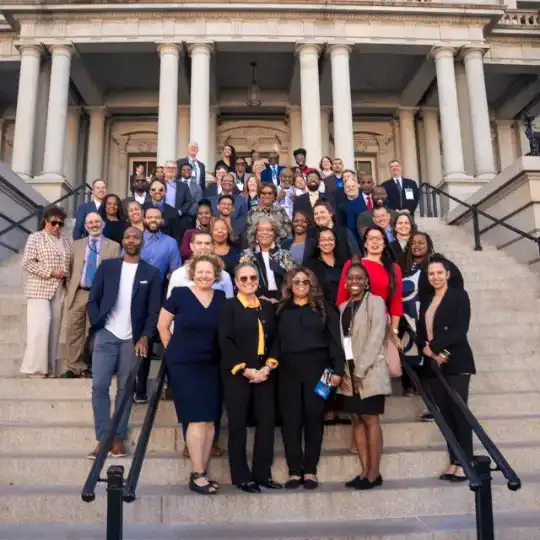
Enterprise and Detroit CDOs at the nation’s capital.Community development doesn’t happen from the top down — it’s built from the block up, by the people and organizations who know their neighborhoods best. That’s the vision behind Enterprise’s Community Partners’ Community Development Organization (CDO) Fund. Since 2020, Enterprise has invested nearly $40 million in 36 CDOs across Detroit, supporting the people and organizations working every day to make their neighborhoods more equitable, vibrant, and livable.These organizations are doing it all — from housing development to climate resilience, youth programming to economic revitalization. Together, they’ve created over $200 million in economic impact while employing more than 430 staff and local contractors. And beyond the numbers, they are transforming lives, restoring blocks, and building a future for Detroit residents — one home, one business, and one street at a time.Detroit’s strength has always come from its neighborhoods and the people who know them best. Through the CDO Fund, we’re making sure community organizations have the resources and staying power they need to turn vision into reality—whether that’s housing, economic development, or building the next generation of local leaders.Melinda Clemons, Vice President and Detroit Market Leader, Enterprise Community PartnersFrom Grit to GroundbreakingImageJeanine Hatcher and the GenesisHOPE team breaking ground on Preston Townhomes.Jeanine Hatcher, executive director of GenesisHOPE,(link is external) remembers when her organization was running on pure grit—no full-time staff, just volunteers and consultants. With support from the CDO Fund, GenesisHOPE has grown into a thriving organization with eight staff and a bold housing agenda. They recently broke ground on Preston Townhomes in Detroit's Islandview neighborhood, and they’re working to develop the Common Ground Community Land Trust to bring permanent affordability under community control.“It feels great to have achieved what we set out to do,” shared Hatcher. “We would not have 31 units made for families without the CDO Fund’s support, and we hope this is the first of many.” Building Back, Block by BlockImageQuincy Jones provides a tour of Osborn Neighborhood Alliance’sMapleridgeproject.On the northeast side of Detroit, Osborn Neighborhood Alliance is wrapping up their Mapleridge project(link is external). The organization took a block where homes were completely abandoned and transformed it into a place where families are moving in, becoming first-time homeowners of affordable duplexes, and renting out their second units to households with vouchers. The CDO Fund helped Osborn become an independent 501(c)(3) and take on development and rehab for the first time. “When you go back five years, you never would have thought that the street would come back, but with the right resources, proper planning, and an organization that knows how to do development, you can bring back a neighborhood,” said Quincy Jones, Executive Director of Osborn Neighborhood Alliance. “Now, there are no abandoned homes on that block, and we know for a fact that it’s our direct impact.”Money You Can Count OnImageLisa Johanon of Central Detroit Christian and George Adams of 360 Detroit (fifth and sixth from the right) celebrate their West Euclid Gateway Housing project.Across the board, CDO leaders emphasize the unique value of flexible, multi-year, operational support—a rarity in the nonprofit world. “Operating support is often the most difficult money to raise, so knowing you had a set amount of funding that was coming to you, that wasn’t restricted in terms of how it could be spent, has been phenomenal,” shared Lisa Johanon, Founder and Executive Director of Central Detroit Christian(link is external).Central Detroit Christian used some of their operating support to pay the mortgage on their building, which serves as their office, as well as a community space. “We’re almost debt free right now—that is incredibly exciting because that money will be freed up to either invest in programs or people,” said Johanon. “We’re getting ready to launch a private school and hope to develop permanent supportive housing for 40 families next year.”As part of the West Euclid Gateway Housing project,(link is external) CDC is also wrapping up the rehab of 20 homes with 360 Detroit(link is external), a member of the Elevating CDO cohort of the Fund. This smaller cohort is focused on building up the capacity of emerging non-profitsthat benefit from the intensive support. “Multi-year funding for operating support was huge. We were able to hire support staff and programming staff, and plan a few years out,” shared George Adams, executive director of 360 Detroit, “Because of that operational support, we’re able to totally focus, the community benefits, the organization benefits, it’s beneficial to the whole ecosystem.”Collaboration over CompetitionImageGovernor Gretchen Whitmer (fifth from left) and Caitlin Murphy (third from right) celebrate Live6 Alliance’sMichigan Main Street designation.(link is external)Another common theme echoed by all CDO Fund participants was the unique strength of the cohort model. “We're all representing different organizations, different parts of the city,” said Caitlin Murphy, executive director of Live6 Alliance(link is external). “Given the nature of fundraising and running small nonprofits, sometimes it feels like we're in competition with one another. The CDO Fund really built an understanding that there's a larger strategy that we could tap into as a collective to advocate for resources, policy, reform.”Live6 is part of Enterprise’s Key Corridors cohort of CDOs focused on revitalizing commercial corridors in Detroit by encouraging responsible development and supporting business growth. As Pamela Martin, president and CEO of Vanguard Community Development, another Key Corridors member, put it, "A cohesive group is stronger than disparate, individual groups in a city as large as Detroit. We’ve built relationships with one another, even talking about doing collaborative work, which would not have happened without Enterprise.” That collaboration also goes beyond Detroit. The CDO Fund hosts learning exchanges in other cities where community organizations are doing exciting work. “If it can happen in Atlanta, D.C., Baltimore, theoretically, it can happen in some fashion here in Detroit,” said Martin. “It’s important to be inspired and dream big.” What’s next?Detroit’s CDOs are ready to take on more. More homes. More commercial corridors. More inclusive development that centers residents. But they need sustained investment—and the CDO Fund is proof that it works. The CDO Fund is powered by seven incredible philanthropic partners who have seen the success of our partners on the ground firsthand: Kresge Foundation, Ford Foundation, Kellogg Foundation, Ballmer Group, Gilbert Family Foundation, Ralph C. Wilson, Jr. Foundation, and Hudson-Webber Foundation. Their support has directly helped Detroit’s CDO ecosystem expand in capacity and cross-collaboration. With planning for the third round of funding underway, Enterprise looks forward to seeing local leaders make an even greater impact on the city and invites philanthropic partners to join the fund and be a part of that change. Related Topics:Detroit
Five Decades of Community Activism and Helping Residents
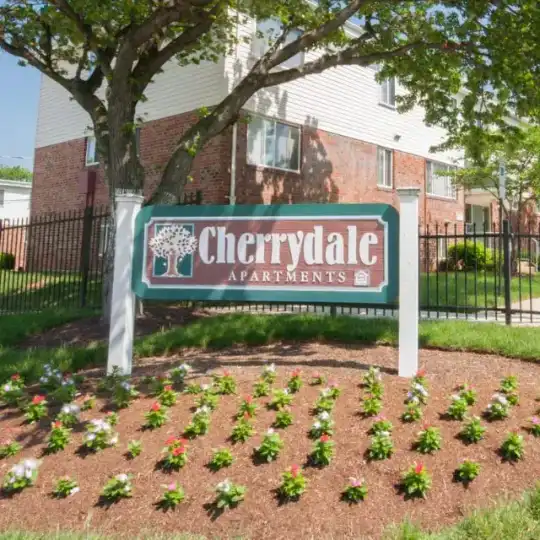
In 1997, Cherrydale Apartments was set to be sold and was in danger of losing its affordability protections. That's when Cleo Walker sprang into action. Walker, 83, who had lived at the Baltimore community for the prior 31 years, worked with local organizations including Enterprise to find a way to keep her home affordable.“The owners wanted to give me one day, but I negotiated for three days. That is all the time we had to try to put a deal together,” said Walker, who has now lived at Cherrydale for 59 years. “I went to every organization I knew of — including the Maryland Low Income Housing Commission, ACLU and Enterprise — since I knew of them from my earlier work with (Enterprise founder) Jim Rouse.”ImageCleo Walker, a resident of Cherrydale Apartments for the past 59 years, has made a lifelong commitment to community activism.The stakes were high for the residents of the for-sale building. “If it became a market rate building, we could have been homeless, sleeping on the streets, or under bridges,” Walker said. “Luckily, Enterprise came to the rescue and hustled to get a deal together to buy the property in the short timeframe. Enterprise came in like a fresh wind to make the purchase happen.”Renewed Energy After PurchaseThe residents experienced renewed energy after the purchase that allowed it to remain as affordable housing. Walker describes how a resident council was formed to make requests for improvements. Soon thereafter, Enterprise added amenities including a laundry room and computer lab in addition to maintenance enhancements like a security gate, new paint, carpets, additional lighting and air conditioning. “It was heaven on earth,” Walker said.“We all have a right to live in safe, decent, and affordable housing,” she explained. “You came in and did what [Enterprise founder] Jim Rouse cared and spoke about – showing compassion for people and making things right for them.”Over the ensuing decades, Cleo Walker has made a lifelong commitment to community outreach and activism. She was recently celebrated by Maryland Governor Moore in his State of the Union address for her commitment to the people of Baltimore and her ongoing work to make her community safer.As a community leader and organizer, she brings together the various stakeholders in the Cherry Hill community, which include the Baltimore City Southern Police District, clergy, Cherry Hill Community Coalition and Safe Streets of Cherry Hill to create events and activities to help make it a better, safer community. One activity is the annual National Night Out event, which she co-leads.In addition to fostering safe streets, Walker previously created and offered resources for the children of Cherrydale Apartments. She organized reading programs and computer training to help her young neighbors develop the skills they need to succeed in life.A Street Named Cleoda Walker WayKnown as “Momma Cleo” to many in the Cherry Hill community, she has a street named after her that borders Cherrydale Apartments: Cleoda Walker Way. Not only has she testified before the United States Congress and Maryland legislature on affordable housing policy, but she also previously worked with Jim Rouse to lobby elected officials to pass affordable housing related legislation.Walker is also a Baltimore City police chaplain and a social justice minister to the Cherry Hill Ministerial Alliance. In 2023, she was inducted into the Cherry Hill Hall of Fame. Walker is often asked why she’s lived so long at Cherrydale. She explains that “my mother and father were community activists too. Early on my mother told me ‘Don’t leave Cherrydale. Be like a tree, stay where you are planted and grow.’ So, I’m still here, working for safer streets and a safer community.”And her impact extends like the roots of a well-watered tree. Decades after Enterprise preserved this property to keep it as an affordable community, Cleo Walker shines as an example of a local leader and resident liaison. As a resident of an Enterprise community, she continues to make an impact on her neighbors, her community, and her city.Related Topics:Development, Property Management and Resident Services
Husband-Wife Team Bring Affordable Housing to D.C. Veterans
In the heart of Washington, D.C., where affordable housing options remain scarce, Richard Cunningham and Jésyl Crowdy-Cunningham are leading a quiet but powerful transformation to ensure veterans have a safe place to live. Through their firm, Cunningham Real Estate Holdings, the husband-and-wife team has become a steadfast presence in the city, operating 160 mixed-income rental homes across a dozen communities, and with more in development.For the Cunninghams, it’s more than real estate — it’s a calling.“It gives us a sense of joy and satisfaction to provide upscale affordable housing for lower-income individuals in our community,” said Richard Cunningham. “To see the growth and development of constituents in need means everything to us.”Partnering for ImpactImageJésyl Crowdy-Cunningham and Richard Cunningham Cunningham Real Estate Holdings didn’t grow its footprint in isolation. Strategic partnerships — with Community Development Financial Institutions (CDFIs) like Enterprise Community Loan Fund, Mercy Community Capital, and city agencies — have played a vital role. Early on, the Cunninghams attended educational seminars hosted by Enterprise and others, which introduced them to new tools, contacts, and financial pathways to expand their mission.One of the most transformational of those tools has been HUD-VASH(link is external), a joint program between the U.S. Department of Housing and Urban Development (HUD) and the Department of Veterans Affairs (VA). Designed to end veteran homelessness, the program provides housing vouchers alongside wraparound services like healthcare and mental health counseling.The Cunninghams have emerged as local leaders in integrating HUD-VASH with their properties. Their latest effort, Legacy Lofts, is a 28-unit project created from the acquisition and rehabilitation of two multifamily buildings. Funded in part by a $10 million loan from Enterprise and Mercy Community Capital, the development will offer one-, two-, and three-bedroom units affordable to residents earning 30% of the area median income.Through HUD-VASH, eligible tenants will receive rental assistance and supportive services coordinated by a dedicated VA case manager. Additional help is available offsite, reinforcing the safety net that makes recovery and progress possible.Legacy Lofts comes after the Cunninghams’ 2018 project, Cunningham Apartments, a ground-up development of 37 veteran-focused affordable units in the Brightwood Park neighborhood. That project also received support from HUD-VASH, along with a $17.3 million construction and acquisition loan backed by Enterprise and Capital Impact Partners.“These individuals served our country,” Cunningham said. “And it’s now time for us to serve them in return.”An Urgent Crisis Demanding SolutionsImageCunningham Apartments offers 37 veteran-focused affordable homes in Washington, D.C.The Cunninghams’ work is especially vital against a backdrop of mounting housing insecurity in Washington D.C. Nearly half of all D.C. households are cost-burdened, spending more than 30% of their income on housing. More than 80,000 residents experience some form of housing instability, according to a 2023 Urban Institute report.Veterans are disproportionately affected. The National Alliance to End Homelessness reports that over 32,000 veterans experienced homelessness in 2024 —13,000 of whom had no shelter at all.Meanwhile, the financial sustainability of affordable housing itself is under threat. The pandemic-era surge in nonpayment of rent has ballooned into a long-term challenge. In Washington, D.C., unpaid rent to affordable housing providers soared from $11 million in 2020 to an expected $147 million by the end of 2025. That kind of loss can cripple providers, making it impossible to maintain properties or keep rents affordable.HUD-VASH helps bridge the gap. It ensures housing providers have a reliable revenue stream while giving residents a stable home base to rebuild their lives. In this delicate balance of mission and economics, the Cunninghams have found a model that works—and one that offers hope.Related Topics:Community Development Financial InstitutionMid-Atlantic
Energy, Focus, Purpose
Tim Block has run eight marathons and is training for another. But with his work as senior director in Enterprise’s Southeast market office combined with an active family life, a leadership role in his fraternity, and studies in a doctoral program, each day might easily be described as “a marathon” of its own.Block, who joined Enterprise nine years ago, is responsible for overseeing Enterprise's Faith-Based Development InitiativeSM (FBDI) in the Southeast, where he works with a growing cohort of 32 houses of worship to create affordable housing on church-owned land in Atlanta and South Florida, with plans to expand into additional states. In addition to leading FBDI, he also oversees several other programs that focus on advancing affordable housing, strengthening community development, and supporting nonprofit capacity-building efforts across the region.Tapping into his personal sense of discipline — with help from a scheduling app and the occasional Oreo Blizzard — Block balances this high-profile work on a calendar filled with local civic committees in Atlanta and a stream of outside activities that tie back to his commitment to affordable housing and community building.Here’s what a typical day in May looks like for Tim Block.Whether it’s my family, my work, my fraternity, or my school — all these parts of my life are interwoven, and they give me energy, focus, and purpose. Greeting the DayThe first thing I do each day is to get on my knees and pray. I've been doing it for 30 years now. Before I even put my glasses on, or turn the lights on, I roll out a bed, and I pray and meditate for a few minutes just to think about the blessings and the responsibilities that I have, and I thank God for those things. That sets the tone for me to then get up and start my day.ImageTim Block surrounded by familyMy wife and I both have hybrid work schedules, so whoever’s working from home that day will make the coffee. We met at the Home Depot Foundation 17 years ago working on the philanthropy’s grant making initiatives, and we’ve both continued our careers in the community development space. She now oversees community investments as Atlanta Market Executive for Bank of America, and it’s great to have a partner whose life’s work is so aligned with my own. When I sit down at the computer, the first thing I do is look at a scheduling application called Motion. This helps me integrate and balance everything that’s important in my life — my work calendar but also my fraternity calendar and my school calendar. In addition to my professional career, I’ve been a member of the Omega Psi Phi fraternity(link is external) for almost 40 years. I’m currently first vice state representative for the state of Georgia and I’ll be running to the be the state representative in October. On the school side, I’m in the middle of getting my doctorate in strategic leadership. I have a lot of homework!Work TimeIt’s an office day, and I’m getting ready for a full slate of meetings. First up is a check-in with the FBDI team. Right now, we’re working alongside 32 houses of worship in Atlanta and South Florida, and we’re close to finalizing an opportunity to expand into a new city. On top of that, we’ve either submitted or are preparing to submit proposals in several other cities across the southeast. It’s exciting to see the momentum building.ImageTo make sure we're providing the right support and tracking their progress, we schedule six-week check-ins with each house of worship. During those meetings, we focus on next steps that either Enterprise or their assigned development consultant has identified. For instance, if they need to complete a feasibility analysis or a market study, and they’re not sure where to start, we connect them with the right professionals in their area. We also share templates and examples to help them engage development consultants and seek out grant funding opportunities. We understand that development work isn’t their day job, so we try to make the process as clear and accessible as possible.While most of these check-ins are virtual, we also prioritize in-person peer exchanges. Earlier this year, we hosted two of them — one in South Florida and another in Atlanta. It’s always powerful to gather in person, share lessons learned, and encourage one another along the journey.Lunch Time ConnectionsMost days when we’re in the office, we carve out time to grab lunch together and bring it back to the conference room. Sure, we talk about work, but we also catch up on what’s happening in each other’s lives. I have the privilege of managing two incredible colleagues, Shannon Ball and Gabriella Lott, and we recently welcomed a new VP and market leader, Dr. Christie Cade. One thing I really appreciate about our team is that we make time to serve the community outside of work too — whether it’s volunteering at the HOPE Atlanta(link is external) Women’s Community Kitchen or helping with the annual Point-In-Time Count. That experience is always a powerful reminder of how much more we need to do to support our neighbors facing homelessness.ImageWith Dr. Christie Cade, Enterprise's vice president and market leader for the Southeast regionWe’re a team that truly supports each other, and our conversations often weave between current events, personal milestones, and celebrations. When it’s someone’s birthday, you can bet there will be cupcakes — and for the record, I’m a big fan of red velvet. We recently had a fun debate about our favorite sweets. Mine? The Oreo Blizzard from Dairy Queen. I love them so much that, back in the day, I had a GPS device in my car that could find the nearest Dairy Queen for me — no matter where I was.Afternoon VisitsWe’re a trusted advisor in the southeast, so we often get pulled into a lot of coalition meetings. For example, I recently went to a kickoff meeting of a subcommittee for the Atlanta Regional Commission (ARC), our regional planning commission. We talk about the resources we have at Enterprise to help Atlanta with its affordable housing goals.On this day, we might also have our HouseATL(link is external) Monthly Pipeline Review Committee meeting, where we bring together people from the public, private, and philanthropic sectors. Developers present the deals they’re working on, and it’s a chance for the committee to hear their pitch and offer feedback. It’s a little like a "Shark Tank" setup — giving developers a platform to showcase their projects and get real-time input.A great example of this is Zion Hill Baptist Church. Their Community Development Corporation went through our FBDI cohort program, and after that, we provided them with grant funding to help move their pre-development activities forward. Once they brought a development partner on board, they were ready to present at the Pipeline Review Committee.The developer helped them take their initial ideas and really shape them into a more detailed design and development concept. That put them in a strong position to pitch their project to the committee. After their presentation, they ended up connecting with a few potential investors — all because we were able to give them a platform to get in front of the right people. It’s a win-win all around.A Refresh: Leaving Work for Part Two of my DayI’m feeling a little tired, but the day’s not done yet. I’m heading to a committee meeting for my fraternity, Omega Psi Phi. We’ll be diving into our social action work and finalizing the scholarships we’re awarding across Georgia. What I really love is how naturally my work with Enterprise and my fraternity flow together — whether I’m advocating for affordable housing at the state capitol or meeting with city officials and legislators to push for change.ImagePresenting a "citizen of the year" award with fraternity membersMy fraternity is one of the great loves of my life. I’ve been a proud brother for nearly 40 years, and it’s still just as meaningful today. It gives me the chance to combine everything I care about — service, leadership, and community — into a mission that’s all about lifting people up.Homework and a Family Reunion When I arrive home, I hear “G-pa, G-pa, G-pa!” Those are my three grandsons, all under the age of 5, calling for me. My daughter and her sons are living with us — it's a blessing right now. I love spending time with them. I try to be outside with them when the weather is nice and help give them baths. We have a full house, so everybody needs to pitch in and help where we can. Sometimes, if I have time, I’ll put on my running shoes and at least get a few miles in. I’ve run eight full marathons in eight states. I’m trying to get to all 50 states, but I'm getting a little old now – the Marine Corps marathon is in the fall and it’s on my bucket list.I’m also pursuing my doctorate degree in strategic leadership from Liberty University, so I’ll often end the day with reading or some type of homework. If I can stay the course, I’ll have my doctorate degree in 2026. May aim is to use all these learnings to help me become a better manager and add to my strategy skills.Even though I’m tired at this point, I’m fulfilled. Whether it’s my family, my work, my fraternity, or my school — all these parts of my life are interwoven, and they give me energy, focus, and purpose.ImageRelated Topics:Enterprise Faith-Based Development InitiativeSMSoutheast

California Final Budget Restores Key Affordable Housing Funds
After months of tough negotiations, California’s FY 2025–26 state budget(link is external) restored funding for several critical affordable housing and homelessness programs, reversing earlier proposals that left them unfunded.We appreciate Gov. Gavin Newsom and the Legislature for restoring funding to the State Low-Income Housing Tax Credit(link is external) Program, Multifamily Housing Program(link is external), and the Homeless Housing, Assistance and Prevention Program(link is external). These investments mark a significant turnaround from the Governor’s January Proposal and May Revision(link is external), which proposed no funding for core housing efforts.Continue AdvocacyWhile these are one-time investments and many vital programs remain unfunded, this outcome represents hard-fought progress during a challenging budget session. Every dollar committed in these proven programs brings California closer to building more affordable homes and addressing homelessness at scale.Enterprise, alongside our partners, will continue to work with state leaders, local governments, and community partners to develop long-term investment strategies that prioritize significant ongoing funding to address our state’s urgent homelessness and housing needs. Together, we will continue to urge for long-term investments in affordable housing and homelessness solutions to move toward a future where all Californians have a safe, stable, affordable place to call home. Budget Investments The final 2025 budget agreement draws heavily from the Legislature’s proposal(link is external) released on June 9, which sought to restore critical funding to affordable housing and homelessness programs that were absent from the Governor’s May Revise(link is external) and January Proposal(link is external). The final budget includes: State Low Income Housing Tax Credit program (LIHTC): $500 million allocated Multifamily Housing Program (MHP): $120 million allocated Homeless Housing, Assistance, and Prevention (HHAP): $500 million allocated for FY 2026-2027 The Governor’s Reorganization Plan The budget agreement also approved the resources needed for the implementation of the proposed Governor’s Reorganization Plan(link is external) to divide the current Business, Consumer Services, and Housing Agency into two new agencies: the California Housing and Homelessness Agency and the Business and Consumer Services Agency. As we shared in our May Revise Blog, the restructuring is a major step forward in streamlining affordable housing finance in California. It positions the state to be more effective when more resources are available for housing and homelessness. Related Topics:Policy Northern CaliforniaSouthern California
Building Home, Honoring Heritage: Jeff Ackley’s Path in Tribal Housing
One of 20 new single-family homes built on the Lac du Flambeau Indian Reservation through a $15 million Low-Income Housing Tax Credit investment, completed under Jeff Ackley’s leadership as executive director of the Tribal housing authority.Growing up just outside Mole Lake Reservation in northern Wisconsin, Jeff Ackley had strong connections to his Tribal heritage, culture, and history. His family was active in the Sokaogon Chippewa Community, and Ackley spent weekends at his grandparents’ home on Tribal lands, where he absorbed tradition and stewardship by learning to harvest wild rice and watching his grandfather trap muskrats.Ackley started his career in affordable housing in 1998 as a maintenance worker for his Tribe’s housing authority. He then worked his way up through construction, administration, finance, and executive leadership and has spent the last two decades leading regional Tribal housing associations, helping develop homes across the Midwest, and connecting Native communities to national housing resources. Now, as Enterprise’s new Native American programs director, Ackley brings his experience and deep-rooted commitment to Indian Country to our organization’s Tribal Nations work, which provides training and technical assistance, access to capital, and policy solutions that strengthen affordable housing and homeownership.A Dual PerspectiveImageJeff Ackley standing in front of an electrification upgrade project of cold climate heat pumps that will reduce dependency on fossil fuels and provide utility savings for the Lac du Flambeau Tribe.Ackley’s resume features successful tax credit developments, housing rehab projects, and hands-on community engagement. Over the course of his career, Ackley learned to navigate two worlds, staying true to Native traditions while also adapting to the broader housing and financial sectors.“There’s a real difference between how Tribes operate and how the business world operates,” he said. “Tribes move with purpose, with consultation, with sovereignty in mind. It doesn’t always line up with the speed of business. You have to know how to work within both.”That dual perspective has become a powerful asset — not just in his housing work, but also in leadership roles like serving on the local school board, where he’s spent 14 years helping to foster communication between two tribal nations that share a single school district, a rare setup seen in only one other place in the country.Ackley says he first learned about Enterprise six years ago and has come to realize “how much Enterprise can offer tribes—and how few people know that.”Today, he’s part of a dedicated team working to extend that reach. As chair of the Great Lakes Indian Housing Association, he’s helping bring Enterprise’s tools and training to dozens of tribes in the Midwest. An upcoming academy in Oklahoma focused on housing resilience and homeownership is expanding the Tribal Nations’ geographic reach even further.Coming Full CircleImageStatute of Jeff Ackley's great-grandfather, Chief Willard Leroy Ackley, who was an integral part of gaining the Tribe's reservation land and trust status. One of the biggest opportunities? Education for both Tribal housing staff and Tribal members. “People need to know they can be homeowners,” he said. “For generations, the message has been, ‘The Tribe will take care of you.’ But now, we need to empower people to build equity, to have choices, to take pride in owning a home—on or off the reservation.”That shift won’t come without challenges. Lending on trust land remains a complicated process, with far more paperwork and fewer financing options than conventional homeownership. But with Native-led CDFIs, new partnerships, and culturally grounded training, progress is happening.Ackley brings it full circle when he talks about his great-grandfather, a hereditary chief and carpenter by trade, who helped his people establish their homelands and secure their future. “I didn’t realize until later how much my family had been involved in housing,” he says. “It’s funny how it all came back around.”Related Topics:Tribal Nations

California Budget Negotiations Enter Final Phase
California Gov. Gavin Newsom released a revised budget proposal(link is external) last week, kicking off final negotiations with the Legislature. The May Revision addresses the state's $12 billion budget shortfall by making cuts, shifting funds, and tapping into reserves.While the May Revision emphasizes the effort to reorganize the state’s housing functions into one entity, the California Housing and Homelessness Agency, the revised proposal did not include new funding for any of the state’s affordable housing or homelessness programs. Meeting the State’s Housing NeedsWithout new significant funding, the state risks undermining its investments to date and would hinder its progress toward creating a California where housing is available and affordable to all. Research from Enterprise found that nearly 45,000 affordable homes across the state will stall without the necessary funding. The Legislature and the Governor must now come to an agreement on a final balanced budget, and advocacy during the next several weeks is critical to ensuring that affordable housing and homelessness programs receive much-needed funding. Our statewide coalition of affordable housing, homelessness, and housing justice organizations released a statement(link is external) in response to the absence of new funding, urging the Governor to restore investments in programs that address urgent housing needs, which had already experienced major cuts in previous budgets. Enterprise will continue to work with our partners in the community and in Sacramento to identify solutions that address the state’s fiscal challenges while prioritizing funding for affordable housing and homelessness programs, which are needed significantly across the state. May Revision Omits Key Housing Funding, AHSC SupportThe Governor’s May Revision did not include affordable housing and homelessness funding, remaining unchanged from the Governor’s January Proposal. Although the Governor voiced support for a 2026 Affordable Housing State Bond(link is external), which the Legislature is advancing in this session, the final bond amount is uncertain.This bond is not on the ballot until November 2026, and the funds would not be available until 2027 at the earliest. Committed funding from the General Fund is still needed for this year and next year to fund and build the state’s affordable housing pipeline and address Californians' dire needs. Furthermore, the Governor’s proposal for reauthorizing the state’s Cap and Trade Program(link is external) did not include a commitment to maintain the continuous 20% appropriation of Greenhouse Gas Reduction Funds (GGRF) for the Affordable Housing and Sustainable Communities Program (AHSC). Advocacy from the affordable housing community is crucial as these negotiations on GGRF continue as part of the budget process. AHSC is an integral program for meeting California's climate, equity, and affordable housing goals, and it is critical that its allocation is maintained. To learn more about AHSC’s impact across California, read this report by Enterprise and the California Housing Partnership(link is external). To find ways to engage, use our call-to-action toolkit. Governor Advances Plan to Restructure Housing AgenciesLastly, the May Revision included more information on the Governor’s Reorganization Plan(link is external) (GRP) to divide the current Business, Consumer Services, and Housing (BCSH) Agency into two new agencies: the California Housing and Homelessness Agency (CHHA) and the Business and Consumer Services Agency. As a new cabinet-level agency, CHHA will exclusively address housing and homelessness to “integrate housing programs, streamline policies, and simplify the administration of state affordable housing programs.” If approved and implemented effectively, the restructuring should reduce the time needed to develop affordable housing by six to 12 months. It will also generate upward of $500 million in cost savings annually. See recent reports from the California Housing Partnership(link is external) and the Terner Center for Housing Innovation(link is external) for more specifics on the impact.The restructuring will also position the state to be more effective when more resources are available for affordable housing. A key component of the restructuring is the creation of the new Housing Development and Finance Committee (HDFC), which will focus solely on financing affordable housing and creating the true “One Stop Shop” envisioned by the Legislature when AB 519(link is external) was enacted last session. The Governor’s revised budget includes $4.2 million in funding to implement the reorganization plan.What’s Next in the Budgetary Process The May Revision marks the beginning of the final phases of budget negotiations between the Governor and the Legislature. It should reflect housing as a top priority. The Legislature must pass a finalized budget by June 15, and the Governor must sign the final agreement by June 30. We look forward to working closely with the Governor's Office, the Legislature, and our broad multi-sector coalition of affordable housing, homelessness, and housing justice advocates to urge the restoration of investments in affordable housing and the adoption of a balanced state budget that responds to California’s urgent housing needs.Related Topics:Policy Northern CaliforniaSouthern California

Behind $3 Billion in Lending: 3 Projects that Demonstrate the Power of CDFIs
“Community development financial institutions are one of the most effective, durable economic development tools we have,” said Elise Balboni, executive vice president of Enterprise Community Loan Fund, Enterprise Community Partners’ CDFI. “They don’t just fund important community-serving projects—they help create sustainable economic ecosystems.”That’s the model behind Enterprise Community Loan Fund, which has surpassed $3 billion in cumulative lending since its launch in 1991. Over the past two decades, the fund has helped create and preserve affordable homes, grocery stores, health clinics, early childhood centers, and other critical projects in communities across the country. Each dollar lent has helped unlock at least $10 in additional investments from public and private partners—bringing the CDFI’s total capital impact to more than $30 billion.That capital often reaches places conventional lenders can’t—or won’t—go. According to Balboni, CDFIs offer longer terms, higher loan-to-value ratios, and interest-only periods that make community development more financially viable. In doing so, they can help stabilize neighborhoods, improve credit outcomes for borrowers, and lay the groundwork for future investment—especially during times of crisis, she explained.“We saw proof of that during the COVID-19 pandemic. When traditional banks needed to tighten their lending standards, CDFIs were able to continue lending, keeping businesses and community projects funded,” Balboni said. “For both investors and borrowers, CDFIs are a critical ally during times of economic uncertainty.”CDFIs are often at their most visible during moments of crisis—but their impact is just as significant in the long-term, day-to-day work of supporting local growth, Balboni said. To mark their $3 billion lending milestone, we asked the Enterprise Community Loan Fund team to share, in their own words, three projects that demonstrate what mission-driven lending can do.Creating a Community's First Permanently Affordable Rental HomesOne of my favorites is the acquisition/rehab to permanent loan we provided through the Bay Area Preservation Pilot program to the Bay Area Community Land Trust for their property on Solano Avenue in Berkeley, California. It’s actually the first permanently affordable property in that district of the city, which tends to be more affluent and feature largely only single-family housing—it’s on a busy commercial corridor next to a bunch of restaurants, grocery stores, banks, and bookstores. The location is perfect, and they fixed the building and apartments up beautifully.What really stands out to me about this project is its story. The former owner began evicting residents through the Ellis Act because they wanted to convert the rental property into condos. Residents reached out to the city’s rent board and Bay Area CLT, who helped them push back, eventually resulting in the landlord selling the property to the land trust.With loans from the city and Enterprise Community Loan Fund, BACLT was able to acquire and finish rehabbing the property. They also secured three project-based vouchers — rare for unsubsidized preservation deals — which means these homes will be affordable permanently, with three apartments offered at deeply affordable rates. To me, this project demonstrates the power of community investing in a very meaningful way.— Eve Goldstein-Siegel, Senior Loan OfficerGetting Capital Where It’s Needed—FastOne initiative I’m especially proud of is our Site Acquisition Funding Initiative, or SAFI. It’s a unique structure that combines Enterprise Community Loan Fund capital with public housing production trust funds to help developers acquire sites for preservation and new construction of affordable housing in Washington, D.C.The public funds lower the cost of borrowing, while our participation ensures that capital can be deployed quickly — something that’s often hard to achieve through city channels alone.What makes SAFI stand out is how it leverages our strength as a public-private intermediary. We bring our underwriting and asset management expertise to the table, giving public sector partners confidence in the deals we help finance. At the same time, developers get a responsive and high-touch experience—which is especially critical for projects that might otherwise struggle to find early-stage capital.This initiative not only accelerates the development timeline, but it also shows how thoughtful financing structures can unlock urgently needed affordable homes. It’s a clear example of how we’re helping lead in Washington, D.C. with creative, community-centered capital solutions. For example, through SAFI, Homes for Hope received a $789k acquisition loan for new transitional housing paired with wrap-around support for individuals returning from incarceration.— Monica Warren-Jones, Strategic Projects DirectorA Proven Model for Equitable Transit-Oriented DevelopmentThe Denver Regional Transit-Oriented Development Fund is one of the strongest examples we have of a successful public-private partnership in action. Launched in 2010, it combines investments from three CDFIs — including Enterprise Community Loan Fund — with investments from philanthropic partners and the city of Denver, the state of Colorado, and the Colorado Housing Finance Authority.Since its inception, the Fund has invested more than $70 million to acquire 28 transit-oriented (TOD) sites across the Denver metro area. Those acquisitions have already led — or will lead — to the creation or preservation of more than 2,800 affordable homes located near public transit stops.This model is powerful because of its simplicity and impact: Enterprise Community Loan Fund provided acquisition financing that is low cost and has a high loan-to-value ratio, therefore reducing the upfront capital sponsors need to provide — which in this case, is helping to create a pipeline of affordable housing projects near public transit stops across Denver. It’s a proven approach to equitable development that connects people to housing and, ultimately, opportunity. For example, Enterprise Community Loan Fund provided a $5 million loan to Johnson and Wales Family Housing to acquire two dormitory buildings on the former Johnson and Wales University campus. The two buildings were converted into 80 affordable apartments ranging from studios to three-bedroom units. The buildings are part of a larger project by the sponsor, Archway Community Investment, to create 154 total affordable homes that are supported by a full-time service coordinator who will provide community resources like health and fitness programming, financial education, and a weekly food bank. Overall, the redevelopment plan aims to transform the former campus into an education, economic development, and affordable housing hub in the South Park Hill neighborhood.—Josh Griff, Director of Credit Related Topics:Community Development Financial Institution
Four Key Findings from the 2025 State of the Nation’s Housing Report
More Americans are experiencing the impacts of the nation’s worsening housing affordability crisis. Families are struggling to remain housed in an environment where many renters can narrowly afford their housing costs, disasters are endangering communities, and homeownership slips further out of reach. These are key findings from a new national report from Harvard’s Joint Center for Housing Studies (JCHS), The State of the Nation’s Housing 2025(link is external). The report found that households are still grappling with high purchasing and rental costs, despite a rise in multifamily housing completions in 2024, and growth in the inventory of homes for sale in 98 of the nation’s 100 largest metro areas in early 2025. Housing innovations, state and local government leadership, and the revival of federal investments will be crucial for progress toward affordable housing for all, the report states.Cost Burdens Trigger InstabilityCost burdens for renters and homeowners persist, especially for those with the lowest incomes. While 24% of all homeowners are now spending over 30% of their income on housing costs, cost burden challenges are even more pervasive among renter households. In 2023, 50% of all renters, or 22.6 million households, were cost-burdened, and 12.1 million (27%) were severely cost-burdened — spending over 50% of their income on housing. According to the Center, 65% of working age renters do not have enough residual income after paying for housing to cover daily items, such as healthcare or food, and must make trade-offs to maintain their housing.The effects of housing cost-burdens vary significantly across racial groups, due to historical discriminatory housing policies that have disadvantaged households of color, the report states. In 2023, 57% of Black, 53% of Hispanic, and 50% of multiracial renter households were cost-burdened, compared to 46% of their white counterparts. Renters with disabilities, older adults on a fixed income, and those who have difficulty securing full-time work were also disproportionately impacted by housing affordability challenges. JCHS further reports that while disadvantaged, vulnerable, and the lowest income renters experience higher shares of cost burden, the same phenomenon is becoming more prevalent for middle-income households earning $30,000 to $74,999 annually.Housing Challenges at the Intersection of Disasters and Property InsuranceAcross the country, increasingly severe disasters and extreme weather events continue to result in housing instability, displacement, and the destruction of homes in the nation’s already limited housing stock. JCHS cites a recent report from The Brookings Institution, co-written by Rachel Drew, former senior research director at Enterprise; Andrew Jakabovics, vice president for policy development at Enterprise; and other colleagues. The report finds that in the wake of a disaster, a housing market can potentially see rents increase 4-6% (link is external)more relative to rents in similar, non-impacted markets, as well as high rates of people experiencing post-disaster homelessness (in the short- or long-term). These ever-frequent disasters are not only deepening the housing supply shortage — they are also fueling the national property insurance crisis. As insurers drive up premium costs, limit coverage availability, file non-renewals, or completely stop servicing certain states and regions that are at greater risk of environmental hazards, homeowners and nonprofit property owners and operators must either completely forgo insurance (if they own their property without any debt) or rely on state-run insurance plans that are often unable to support consumers to the extent necessary due to limited funds to cover claims. Rising insurance premiums were a major factor in the 26% growth in operating costs for multifamily owners and operators from 2022 to 2023.The JCHS report calls for several Congressional and federal actions to mitigate disaster risks and curb rising insurance rates, including appropriating additional HUD Community Development Block Grant-Disaster Recovery funds to help communities with long-term recovery, preserving and increasing funding for Federal Emergency Management Agency programs that help communities build resilience, and improving methods for communicating hazards risks to community members.Beyond Unlocking the Housing SupplyWhile the nation’s overall housing supply remains in a significant deficit, with estimates varying from a shortage of 1.5 million to 3.7 million units, housing inventories have slowly begun to level up. Yet even as the supply of multifamily housing has increased, the stock of low-cost rentals has not kept pace with the affordability needs of households across the country. Between 2013 and 2023, the stock of units with rents below $1,000 per month dropped by over 30% from 24.8 million to 17.2 million. Challenges with construction, such as regulatory barriers, shortages of construction workers, and rising building material and land costs are also worsening supply shortages in the multifamily and single-family markets. These obstacles are contributing to high costs for renters and homeowners.Additionally, homeowners must manage costly mortgage rates and general economic uncertainty, complications that are keeping many prospective buyers on the sidelines and limiting options for even moderate and higher-income households to make the move from owning to renting.The report emphasizes the need to continue pursuing construction techniques, building methods, and policy changes that enable more affordable and accessible development. For example, the report discusses land use and zoning reforms that allow for a broad range of housing types, including accessory dwelling units and “missing middle” homes, as well as policies and programs that simplify the use of off-site construction methods. Enterprise’s Making it Happen issue brief series explores best practices for scaling these affordable housing innovations.Preserving and Expanding Federal Rental Assistance Despite the moderating in rent increases nationwide, average monthly rents for professionally managed units remain high historically, registering at $1,830 in the first quarter of 2025, 32% higher than in the same quarter of 2019. As asking rents stay elevated, the federal rental assistance system is at risk of serving even fewer households than it already does. JCHS reports that in 2021, federal rental assistance programs served about 5.1 million renters, or about 25% of all income-eligible households, leaving 14.2 million without support. Recent federal resource and staff reductions, proposed budget cuts, delayed grant disbursements, and insufficient appropriations from the 119th Congress threaten the loss of even more Housing Choice Vouchers and other forms of rental assistance that are in use by low-income households across the country.The report further points out insufficient funding and risks of housing losses in other federal assistance programs, such as the Rental Assistance Demonstration program, the U.S. Department of Agriculture Section 515 program, and the Low-Income Housing Tax Credit (Housing Credit) program, where many units are reaching their Qualified Contract exit point. JCHS notes that without strengthening and expanding these critical programs, the number of people experiencing homelessness — which reached a record high of 771,480 people as of the most recent reported count on a single night in January 2024 — could continue to soar. The report points to localities that have utilized Housing First strategies to successfully reduce rates of homelessness, some of which are highlighted in Enterprise’s fact sheet on evidence-based solutions to end the homelessness crisis.Looking AheadThe nation’s housing crisis is intensifying as the country contends with deep uncertainty regarding federal policy actions. In addition to confronting the persistent housing challenges detailed in the JCHS report, policymakers must also consider how plunging immigration rates, the aging baby boomer population, and ever-changing tariff policies may impact the housing market and the broader economy. The report stresses that the nation has gone too long without adequately addressing the housing crisis, noting that now is the time to employ proven housing affordability solutions and test innovations that enhance these measures. From investing in new financing models that support renters and first-time homebuyers to strengthening disaster preparedness across the country, state and local governments will have to take the lead in implementing policies to change the nation’s course. However, state and local efforts can only scale with strong levels of federal funding. While the level of federal support is unknown, the report conveys that waiting to invest in solutions is no longer an option. Related Topics:Policy
A Generational Opportunity: Bipartisan ROAD to Housing Act Paves the Way for Progress
In contrast to the political gridlock that led to this fall’s government shutdown, there’s growing bipartisan momentum around one of the nation’s most pressing issues: the affordable housing crisis. This summer, the Senate Banking Committee unanimously advanced the most significant piece of housing legislation in over 16 years: the Renewing Opportunity in the American Dream (ROAD) to Housing Act of 2025(link is external). This landmark legislation was also included as an amendment to the FY26 National Defense Authorization Act (NDAA), which passed in the Senate on October 10. Now, the bill’s potential impacts on the affordable housing landscape are coming into view. The ROAD to Housing Act is a comprehensive package that brings together 40 different provisions – many of them aligned with Enterprise’s policy priorities – aimed at tackling the nation's housing crisis from multiple angles. At a time when the need for safe, affordable homes has never been more acute, this bill represents a critical and encouraging step forward.The legislation includes several of Enterprise’s top federal policy priorities like:the Rural Housing Service Reform Act, which would reform the USDA’s Rural Housing Service to preserve affordable housing in rural communities;the HOME Investment Partnerships Reauthorization and Improvement Act, reauthorizes the HOME program, increases the administrative cap to help local partners better deliver assistance, and makes it easier for nonprofits to qualify for funding (see how one Mississippi town has put HOME to work for residents).the Reforming Disaster Recovery Act(link is external), which will help communities rebuild faster and more equitably after major disasters.the Reducing Homelessness Through Program Reform Act, which would strengthen and streamline HUD’s homelessness services and Housing Choice Voucher programs, making them work better for communities and residents.The strength of the ROAD to Housing Act lies in its multi-pronged approach, which recognizes that there is no single solution to our housing challenges. The bill rightly focuses on a core driver of the affordability crisis: the urgent need to increase supply. Beyond building new homes, the bill makes vital investments in preserving our existing affordable housing stock and strengthening the federal programs that millions of families rely on. Crucially, the legislation also advances affordability and opportunity for homeowners and renters alike. The act also looks to innovative housing models by increasing loan limits for FHA-insured manufactured housing loans and allowing FHA property improvement loans to be used for constructing accessory dwelling units (read more about how ADUs can transform neighborhoods). By addressing everything from land-use policy and federal program reform to innovative construction and cross-agency collaboration, the ROAD to Housing Act provides a powerful and comprehensive framework for accelerating housing supply and access. While the bill still has a long road to travel through the full Congress, its unanimous approval in committee and its inclusion in the FY26 NDAA bill is a powerful signal that our nation’s leaders are ready to work together on solutions. Related Topics:

Rescuing Ourselves: 20 Years After Hurricane Katrina
Four days after Hurricane Katrina devastated New Orleans, Kwamé Juakali was walking with his family along the Interstate highway toward the Superdome, seeking shelter, food, and water. Juakali was 15 at the time and recalls coming across two older men in a car who were begging for water. “As exhausted and mentally drained as we were, I realized we were in better shape than a lot of people,” Juakali said. “But we didn’t have any water and couldn’t help these men. I remember knowing in my heart that these guys probably wouldn’t make it.”Fast forward 20 years and Juakali has focused his career on rebuilding and reinforcing his native city, motivated in part by his conviction that “this kind of failed response should never happen again.”While many New Orleans residents left their city and region after the unprecedented storm and never returned, Juakali and his family relocated temporarily to Memphis before coming home several months later. Juakali has devoted his life since then to his hometown, starting his career with AmeriCorps, then working for the city of New Orleans under Mayor Mitch Landrieu, and joining Enterprise in 2021.We caught up with Juakali, program manager in Enterprise’s Gulf Coast office, to hear about his experience and to understand the impact and significance of Hurricane Katrina, 20 years later.ImageJuakali with New Orleans Mayor Mitch LandrieuIn his words:Life in New Orleans before Hurricane KatrinaI was born and raised in New Orleans. My roots here run deep — my family moved from Mississippi and settled in the St. Bernard Housing Projects in the ’40s and ’50s. My parents met there; my mom worked at Head Start, and my dad was a community organizer. Right before Katrina, we were a family of five living in Section 8 housing in the St. Roch neighborhood. I have four sisters, and my mom was a single parent at that time.ImageKwamé Juakali 's family home on Music StreetWe heard about the storm comingI was 15 and a sophomore in high school when Katrina came. Storms were routine, so when we heard about Katrina, we thought we would do the normal thing, which was to pack a three-day bag. We didn’t evacuate mainly because it was just too expensive. Instead, we went to my aunt’s apartment on the third floor of her house in the 7th ward, thinking we’d ride it out safely. We weren’t the only ones to have that idea and quickly there were 17 of us in a three-bedroom apartment.When Hurricane Katrina hitAt first, it didn’t feel unusual. But then the water started rising and soon we knew this wasn’t a regular storm. We stood on the balcony watching it cover the cars and creep into the lower floor apartments. The water was up to 10 feet, completely flooding the building’s first floor and then second floor. It was chaos. The families that were living downstairs came upstairs and it was extremely crowded. ImageJuakali and family sheltered at the St. Bernard Housing DevelopmentAfter the stormBy day two, we ran out of supplies. My mom was always a very resourceful person. She came up with the idea to drain the hot water heater for drinking water. On day three, it became clear that we had to rescue ourselves. There was a point where it felt like we might not make it out of there, because we had no food and water. Up until then, we thought there would be a national response and that we would be rescued. Then we realized that no one was coming and that we couldn’t stay there.Rescuing OurselvesAt a certain point, I remember looking down and seeing my sister’s boyfriend floating in a small aluminum boat. We used that boat to ferry our family to I-10 – it was our lifeline to reach higher ground. Some of us didn’t know how to swim, and I was one who did, so I was in the water for hours, swimming alongside, sometimes touching the tops of cars, pushing the boat from the house to the interstate. It took all day and night, trip after trip. But we got everyone to safety by nightfall. We slept on the interstate with hundreds of others, exhausted and scared.The trip out of New OrleansThe next day, we walked to the Superdome. That walk… I’ll never forget it. The Superdome was packed and chaotic. No air conditioning, barely any food, no toilets. We slept on the 50-yard line and got water and MREs.Eventually, buses came. No one told us where we would be going, but we all had to line up for a bus. We stood for 12 hours in the hot sun. It was chaotic — my sister got separated and ended up in Houston. The rest of us were sent to Dallas. We got clean clothes, showers, and some dignity back. We reunited in Memphis where we stayed for several months, and I went to high school there.HomecomingIn December 2005 we returned to New Orleans. Our house on the East Bank had too much roof damage so we couldn’t live there. We found housing on the West Bank, which hadn’t flooded as badly. That’s where I finished high school — at Perry Walker. I’d grown up an East Bank kid, so switching sides like that felt like a big deal in New Orleans.Coming back was strange. A lot of my friends didn’t come back or came back much later. But my cousin and my godbrother returned too, so I had a small circle, a kind of anchor. It was like starting over. Again.ImageJuakali at college graduation with his mother, Lisa SmithChanging career plansBefore Katrina, I wanted to be an attorney like my dad. I played football since I was a kid. I was good, but I knew I didn’t have the size to go pro, so I thought I’d work in the field some other way, as a sports attorney. Everything changed for me when I saw those two men in the car during the evacuation. That moment stuck with me and it still does so many years later.Even in college, I was prepping for law school. I took the LSAT twice. But halfway through my senior year, I had a crisis of conscience. None of it made sense anymore. I joined City Year through AmeriCorps, worked in a school in Gentilly, and it hit me: I didn’t want to be a lawyer. I wanted to make sure what happened to me didn’t happen to anyone else. That led me to policy and community advocacy. That experience was pivotal, and I’m still involved as a City Year New Orleans board member.What home meansHome is safety. It’s where I can be vulnerable. It’s the foundation of the community and a big part of who I am. Despite everything, I’m still here. I’ve dedicated my career to this city. I can’t imagine living anywhere else, as long as there’s still a New Orleans to live in. We have such deep roots in New Orleans. We really didn't know how to be at home anywhere else.After 20 years, so much has changed. The population has shifted. Gentrification has reshaped neighborhoods like St. Roch. Families are being bused for hours to school. We lost a lot of our native community. Still, there’s beauty here. The new schools, libraries, infrastructure — they’re amazing. Some neighborhoods like Lafitte were rebuilt the right way, with community involvement. That matters.New Orleans isn’t what it was before Katrina. But cities change. And as long as we keep fighting for it — keeping culture, people, and community at the center — we will hold onto what makes this place home.ImageImageWith political consultant James Carville and Michael Brown, co-founder of City YearRelated Topics:ResilienceGulf Coast
Overcoming Barriers to Successful Appraisals on Tribal Trust Land
This piece is part of our series, Policy Actions for Racial Equity (PARE). The series explores the many ways housing policies contribute to racial disparities in our country.In South Dakota, the cost of an average appraisal(link is external) on one of the state’s nine reservations is more than double the average cost of an appraisal in the U.S. At the same time, appraisers in the region — and in other tribal and rural areas — are often forced to travel long distances to remote locations to do their work.These challenges, which often lead to a smaller pool of appraisers and can create roadblocks for appraisals, are just two of the many factors intensifying inequitable appraisal processes on tribal land. The hurdles stem from the unique complexities of land ownership on tribal lands and often limited access to comparable market data. Additional barriers that affect Native Americans and Alaska Natives living on tribal land and in remote areas include difficulty reaching homes in isolated locations and requirements in the process that can be hard to meet. While policymakers and housing advocates have recently focused on the appraisal bias that Black, Indigenous, and other People of Color (BIPOC) face when buying properties that are located on “fee-simple(link is external)” land and purchased with conventional loans, there has been limited discussion about conducting appraisals specifically in tribal communities. Federal actions and strategies to address these barriers include expanded outreach, partnership with tribes and lenders, and support for pilot programs.Legal Standing of Tribal Trust LandIn the United States, “Indian Country(link is external)” includes Indian reservations and allotments held in trust by the federal government for tribes and individual Native Americans (“tribal trust land”). It also includes land in Alaska that is held in fee simple ownership by Alaska Native Village Corporations and Alaska Regional Corporations for Alaskan Natives. In the continental U.S., 95% of land in Indian Country(link is external) – about 56.2 million acres – is tribal trust land and therefore under the auspices of the U.S. government. This unique legal status makes buying a home on tribal land more complicated. Unlike fee simple land, tribal trust land (link is external)cannot be sold to any person or entity except the U.S. government, and the value of the property does not include the value of the land. These factors add steps to the appraisal process, making it longer and more challenging to navigate. Appraisal challenges confound lending for prospective homebuyers on tribal trust land even under programs that were specifically designed to ease the home purchasing process, including the HUD Section 184 program, which has an exceptionally low rate of use on trust land(link is external).Boosting the Number of AppraisersCommunities nationwide face an appraiser shortage due in part to the significant costs of appraiser courses and the time-consuming process to obtain a license. People who pursue a license are often lower income, so the cost burden of training is disproportionately higher. What’s more, appraisers are often reluctant to take on the few apprentices who qualify due to concerns about “training the competition.” Typical appraiser training does not include education on the legal structure of tribal land, which leaves many traditionally trained appraisers with a knowledge gap and unable to conduct accurate appraisals on tribal land. Currently, South Dakota(link is external) is the only state that offers specific training for appraisals on tribal land. To help remedy this situation, tribes, Tribally Designated Housing Entities (TDHEs), lenders, and educational institutions could partner with each other to provide specialized financial, training, and apprenticeship support for prospective appraisers who live on tribal trust land. Expanding continuing education options for existing appraisers on the complex legal status of tribal trust land would also be beneficial. Reaching Remote HomesRemote forms of appraisal or waived appraisal requirements may assist in lowering costs and reducing processing time. National appraisal boards and coalitions could explore permitting increased use of alternative appraisal techniques such as desktop appraisals, assisted appraisals, temporary waivers of appraisal requirements, and Automated Valuation Models (AVMs) on tribal trust land and in remote areas. These modifications would decrease the cost and required time for prospective homebuyers to get an appraisal. Continued collaboration between the federal government, professional appraisal associations, and tribes to make the appraisal process easier will increase the number of appraisers eligible to work in Indian Country and allow homeowners to sell their houses more efficiently. Acknowledging and amending the bias in the appraisal process will create a more equitable housing market for tribes and native neighborhoods in the future. We encourage all who believe in the need to create a just society to read, discuss, and share the PARE blog series as we learn and act to address the impacts of housing policies on racial equity in America. We also invite you to join us in this conversation, by suggesting additional topics and sharing resources for how we can advocate for greater racial equity. If you’d like to offer feedback on our body of work, please reach out to the Public Policy team(link sends email). You can also subscribe to our daily and bi-weekly policy newsletters for more information on Enterprise’s federal, state, and local policy advocacy and racial equity work.Related Topics:Policy Tribal Nations

Unlocking Transformative Development
Spanish VersionIn Toledo, Ohio, the city established a $37 million loan pool to provide financing for housing rehabilitation, real property acquisition, and economic development. In Oakland, California, a $34 million loan pool supports developers operating in historically underinvested neighborhoods. Both cities tapped into HUD’s Section 108 loan guarantee program, which provides communities of all sizes with low-cost, long-term, fixed-rate financing to support a wide range of housing, economic and community development projects. Increasingly, access to flexible financing is a critical need for jurisdictions looking to drive economic growth and revitalize communities. Enterprise Advisor’s new Section 108 Implementation Guide, Leveraging HUD’s Section 108 Loan Guarantee Program for Equitable Development — funded by the Robert Wood Johnson Foundation — is a comprehensive resource designed to help local governments utilize HUD’s Section 108 Loan Guarantee Program to finance transformative projects. The Section 108 program, which allows states, counties, and cities to borrow up to five times their annual CDBG allocation, remains largely underused, with more than half of eligible jurisdictions yet to access their Section 108 Loan Authority. By providing communities with the knowledge and resources needed to navigate this program, we aim to empower more communities to unlock opportunities for equitable growth and development.How our Guide can help:For local governments looking to finance catalytic projects, our Section 108 Implementation Guide serves as a roadmap for success, providing:Overview of the program’s structure, eligibility requirements, and application processBenchmarks to help grantees assess their readiness to applyStrategies for building internal and external capacity to support a Section 108 loan poolBest practices for establishing a strategy-driven Section 108 loan poolGuidance on creating an effective delivery system for a Section 108 loan poolApproaches for leveraging 108 with other common sources of fundingThe Guide also showcases successful projects across the country to illustrate how communities are using Section 108 to achieve their development goals.Cities Leading the Way with Section 108 With funding from the Robert Wood Johnson Foundation, Enterprise Advisors is providing technical support to a cohort of cities, helping them access Section 108 financing and deploy it for transformational projects. We highlight two cities that are effectively using Section 108 to drive impactful development projects.Toledo, OhioToledo, Ohio used Section 108 funding to establish a $37 million loan pool — launched in 2022 — to provide financing for projects that focus on housing rehabilitation, real property acquisition, economic development, and public facilities. While the loan pool is available citywide to eligible borrowers, the city prioritizes projects that support investments in communities of color or those led by BIPOC developers, businesses, or organizations. The city is also prioritizing the renovation of public facilities across the city, including senior centers and community centers. Oakland, CaliforniaLaunched in late 2023, Oakland’s $34 million Section 108 Loan Pool supports developers operating in historically under resourced neighborhoods. The city is proposing to use approximately $9 million in Section 108 funds to support the acquisition of a multi-family building with 81 affordable units in Oakland’s Fruitvale District by The Unity Council – a non-profit social equity development enterprise with a more than 60-year legacy in Fruitvale that is planning to preserve 80 units as affordable rental housing. “Oakland Housing and Community Development Department (HCD) is grateful for the technical assistance provided by Enterprise to utilize the City’s Section 108 Loan Pool for deeply needed affordable housing units,” said Emily Weinstein, Director of HCD. “The HCD/Enterprise partnership is instrumental to understanding, accessing, and ultimately spending these funds.”Ready to explore how Section 108 can support your city’s development goals? Download our guide and take the next step toward transformative community development.For additional insights on how to access and leverage Section 108 financing please contact Advisors at section108@enterprisecommunity.org(link sends email).Related Topics:Advisory Services and Technical Assistance

Trump-Vance Administration Releases Full President’s Budget Request for FY26
President Trump has released his request for the Fiscal Year 2026 (FY26) budget(link is external), signaling the administration’s priorities and providing a jumping off point for the congressional appropriations process for FY26. The president’s budget request proposes significant reductions or elimination of major housing and community development programs. The budget request, while not legally binding, builds on the administration’s broader efforts to reduce federal spending and the federal government’s role in housing and community development programs. When the administration released a preview of the president’s budget request, Enterprise CEO and President Shaun Donovan released a statement on the impact of the budget plan, stating that the proposed spending cuts “will only worsen the historic housing crisis and erase hard-fought progress toward building affordable housing.” Enterprise will continue to advocate for congress to provide robust funding levels for affordable housing, community development, homelessness, and resilience programs in FY26. Here’s an overview of the administration’s housing, homelessness, and community development proposals:U.S. Department of Housing and Urban Development (HUD)Overall, the request calls for HUD(link is external) to be funded at $43.5 billion, a $45.6 billion (51%) decrease from FY25 levels. Some highlights include:Consolidation of ProgramsHUD’s Rental Assistance ProgramsThe budget proposes eliminating all of HUD’s rental assistance programs including: Tenant-Based Rental Assistance (Housing Choice Vouchers), funded at $36 billion in FY25Project-Based Rental Assistance, funded at $16.49 billion in FY25Public Housing, funded at $8.9 billion in FY25Section 202 Housing for the Elderly, funded at $931.4 million in FY25Section 811 Housing for Persons with Disabilities, funded at $256.7 million in FY25The President’s Budget Request proposes to replace these programs with a state-based formula grant program for local governments to design their own rental assistance initiatives based on their needs and preferences. The State Rental Assistance Program is proposed to be funded at $36.2 billion, which includes $4.4 billion in advance appropriations for FY27 and $25 million for youth aging out of foster care. This would be a $26 billion (43%) cut to HUD’s rental assistance programs. This program would institute a two-year cap on rental assistance for able-bodied adults and would prioritize the elderly and persons with disabilities. Homeless Assistance Grants and Housing Opportunities for Persons with AidsThe budget would also consolidate the Homeless Assistance Grant (HAG) programs and the Housing Opportunities for Persons with Aids (HOPWA) into the Emergency Solutions Grant program (ESG). HAG is proposed to be funded at $4.024 billion, all of which is allocated to the ESG program and none to the other HAG programs such as the Continuum of Care program. The proposal would also provide no funding for the HOPWA program. Elimination of ProgramsCommunity Development Fund. $3.3 billion was provided for the Community Development Block Grant (CDBG) program in FY25. It would also eliminate funding for the Pathways to Removing Obstacles (PRO) Housing grants, which received $100 million in FY25.HOME Investment Partnership Program, which received $1.25 billion in FY25Choice Neighborhoods Initiative, which received $75 million in FY25Family Self-Sufficiency (FSS), which received $125 million in FY25Preservation and Reinvestment Initiative for Community Enhancement (PRICE) program, which received $10 million in FY25Programs with Significant Reductions$16 million for the Section 4 program, a $26 million (62%) decrease from FY25$26 million for the Fair Housing Activities, a $60.4 million (70%) decrease from FY25. The proposal maintains the funding for the Fair Housing Assistance Program (FHAP) but would eliminate funding for the Fair Housing Initiatives Program (FHIP) and the National Fair Housing Training Academy.$887 million for Native American Programs, a $457 million (34%) decrease from FY25. The proposal would eliminate the competitive portion of the Indian Housing Block Grant program which was funded at $150 million in FY25; reduce the Indian CDBG program to $5 million, a $70 million (93%) decrease from FY25, and reduce the formula Indian Housing Block Grant program by a $239 million (22%) decrease from FY25. U.S. Department of Treasury The budget request provides $133 million for the Community Development Financial Institutions (CDFI) Fund(link is external). This is a $291 million (59%) decrease from FY25 enacted. The budget proposes $100 million for a new Rural Financial Assistance (FA) program to support investment and spur economic development in rural communities. This new program would require 60% of CDFIs’ loans and investments to go to rural areas. The remaining $33 million would be to support the Rural FA program, the New Markets Tax Credit (NMTC), and the CDFI Bond Guarantee program. The budget proposes no funding for any of the other CDFI programs such as the Native American CDFI Assistance Program and the Bank Enterprise Award Program.U.S. Department of Agriculture (USDA)The president’s FY26 budget request includes $23 billion in discretionary funding for USDA,(link is external) a $6.7 billion (23%) decrease from FY25. Note, the FY25 continuing resolution allowed the shifting of funding between USDA programs. Therefore, the amounts for some programs are different than they were in FY24. Some highlights for rural housing service programs include:$1.715 billion for Section 521 Rental Assistance, $73 million (4.4%) above FY25 enactedZeroing out the Section 502 Single Family Housing Direct Loan Program, which received $716 million in FY25. It would also zero out the Tribal Direct Relending Pilot, which was funded at $4.6 million in FY25. This proposal would also continue to provide authority for the mortgage decoupling pilot.$400 million for the USDA Section 538 guaranteed loans to preserve and rehabilitate USDA rental housing, level with FY25$50 million for the Section 515 Rural Rental Housing program, $3 million (6%) above FY25$23.97 million for the Multi-family Housing Preservation and Revitalization Program, $10 million (29.5%) below FY25 enactedOther Related Programs/AgenciesElimination of the United States Interagency Council on Homelessness (USICH), with $250,000 in funding to close out the agencyElimination of the Neighborhood Reinvestment Corporation (NeighborWorks America), with $27 million in funding to close out the agencyElimination of Health and Human Service’s Low-Income Home Energy Assistance Program (LIHEAP), funded at $4.025 billion in FY25Elimination of Department of Energy’s Weatherization Assistance Program (WAP), funded at $326 million in FY25A breakdown of the affordable housing and community development spending levels can be found in our Fiscal Year 2026 Budget Request and Appropriations Chart. Enterprise will continue our work in the 119th Congress, engaging with lawmakers, the Administration, and our partners to advocate for robust funding for housing, community development, homelessness, and resiliency programs. To stay up to date with critical housing policy news,subscribeto our bi-monthly Capitol Express newsletter. Related Topics:Policy
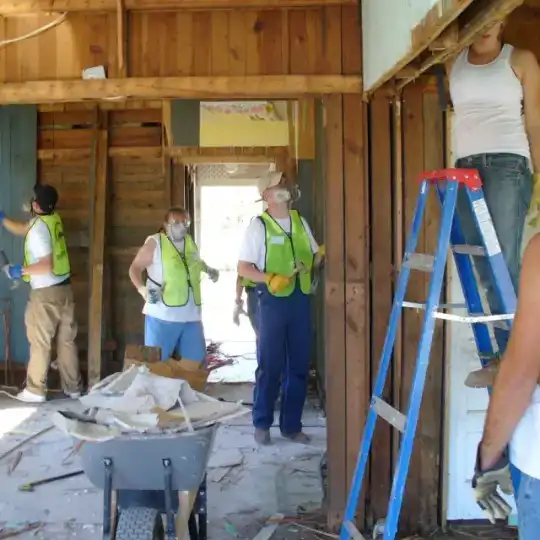
Investing in Recovery: 20 Years After Katrina
Tens of thousands of families across the Gulf Coast dealt with the tasks of rebuilding water damaged homes.On the Saturday before Hurricane Katrina made landfall, George Dupuy managed to secure one of the last RVs in the New Orleans area. The family packed it with essentials and personal belongings, before joining the miles-long traffic jam heading west. What was supposed to be a brief evacuation turned into months at a KOA campground outside Lafayette, where displaced families forged community even as they faced staggering loss.Dupuy’s own house, spared from total destruction, still took on two feet of water inside. The only way forward was to strip it down to the studs—exhausting work that proved unexpectedly therapeutic. He did the same for his mother’s and uncle’s homes, repeating the grueling cycle of demolition and recovery. But Dupuy’s focus reached beyond his own family. As a longtime advocate for affordable housing and a senior vice president at Omni Bank at the time, he was also part of a massive effort to help thousands of Gulf Coast families and businesses rebuild.Now, a senior commercial relationship manager at Home Bank, he talked about his experiences immediately after Katrina and the two decades since.Serving Immediate NeedsRight after the storm, the banks knew people’s biggest need was cash. With branches destroyed and systems down, local banks actually shared office space and handed out cash based on daily CDs (compact discs) of account balances. It wasn’t perfect, but it kept people going.Omni Bank was very much in the forefront of trying to help people rebuild – their properties, their investment properties. In the wake of Katrina, Omni Bank made about 3,000 loans focused on rebuilding flood damaged properties. [Now] There’s not a lot of big banks here, and there’s not a lot of people doing affordable housing (lending). It’s too complicated. ImageLocal banks in the Gulf Coast used capital that not only built new homes but created a path to homeownership.How Work ChangedKatrina brought an influx of expertise in affordable housing construction and finance. Enterprise and other national groups brought in young, creative housing professionals who showed us new ways forward. They brought a whole new skill set to the area. The federal government took off some of the constraints [caps on Low-Income Housing Tax Credits] off the subsidies, and it really moved the money. If they would have taken even more constraints off, we could have built a lot more housing.Agencies that managed the funding were not too worried about density. They were focused on income levels. Mixed income was considered a healthier living environment. In the Warehouse district, for example, a lot of the property was developed using the mixed income model with Low-Income Housing Tax Credits. Now, it’s all coming off its compliance (year 15), so the affordable part is going away. You are going to see a lot of nice properties that are no longer affordable. They’ll be market rate.But deals were complicated—some projects had up to 10 funding sources. One project I worked on included a million dollars from Major League Baseball for veterans housing. It got done, but the process was painfully slow.Challenges in the AftermathRebuilding was tough because everything was expensive. Everything cost a lot, and you were lucky if you found skilled labor.The capital flowed right after Katrina, but once the official disaster period ended, it dried up—even though the need was still massive. That’s why projects like Lafitte have taken almost two decades. Lafitte Phase VII took awhile because of the regulations. Delays caused by complying with complex regulations resulted in increased costs which necessitated the search for additional funding. It was a vicious cycle.You have to play with the cards you are dealt. A lot of these transactions take forever to close. If the programs were a little more streamlined, you could deploy the money more quickly and get more housing built.We need a better sense of urgency and simpler programs. Every time there’s a mistake, a new regulation gets added, which only slows everything down.A Focus on Homeownership Home Bank and OMNI Bank were able to utilize that [Enterprise's Louisiana Loan Fund] program to finance the construction of homes for resale. Enterprise provided an option for refinancing the bank if the homes took too long to sell to an income qualified buyer. That program allowed the bank to finance more spec homes than we would normally do.Important Lessons LearnedFirst, mixed-income housing works. Concentrating poverty doesn’t. Stronger neighborhoods are built when people of different income levels live side by side. Second, keep it simple. Disaster recovery programs should move money quickly, without so much red tape. Delay just makes suffering worse.Faubourg Lafitte's Final PhaseHome Bank is the construction and bridge lender for the 51-unit Lafitte Phase VII project. We are only part of the financing sources for this project and are happy to get the closing completed. Home Bank is the purchaser of the 4% LIHTC bond issued by the Louisiana Housing Corporation. The project is off to a rapid start, and we already know this team will produce quality housing that will finally complete the ambitious Lafitte development.Related Topics:ResilienceGulf Coast
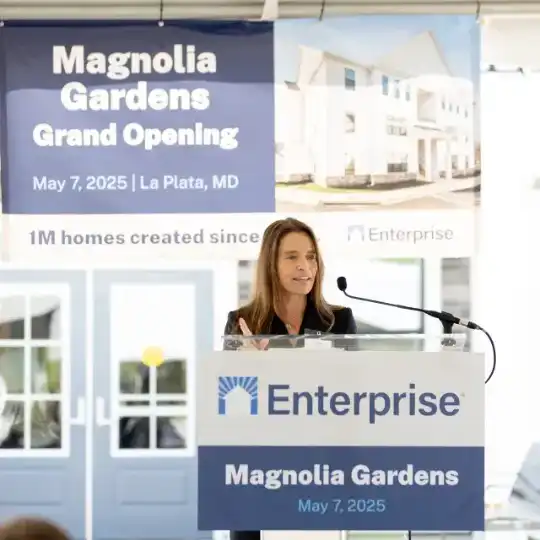
A Year of Living Hopefully
After just a few months on the job, Janine Lind put together a five-year plan for Enterprise’s Community Development division. “I was feeling good about this plan,” said Lind, who recently celebrated her one-year anniversary as the division’s president. “And then, starting in February of this year, external changes caused things to go a bit haywire.”Despite funding headwinds and market uncertainties of the past several months, Lind’s ambitious goal to create 1,700 homes this year remain unchanged. While she and her team are focused on finding new and innovative solutions to current challenges, Lind finds inspiration from property visits, ground breakings and ribbon cuttings, and the people she meets along the way. Ultimately, it's not only about the numbers or our continued growth — it's the fact that we need more affordable housing for people. And if we can do that for one person at a time, that’s what we’ll do.We recently sat down with Lind to talk about her outlook for the second half of 2025, unexpected opportunities, and sources of inspiration.What are your top priorities for 2025 for Enterprise Community Development?ImageAt the end of last year, I was feeling good about a five-year “pathway to sustainability” plan. But even through all the uncertainty and the political headwinds that we face now, our goal remains the same. We aim to have 19 properties under construction — either in progress or we'll commence construction — this year. That’s almost 1,700 new homes in the Mid-Atlantic region, and it’s our priority to get those built. We look at that every month, and the team is working very hard to solve the challenges and the problems that have come our way with some of the funding sources being frozen — such as the Greenhouse Gas Reduction Fund (GGRF) — and finding a solution to make sure we can still deliver these projects. In addition to that, it’s important that we launch our phase three solar energy work. We spent a whole year building a business model for clean energy(link is external) that others can replicate. You mentioned some of the challenges with funding and other curve balls that have come your way. How would you describe the biggest risk that you face right now?I would say our biggest risk right now is our development pipeline. It’s so dependent on federal funds that we run a risk that we cannot close on all our projects this year or next year. And that would mean we wouldn’t be able to build a thousand units of affordable housing in the Mid-Atlantic. We are working hard to address that, to think about other funding sources, and to find creative and innovative ways to make sure that we can still close them. Conversely, what about opportunities? You talked about the projects under construction and the potential for so many new homes. The big question is: can we turn our current challenges into opportunities, especially those related to federal funding? As a nonprofit, we need to think differently about how we fund the development of properties, even if it's hard. When I'm talking to my peers about that, we're so used to tax credits, we layer on some other funding sources, and then we try to get vouchers for subsidies for our residents. We need to start thinking about putting more emphasis on the private side of funding, with some public funding, rather than the reverse.ImageAnd there have been some recent innovative ways and an increase in interest from private capital. For example, just this morning I heard from my leadership that there have been some discussions with a bank that is interested in funding housing for seniors.And there are other innovative models to consider. We have a new team member, Zach Marks, who brings valuable experience from his time working for Montgomery County [Maryland] and creating a “housing production fund” to supplement, not replace, their other funding sources for affordable housing. They have been very successful in using that model to build more housing at an affordable cost.We’ve been talking to the District of Columbia and Virginia about ways to start up a housing production fund in those locations, and I know it’s happening in Denver also. As nonprofits, we need to continually examine new opportunities.What type of needs are you seeing in your communities in addition to housing?There are a lot of needs and I’m seeing it more and more – one of those issues is food insecurity. It cropped up during Covid and I think we thought it would go away, but it’s never gone back to pre-Covid levels.I was at one of our senior properties a week and a half ago for our gratitude tour and at the end of it, we had some leftover sandwiches and salads and some cookies. So, we said to the manager, why don't you just let your residents know? For some, the leftovers can be a week's worth of food versus just grabbing a sandwich for that afternoon. They're either buying less, going hungry, or forgoing medical care because they just can't afford it because their income hasn't kept up with inflation. At the same time, we’re seeing that food banks are not getting funded. There are also several federally funded programs that are being cut, and that include programs at schools as well for children of low-income and extremely low-income families, which is going to impact families in our communities. It just breaks my heart that in a country this wealthy we have way too many people who can't afford to eat. What have you come across lately that's been inspiring to you?I’ve had the good fortune to meet several residents over the past year. Soon after I started this job, I was standing in the parking lot at Oxford Manor in Washington, D.C. and a resident walked up to me and started telling me her story. She had been homeless and struggling to find a permanent place to live and finally found it at Oxford Manor. She had been living in a car before she came to us, and she had written a book that she gave to me – it included some of her history and this quote: “May I live as long as I want and never want as long as I live.”More recently, I met Cherrydale resident Cleo Walker at my colleague’s retirement party. I didn't know her story until that event, and it really stuck with me. She was integral in convincing Enterprise to buy the community to prevent it from converting to market rate housing, while also being an advocate for safer communities. She's done a lot of community advocacy in Baltimore more broadly —it's incredible how much she has done for Enterprise and for all of us.We also have these stories within our staff and property management. At a recent huddle with 200 people on Zoom, we had a breakout session where one of our property managers talked about her own lived experience and how glad she is to work for an organization that understands the importance of affordable housing. She lived in affordable housing as a single mom of three kids, and it was for her the foundation that brought her to now, where she's just about to close on her first home purchase. What inspires you on a personal level?By nature, I’m a very hopeful person, but honestly, it's been a little hard this year. Lately I’ve gone back to reading Jim Rouse’s speeches and I find myself wishing we had made more progress since he wrote them. I do believe and am committed to making a difference and I try to find inspiration from other people and places. Where I’m from in the Netherlands, no one sleeps on the street at night. In 2023 they had a 0.17% homelessness rate, even if not everyone has a permanent home. And now they are working on a plan to ensure everyone has one of those. The Netherlands is the size of Rhode Island, so why can’t we start with Rhode Island and move from there?Despite the tumult in our world today, I am focused on being here today, supporting my team, and anyone I interact with. And when I have hard days, I go for a run in the woods and life is good. ImageHighland Terrace Apartments in the Highland Park neighborhood of Richmond, VA.Related Topics:Development, Property Management and Resident Services
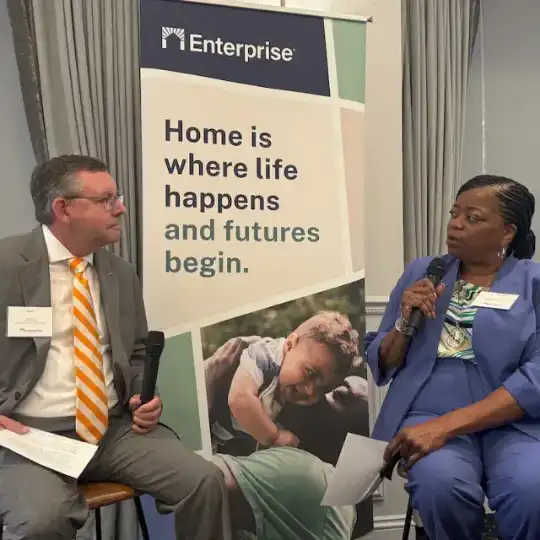
Rural Housing at a Crossroads
For many families, seniors, and workers who live in rural areas across the country, affordable housing makes it possible for them to remain in the communities they call home. Yet these rural communities face distinct challenges in preserving and creating safe, affordable housing, including limited financing options, aging rental stock, construction workforce shortages, and escalating insurance costs. Against this backdrop, more than 100 housing providers, policymakers, public housing officials, and financial experts gathered in Knoxville, Tennessee, in August to exchange insights and strategies for protecting affordable homes in rural communities. The convening builds on Enterprise’s ongoing commitment to sustaining rural rental housing across the country. A highlight of the event was a fireside chat featuring Ralph Perrey, executive director of the Tennessee Housing Development Agency(link is external), in conversation with Dr. Christie Cade, Enterprise VP and Southeast market leader. Together, they explored innovative solutions Tennessee is using to address rural housing challenges across the state. Dr. Christie Cade: One of the things that has happened in Tennessee is that you’ve brought innovative ways of financing forward. Can you explain how the Community Investment Tax Credit (CITC) works and its impact on both the production and preservation of housing? Ralph Perrey:This [the CITC(link is external)] was something Tennessee legislation created about 20 years ago. We don’t have a state income tax, but we do give banks a break on their franchise and excise tax—our principal business tax—if they provide below-market-rate financing for things like affordable housing development and preservation. It brings about $40 million worth of tax breaks to banks each year, which means they’re investing much more than that into affordable housing across the state. Our role is to make sure the purpose and recipient are eligible, then the Department of Revenue does the heavy lifting. It’s been very helpful to development partners, saving them thousands in costs. Have you seen this used for preservation and single-family housing as well? Not so much with single-family. It’s been used more for housing development on a larger scale. For example, in tax credit developments, if you still need to borrow money, the CITC helps you get a better rate. That’s why the legislature saw a spike in claims—developers realized they could use it effectively. When you think about the 20 rural counties in Tennessee, what comes up in conversations beyond “we need more money”? We can only build what communities allow us to build. That leads to discussions about zoning, regulation, and permitting. If you require three-quarter-acre lots, you can’t build anything affordable. Some communities want more housing for newcomers. Others want to slow growth. But not building doesn’t stop people from moving; it just prices out locals. Starter homes are especially scarce. They once made up 40% of new builds, now it’s only 7%. We’re working on a revolving loan fund to encourage developers to build small homes—say, 1,500 square feet—by offering interest-free construction financing. Oklahoma tried this with $53 million and got 260 homes built. We think we could create 200–300 homes a year. Who else do you see as key partners in preserving affordable housing?Besides Enterprise, of course, FAHE(link is external) and its affiliates are indispensable in East Tennessee. Rural LISC(link is external) has opportunity centers in the region. NeighborWorks(link is external) affiliates are very strong partners, too. We also need investors willing to buy tax credits for smaller Appalachian projects. As new economic development emerges—such as the Ford Blue Oval plant in West Tennessee—we must link housing efforts to infrastructure. Without water and sewer, you can’t build housing. Is the private sector, outside of banks, stepping up in rural housing preservation?Some community banks are active locally, but overall, nothing affordable gets built without subsidy. Local governments can help by making land available, extending water and sewer, or adjusting zoning to allow multi-family or modular homes.What other innovative approaches are you trying?We launched a Development Gap Subsidy Program(link is external). If it costs $210,000 to build a home but it only appraises at $150,000, we cover the $60,000 gap so the home can be sold instead of rented. It’s a simpler, lower-budget version of the Neighborhood Homes Investment Act. We just made our first commitments to five or six partners around the state. We’ll see how it works, but we hope it spurs rural development. 100 attendees participated in the rural housing perservation academy in Tennessee.Looking ahead, what’s top of mind for FY25 and FY26?We’re pushing for money to start that revolving loan fund for starter homes. Governor Bill Lee deserves credit—he’s the only Tennessee governor ever to propose a direct appropriation for THDA. I’m also interested in Virginia’s model(link is external), where housing funds follow new job creation in small communities. If Tennessee can tie housing to economic development efforts, that could be powerful.Tennessee has faced disasters. How is THDA approaching disaster recovery and repair?We’d love to do more, but federal disaster money hasn’t flowed through us. The one thing we did was repurpose $8 million in HOME dollars for eight counties hit hardest by Hurricane Helene’s flooding. It wasn’t much, but it was what we had. The bigger conversation is about FEMA and how funds move through different entities. That’s beyond us.What advice do you have for organizations about working with their housing finance agencies (HFAs)?Figure out who handles what in your state—sometimes housing is split between multiple agencies. Engage them. HFAs should be asking what communities want, not telling them what to do. We also need to simplify requirements. Some federal rules, like Davis-Bacon reporting or environmental reviews for very small projects, add months of delay. Programs like HOME could be improved significantly.Any final thoughts?Everything we do is through partners, and none of them have to work with us. So we owe it to them to be responsive and effective.
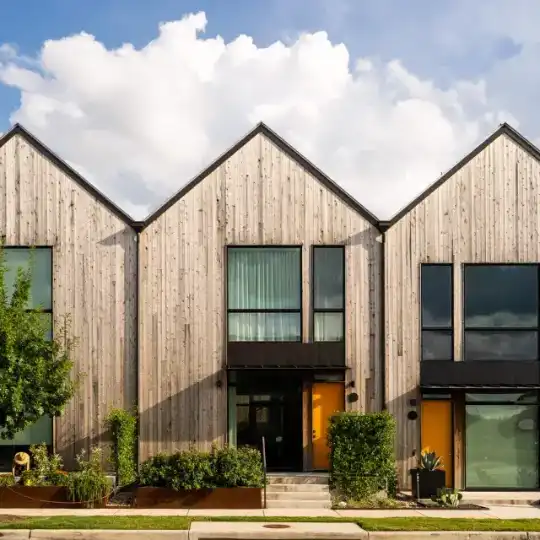
Missing Middle: 3 Ways to Scale Low-density Multifamily Housing
Muskin Row Homes I, Austin, Texas (Photography: Likeness Studio | Nicole Mlakar)Single-family–only zoning — where large shares of land are zoned exclusively for traditional single-family home development — contributes to housing supply scarcity nationwide and has a spillover effect on home sales and rent prices. Unlocking underutilized land zoned for single-family development by allowing low-density multifamily housing is a promising strategy to help cities and towns address the housing shortage impacting all parts of the country. Since we released a paper on this strategy in 2022, several jurisdictions and private entities have taken steps to make it easier to build low-density multifamily (LDMF) housing, also called gentle density or missing middle housing. In a new issue brief — Making it Happen: Scaling Low-density Multifamily Housing — we discuss opportunities to scale affordable housing innovations, including regulatory reforms designed to facilitate the development of some forms of LDMF housing and recent lending products tailored to financing LDMF development. (Learn more about the definition of LDMF housing)ImageMPHA Family Housing Expansion – Sixplex, Minneapolis, Minnesota (Photography: DJR)Here are three ways to unlock the potential of LDMF housing to scale this housing strategy and ease supply and affordability challenges:Adopt zoning reforms to allow for some form of LDMF development in single-family–only zoned areas.The first step to facilitate LDMF housing is to adopt jurisdiction-wide land use and zoning reforms that allow for creating some forms of LDMF in areas zoned for single-family–only housing.A number of jurisdictions across the country have enacted zoning reforms to allow for some form of LDMF development in single-family–only zoned areas, acknowledging that this type of zoning contributes to a range of state and local housing challenges affecting affordability and supply. Since releasing our paper on this strategy in 2022, several states, including Arizona, Colorado, Montana, and Washington, have adopted state-wide zoning reforms intended to facilitate the development of some form of LDMF housing. Additionally, several local jurisdictions have adopted zoning reforms, including Arlington, Virginia; Burlington, Vermont; Knoxville, Tennessee; St. Paul, Minnesota, and New York City.However, legal challenges filed by opposing groups have stalled some reform efforts. Additionally, since these regulatory efforts are recent and limited in geographic scope, they have yet to translate into an increased supply of LDMF nationwide. The adoption of similar reforms by other jurisdictions could lead to widespread state-level reforms intended to facilitate the development of LDMF housing, enabling the housing industry to scale the supply of LDMF housing.ImageJansen Court, Seattle, Washington (Photography: CAST Architecture) Review underlying regulations to ensure they won’t inhibit or restrict the development of the desired types of LDMF housing.Even when a municipality amends its land use and zoning regulations, there may be a set of underlying zoning regulations that could either inhibit or negatively impact the physical and financial feasibility of LDMF development. While local housing market conditions and zoning barriers to LDMF housing production vary from one jurisdiction to another, municipalities interested in addressing regulatory barriers can enact reforms that either eliminate or mitigate prominent regulatory and zoning provisions. These include:Ensure that the underlying minimum lot size requirements allow for developing LDMF housing on parcels previously reserved for single-family development. Minimum lot size requirements are imposed by local zoning regulations to ensure that the parcels to be developed for a specific use meet or exceed size requirements (i.e., at least 5,000, 7,000, or 12,000 square feet).Provide a regulatory landscape that addresses development bulk requirements, i.e., maximum lot coverage, building height caps, and minimum setbacks from the lot’s four lines that allow for and do not negatively impact the development of LDMF housing on parcels previously reserved for single-family development. Ease minimum on-site parking requirements to ensure that underlying requirements allow for and do not negatively impact the development of LDMF housing on parcels previously reserved for single-family development. ImageThe Englewood Passive House Duplex, Englewood, Colorado (Photography: Shape Architecture Studio)Create financing products tailored to the needs of LDMF housing development.The scarcity of lending products tailored for LDMF housing development poses the most significant challenges to developing this type of housing. LDMF housing is likely to be developed by emerging small-scale developers, who often face barriers to accessing lending due to several factors. Small-scale developers pursuing LDMF development often find it difficult to meet underwriting requirements set by lenders and investors, including meeting thresholds for liquidity and net worth levels or track record requirements. Such developers could also be potentially perceived as risky by some investors due to the perception that they lack the financial and technical resources to successfully navigate and tackle unexpected challenges in housing development and operation.Other barriers to accessing financing for LDMF housing development may stem from the scale of this type of development. A developer seeking capital to create LDMF housing may experience challenges in accessing a small-balance loan with terms that would allow the development to pencil out. Additionally, loan underwriters may deem it prohibitive to underwrite a loan for an LDMF development, especially when the cost of the fixed loan originating expenses, such as dedicated personnel and legal fees, outweighs the projected financial return.To overcome these challenges, several private agencies have launched financing products for developers to construct LDMF housing. Such loans are designed specially to finance the construction of LDMF, offering small- to medium-sized loan balances (i.e. $3-5M loan in a market where a larger amount would be deemed a large-sized loan balance), as well as flexible terms that would enable proposed LDMF developments to pencil out, such as low-interest and low-cost small-balance loans that cover a larger share (80% or higher) of the total construction cost. Offering tools such as loan guarantees and pre-development grants could also help emerging small-scale developers access capital by mitigating perceived risks among lenders and investors.This brief is the third in Enterprise’s Making It Happen series. Read the full brief, "Making It Happen: Scaling Low-density Multifamily Housing Construction." This research was made possible through the generous support of JPMorgan Chase & Co. Unless otherwise specifically stated, the views and opinions expressed in the report are solely those of the report’s author and do not necessarily reflect the views and opinions of JPMorgan Chase & Co. or its affiliates. What is LDMF Housing?There is no single, agreed upon definition of low-density multifamily (LDMF) housing, which varies across state and local housing markets largely depending on residential development patterns.These patterns have been significantly shaped by land use and zoning requirements — such as limits to the portion of a lot's area that is covered by buildings, distance between neighboring buildings, and building height — that enabled or precluded certain types of LDMF housing at the time of development. However, changes to these codes over time may have made it illegal to build similar homes today in many areas where they were once permitted.The effective definition of LDMF housing may also be influenced by what is allowable under current land use and zoning requirements, particularly in jurisdictions which have recently enacted zoning reforms that re-legalizes historic forms of LDMF housing. For example, Portland, Oregon’s 2020 zoning reform focused on allowing for LDMF with up to six units, while Minneapolis’ 2020 zoning reform focused on allowing for properties with up to three units.Our research describes LDMF development as housing with density that stands somewhere between traditional single-family development (a detached unit designed to be occupied by one household that sits on its own parcel of land) and high-density multifamily development (broadly defined as having a large number of housing units in relation to the construction site’s total area/size, maximizing land usage). Where it falls on the spectrum depends on the area’s residential development patterns. Related Topics:Policy
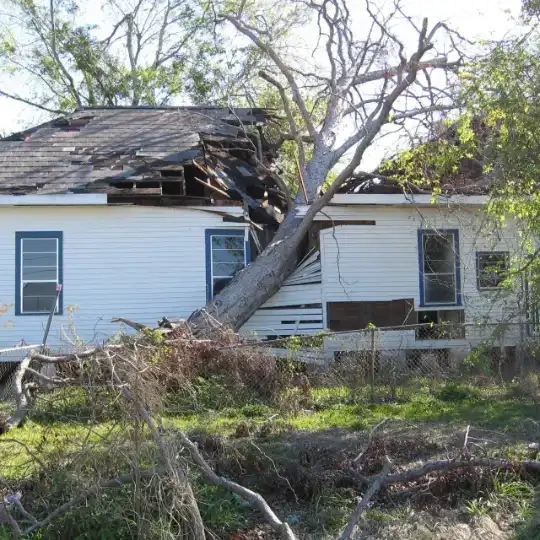
Why Don’t We Know More about Post-Disaster Homelessness?
When a hurricane, wildfire or tornado hits, tens of thousands of households can become homeless in a matter of hours. Homes destroyed or substantially damaged by wind, water, smoke and flames that make them uninhabitable, even if temporarily, can leave families in immediate need of a place to live. Most disaster survivors eventually regain some form of permanent housing, either in the same location or somewhere new, where they can begin the process of restarting their lives. But for some, a disaster can kick off an extended period of housing instability, marked by stays in temporary locations such as hotels, shelters, with friends or family, or even in unsheltered locations. Unable to access stable, affordable housing, people with no place to live eventually blend into the millions who experience homelessness each year in the United States. Given growing concerns over more frequent and severe disasters, as well as rising rates of homelessness in the United States, one might think researchers would be motivated to quantify and understand the connections between these trends. However, as I recently found in my own search for literature on the disaster-homelessness nexus(link is external), there are few studies on this topic. Moreover, what research does exist focuses almost exclusively on either hypothetical or single-event contexts, which limit what conclusions can be drawn regarding the extent of disasters as a contributing factor to homelessness. While scholarship on the scale of post-disaster homelessness is sparse, the existing literature does offer clues as to why this topic remains elusive, as well as options for how to fill this gap. Here are the main sources of disconnect between studies on disaster outcomes and housing instability, and what can be done to provide a better understanding of post-disaster housing experiences that can lead to homelessness.Disconnects in Language, Policy, and DataNeed for Consistent Terminology:Among the reasons for the scant research on post-disaster homelessness is the lack of consistent terminology to describe people in this situation. Disaster survivors who do not return to their former home are often called “evacuees” and described as being “displaced.” These terms apply equally to people who are temporarily dislocated from their homes due to evacuation orders, loss of access or utility service, or repairable damage, as well as to those who experience full destruction of their home with or without the possibility of rebuilding. On the other hand, people who experience long-term homelessness are generally described as being “unhoused” or “unsheltered” due to well-documented systemic inequities that foster and compound housing instability for low-income families. These terms ignore the existence of overlaps in the Venn diagram between these two groups.Differences in Policy and Programmatic Responses:The language used to distinguish disaster survivors from people experiencing homelessness flows through to policy and programmatic approaches to addressing each population’s needs. Disaster-assistance options only address needs directly related to the impacts of the disaster itself, without considering any underlying pre-disaster vulnerabilities that may influence a household’s likelihood of experiencing post-disaster housing instability. Programs to address homelessness, meanwhile, are not designed to support mass-displacement events like disasters. They also rely on existing housing supplies that may be more susceptible to weather-related damage and are already underfunded relative to affordable housing needs generally. Difficult Data:Lastly, data on housing trajectories among disaster survivors and people experiencing homelessness is notoriously difficult to collect. While information on the physical and financial impacts of disasters — e.g., how many homes, buildings, and systems are damaged and the costs to repair them — are prevalent, few options exist to track outcomes for people, especially over the long term. Both populations are generally transient and may experience trauma or other stressors that make consistent, reliable, and compassionate data collection challenging. The lack of baseline data preceding their experience with a disaster or homelessness further limits the longitudinal information that can be gleaned to solely observing post-event outcomes. Without this information, ideally collected from a nationally representative sample, estimates of the true impact of disasters on homelessness in the United States will likely remain elusive.Filling the GapThese challenges are not, however, insurmountable. The following steps could improve our understanding about post-disaster housing trajectories generally, and the degree to which such paths can and do lead to housing instability and homelessness.Acknowledge more broadly the connections between disaster and homelessness research.Most of the current scholarship on post-disaster housing trajectories only theorizes about homelessness as a potential outcome, while literature on housing instability rarely mentions the effect that disasters can have on precipitating an experience with homelessness. Greater integration of these two fields of study is a necessary first step in bridging the divide in our collective understanding of the pathways from disaster to homelessnessSupport efforts to collect longitudinal data on post-disaster housing outcomes.With these research collaborations must also come better data collection on households that experience housing instability following disasters. This data should track the characteristics of such households to identify those at higher risk for worse disaster impacts, lower receipt of disaster assistance, and longer recovery periods, both to highlight the scale of post-disaster homelessness, and call out the gaps in the disaster recovery process that fail to prevent it.Develop policies and programs tailored to the specific needs of people experiencing or at risk of homelessness following a disaster.This includes options that can support short-term housing while local infrastructure and public systems are under repair, as well as long-term options that seek not just to return households to their pre-disaster housing situations, but that also address existing vulnerabilities along with post-disaster needs.With the collective effort of researchers, practitioners, advocates and policymakers working together to improve data collection and understanding about the links between disaster outcomes and homelessness, it is possible to not only quantify the scale of post-disaster homelessness but also develop effective pre- and post-disaster mitigation strategies to reduce it.Related Topics:Policy
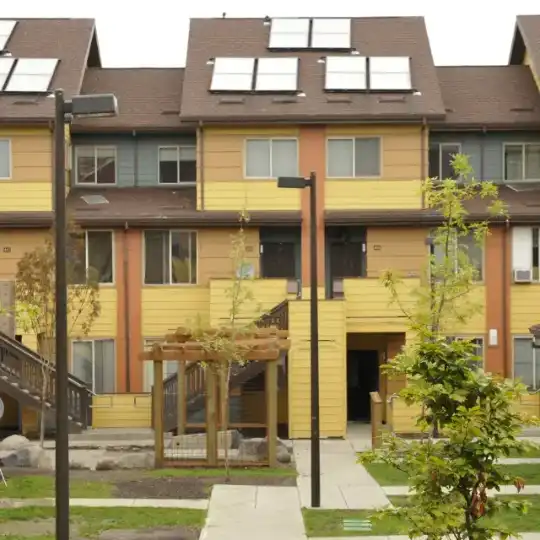
Showing What's Possible: The Genesis of Green Communities
Clara Vista Townhomes in Portland, Oregon, one of the first developments to meet Green Communities certification in 2006It’s been 20 years since Enterprise created Green Communities – the nation’s only green building program designed with and for the affordable housing sector. Today, the program is baked into housing finance policies across 31 states and the District of Columbia, with close to 200,000 units certified, and hundreds of thousands of people living in affordable homes that are more efficient, resilient, and healthier for residents and the planet. Dana Bourland, former vice president of green initiatives at Enterprise, was there from the beginning(link is external), when Green Communities was no more than a bold idea. Key among her contributions is a narrative shift, whereby affordable housing development begins with an integrated design process that draws multiple perspectives and considers how the entirety of a building can benefit people and the natural environment. ImageDana Bourland, former Enterprise VP of green initatives Bourland is the author of Gray to Green: A Call to Action on the Housing and Climate Crises(link is external) and directed over $1 billion toward creating resilient communities while working in philanthropy. Today, her focus is on land-reunion efforts as co-founder and president of Soils & Vessels, which provides capital and resources to help reunite communities with their sacred and ancestral land. Bourland's wide-ranging accolades include Returned Peace Corps Volunteer, Ironman finisher, and Fast Company’s Most Influential Women in Technology. Across these achievements, one constant remains: her visionary leadership to create a planet that is healthier and more equitable. As the national standard undergoes undergo a periodic refresh and Enterprise prepares to roll out the 2026 criteria, Bourland spoke about the launch of Green Communities and why it offers a blueprint for what’s next.In 2004, you were instrumental to the creation of Green Communities. You said there was an appetite in affordable housing at the time to engage in green building. Did you face any challenges?The biggest hurdle then and now is the mindset that speed and quantity are all that matter in affordable housing. The idea that “any housing is good housing” can make it hard to advance smarter, more future-proof approaches.Low rent doesn’t mean much if housing is unhealthy, poorly located, or vulnerable to climate risks. If we ignore those realities, we risk doing more harm than good. Green Communities pushed the field to raise the bar so housing was delivering health, economic, and environmental benefits for all, including our planet and the people in communities where housing materials are manufactured. The Green Communities criteria have evolved over the years and Enterprise is now updating them for 2026. What was the process of creating the first set of criteria? When we launched, the idea was simple: advance an integrated design approach that recognized certain items as mandatory so that no matter what zip code someone lived in, they would get the same benefits. Developers were meeting some criteria, but typically not all. For example, in colder places and where electricity was expensive, housing was generally energy efficient but the developer may have specified materials that were in the red zone, meaning they contained classes of toxic chemicals that can be harmful and potentially life-threatening to communities where they are manufactured, the workers installing them, and the residents regularly coming in contact with them through paint, flooring and insulation. There is nothing better than talking to a person whose child wasn't woken up in the middle of the night because they couldn't breathe, or a family who no longer had to 'eat cheap' during utility bill week.We backed up every mandatory item with cost data, technical assistance, and early grant and predevelopment funding. Over time, updates have become more targeted based on where developers are building and whether they are retrofitting housing. The criteria have also become more responsive to climate science, health data, and building performance. But the principle is the same: lead with what works and make it practical and cost-effective to do the right thing.You must have encountered some naysayers while working to launch the Green Communities standard. How did you handle that?We didn’t dismiss resistance; we used it to provide better technical assistance and partner with trusted entities, particularly those with credible building science and public health expertise. And there’s nothing more persuasive than showing what’s possible. A walk through a Green Communities development, hearing from residents whose health has improved, or seeing the performance metrics – that’s what changes hearts and minds.ImageBourland celebrating Trolley Square's Green Communities certification in Cambridge, MassachusettsSome people had asthma and then did not have asthma triggers a day or two after moving into a Green Communities certified home. There is nothing better than talking to a person whose life was changed, whose child wasn’t woken up in the middle of the night because they couldn’t breathe, or a family who no longer had to “eat cheap" during utility bill week.So it was important to show the naysayers evidence of how everyone and their bottom line benefit. Green development, after all, reduces risk for the developer, owner, operator, and the bank and investor. It future-proofs the building as it limits exposure to volatile energy prices and contributes to better health for residents, who are then less likely to miss work [or school]. And it makes the asset easier to maintain and operate, especially if it is generating and storing its own electricity through solar, wind, or geothermal.Since leaving Enterprise in 2012, you worked at The JPB Foundation (now the Freedom Together Foundation), wrote a book, and recently co-founded a new organization. Yet Green Communities remains an industry standard – what does that mean to you?ImageSaid Bourland: "When the Inflation Reduction Act passed, the affordable housing sector could say: 'We've been building this way for years, and we're ready to scale.'" It’s deeply satisfying and brings me joy. We set out to prove that affordable housing could lead the way, not lag on providing solutions to climate change, health disparities, and economic inequality. And that’s what happened, even though we still have more to do, particularly on equity and justice.When the Inflation Reduction Act passed, the affordable housing sector had a seat at the table. They could say, “We’ve been building this way for years, and we’re ready to scale.” Green Communities laid the groundwork, and developers and owners showed it was possible. Looking ahead, what do you see as the main challenges and opportunities for affordable housing?The first hurdle is political will. We know how to end the housing crisis. We must treat housing as essential infrastructure designed for health, resilience, and equity. That means investing in deeply affordable green homes rooted in community, not speculation and profit. And it requires using the full power of the public purse to direct the resources and regulations needed to make it so.The second is recognizing that the housing crisis and the climate crisis are two sides of the same coin. We can’t separate them. Every new home must be built to withstand heat, floods, storms, and power outages. One way to do that must be to put residents in the driver’s seat to inform what they need from their home and how they can benefit economically over the long term. And we must reckon with history. Housing in this country has divided communities and exploited land. We need models rooted in ownership, sovereignty, and repair, where communities shape their future, not just survive it. We cannot make green communities at the expense of making other communities gray. You’ve said that housing is about a lot more than four walls and a roof. What do you mean?We have decades of data showing that low-income communities and communities of color are disproportionately burdened by pollution from industries that produce “gray” housing: cement, steel, gas, and highways. Neighborhoods are over-exposed to toxic chemicals, heat, and flooding, and under-protected by infrastructure, services, and policy.But it’s not just about buildings, it’s about land. Gray housing is too often built on or near land that’s been contaminated, paved over, or stripped of natural defenses like trees and wetlands. These are the same lands that have been taken from Indigenous communities, rezoned in African-American neighborhoods, and devalued over generations. If we reimagined how we use land – both for industries that make housing construction and home building possible, and by prioritizing ecological restoration, proximity to opportunity, and community stewardship – we could rewrite the legacy of harm. Green Communities offers a blueprint. Vesna Jaksic Lowe is an award-winning journalist. Read more of her writing in ourResilient 7series recognizing housing and community leaders building a more sustainable future. Related Topics:Health and HousingResilienceClimate Risk ReductionGreen CommunitiesEquitable Decarbonization
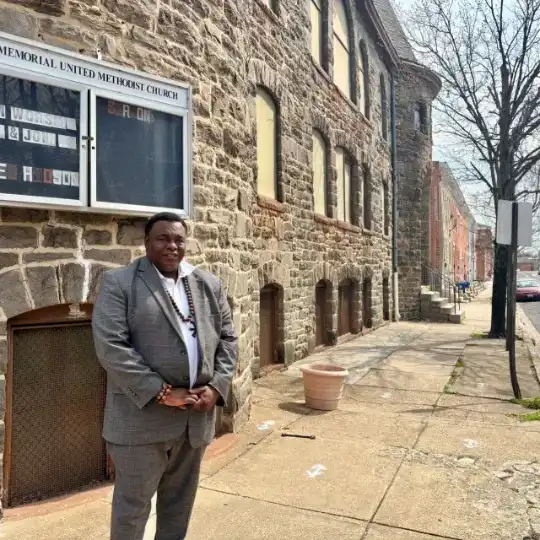
Dream Coming True for West Baltimore Church and Community
Pastor Rod Hudson at the Ames Memorial United Methodist Church in West Baltimore“This is where it all began, right here at this church,” said Pastor Rod Hudson, standing outside the Ames Memorial United Methodist Church in West Baltimore. When Hudson arrived at the church in 2008 as the new senior pastor, he was handed an important piece of history from a Mr. Bill Adams, a congregation member and keeper of the church’s decades-long vision to transform the neighborhood around the church into a vibrant, affordable community. Adams, who was in his nineties at the time, has since passed away, but today, his dream is closer than ever to becoming a reality."The only thing we wanted was just a few lots across the street,” said Hudson. But what started with a few grassy lots expanded into a significant footprint through perseverance, strategic land acquisition, and one bolt from the blue. “It was Enterprise who guided us through the process of how to acquire that lot and what we could do with it," said Hudson. Since 2016, the Enterprise Faith-Based Development InitiativeSM — made possible in Baltimore and cities across the country with support from the Wells Fargo Foundation — has provided training, consulting from industry professionals, grant funding, and technical assistance to support the church’s vision to transform underutilized land into affordable housing and community amenities. Image“We learned about the grassroots of development and how faith communities can leverage their assets to be a benefit to the community,” said Hudson. “Learning that information, getting the technical support, we're able to move from that one lot to where we are now.” By 2021, Ames Shalom Community, Inc. (Ames Shalom), the church’s community development corporation, had amassed 25,000 sq. ft. of developable land by purchasing vacant lots from private owners and Baltimore City. Later that year, they heard back from Northeastern Supply, a plumbing supply company that owned a 100-square-foot corner lot they were eyeing to bring their lots together. “It took them 37 months to respond to our email, but when we met, they asked, ‘Would you like the buildings?’ We didn’t understand what they were saying,” said Hudson. Inspired by the vision laid out by Pastor Hudson and his team, the Cook Family of Northeastern Supply offered to donate their plumbing supply facility and the warehouse behind it. Now, Ames Shalom had 67,000 square feet for their project, “Resurrection Sandtown,” and it was time to put together a development team. ImageBased on their long history of community engagement in the neighborhood, the original plan for Resurrection Sandtown always aimed to incorporate workforce development and health care wraparound services. What they heard from the community was three-fold, “We want jobs, we need a place for our kids to go, and we want quality and affordable housing.” Ames Shalom found an ideal partner in Dwyer Workforce Development(link is external), a health care training nonprofit that wanted to work together to develop their first Dwyer Scholar Healthcare Village. The mixed-use development would include a resource center for their certified nursing assistant trainees as well as a childcare center and mixed-income housing to support their success. Together, they released a Request for Proposals for a development partner, and as Alex Aaron from Blank Slate put it, “God worked this one out. Instead of one, they got three.” Enterprise Community Development, Blank Slate(link is external), and Seawall Development(link is external), all experienced mission-driven developers in the region, were selected to join the team in late 2024, a full circle moment for Enterprise’s Faith-Based Development Initiative team, who has been working with the church for years.Image“Even now, on this next leg, Enterprise is one of our partners, and the fact is that would not have happened without the faith development arm of it,” said Hudson. “Even after I finished the classes, the support is still available,” Hudson added. “If I have a question. I just pick up the phone and call Joe Williams and ask him, ‘What do we need to do here?’”The development journey for a house of worship takes time and isn’t without its challenges. Figuring out the capital stack can be daunting as the development team plans to apply for a combination of Low-Income Housing Tax Credits, New Markets Tax Credits, and public resources, and they project they will have to raise $17 million to cover the financing gap. However, the need in their community fuels their unwavering commitment to Resurrection Sandtown.In one poignant moment at a community engagement meeting, a little girl, about 6 years old, raised her hand to share her thoughts on the project, asking, “This sounds great. I’m excited. Can we also get the streetlights turned on?” Her simple request for a safe streetscape underscored the fundamental importance of Resurrection Sandtown for everyone involved. From the late Bill Adams to Pastor Hudson to the next generation of visionaries in West Baltimore, this small seed of a dream has been carefully nurtured over decades, and it’s finally coming to fruition. Related Topics:Enterprise Faith-Based Development InitiativeSMMid-Atlantic

Advancing Key Updates to Federal Disaster Recovery Program
As disasters increase in frequency and severity, it is more critical than ever to ensure disaster recovery programs are effective and responsive to the needs of impacted communities. Enterprise has long advocated for policies that promote resilience, efficiency, and adaptability in disaster recovery efforts, particularly around the Community Development Block Grant Disaster Recovery (CDBG-DR) program, which is the only source for federal long-term disaster housing recovery funding. We’re proud to have played a pivotal role in shaping the U.S. Department of Housing and Urban Development’s (HUD) recently released Universal Notice(link is external) for the CDBG-DR program. Published on January 7, this notice reflects many of the priorities Enterprise has long worked with HUD to advance, aimed at improving the program’s flexibility and impact. This notice establishes a clear framework for the requirements tied to the $12 billion in CDBG-DR funds allocated by Congress through the most recent continuing resolution(link is external), part of a $100 billion supplemental appropriations package to support disaster recovery efforts across 23 states and one territory affected by disasters in 2023 and 2024. Notably, the framework includes enhanced opportunities for collaboration with Community Development Financial Institutions (CDFIs), which play a vital role in delivering resources to communities in need.The Universal Notice includes the following key updates to enhance disaster recovery efforts:Support for Affordable Housing: Explicitly allowing CDBG-DR funds to pay off post-disaster, pre-award private-sector bridge loans for multifamily affordable housing, easing the financial burden on local communities and helping them recover more quickly.Focus on Preparedness and Resilience: Introducing new eligible activities focused on local disaster preparedness and resilience, empowering communities to be better prepared for future disasters while recovering from current impacts.Streamlined Processes: Aligning environmental review and community-driven relocation requirements with Federal Emergency Management Agency (FEMA) standards, streamlining processes for affected communities.Community Engagement: Establishing a citizen advisory group of community members who reflect the demographics of the disaster-impacted area to provide ongoing input, guidance, and recommendations throughout the grant's lifecycle.Fair Allocation of Funds: Ensuring that funds are allocated to communities in proportion to their needs, covering housing, infrastructure, economic development, and programs for both homeowners and renters.Flexible Ownership Documentation: Allowing alternative methods for documenting ownership of homes damaged by disasters, such as deeds, titles, mortgage papers, tax receipts, home insurance, purchase contracts, wills or affidavits, repair receipts, court documents, letters from manufactured housing community owners or public officials, self-certification, and utility bills.The Universal Notice provides clear, consistent guidance for grantees, ensuring that recovery efforts can move forward with fewer delays. These updates pave the way for a more inclusive and efficient disaster recovery process, ensuring that communities hardest hit by natural disasters are supported in their rebuilding efforts.While the Universal Notice marks a significant step forward, more work remains to ensure the CDBG-DR program can meet the growing demands of disaster recovery. Enterprise urges Congress to permanently authorize the CDBG-DR program in statute. Codifying the program would allow HUD to expedite the distribution of resources, ensuring that funds are delivered more quickly and efficiently to the communities that need them most. We are proud to have contributed to shaping this framework, which will help thousands of families and individuals impacted by disasters from the last two years, and in the new Administration, Enterprise remains committed to advocating for solutions that help communities withstand and recover from natural disasters.

How Adaptive Reuse Helped Revive a Philadelphia Neighborhood
In the heart of Philadelphia’s South Kensington-Fishtown neighborhood, a century-old lamp factory is once again lighting the way — this time, as a symbol of community-centered investment.Oxford Mills, financed in part through $10 million in New Markets Tax Credit (NMTC) allocations from Enterprise Community Partners, has been transformed into a vibrant home for local teachers(link is external), lower income families, and community-serving nonprofits. The adaptive reuse project created 114 rental homes and 42,000 square feet of below-market office space, currently home to eight nonprofits that have created more than 218 full-time jobs — a huge boost in a neighborhood that was considered severely distressed only 15 years ago.When the NMTC investment closed in 2012, the census tract’s poverty rate stood at nearly 34%, with an unemployment rate more than three times the national figure. Philadelphia-based D3 Real Estate Developers(link is external) opened Oxford Mills in 2014 in partnership with Seawall(link is external) — and by 2020, those neighborhood statistics had shifted dramatically. Poverty dropped by more than six percentage points. The median family income grew by more than 80%. Unemployment fell by nearly five points.But behind each of those numbers are human stories, captured in a newly released impact report from Enterprise’s NMTC business: teachers who can live where they work, mission-driven organizations delivering critical services, and longtime residents who have watched the neighborhood change — all while maintaining a stake in its future.Old Building, New Opportunities ImageOxford Mills straddles the line of South Kensington and Fishtown, two neighborhoods northeast of Philadelphia’s Center City. With thriving art and culinary scenes, it’s become a desirable place to live. Such a neighborhood shift often results in workers like teachers becoming priced out of the area — but not with Oxford Mills.Eric Wright, who teaches English in a nearby community, has called the neighborhood home since the former factory reopened in 2014. He lives in one of 65 units specifically reserved for local teachers, which the property offers at a 20% rent discount to ensure they can live in the community they serve. That proximity really makes a difference, he said, both for him and his students.“I’m not wasting 45 minutes to commute, like many of my colleagues. It allows me to be a better teacher in terms of content and preparedness,” he said. It also means stronger relationships with students, deeper ties to the community, and the ability to serve as a role model outside the classroom walls. “Kids see people in their neighborhood who have professional careers … it rubs off on them,” he added.ImageHealth Federation of Philadelphia Early Head Start Family Room at Oxford MillsOxford Mills doesn’t just serve the people who live there—it also anchors vital community infrastructure. Inside its brick walls are organizations like Teach for America, Beyond Literacy, Education Plus Health, and the Health Federation of Philadelphia. These nonprofits work across the education and social services spectrum, from early childhood programs to school-based health clinics to adult literacy initiatives.In 2023 alone, Beyond Literacy served over 1,600 adults taking English classes and other high school equivalency programs. The Health Federation supported more than 180 families through home-visiting services. And Education Plus Health connected thousands of students with critical health resources directly in their schools. Ultimately, the result is a campus-like ecosystem of care and opportunity—one that wouldn’t be financially viable without NMTC financing.“The New Markets Tax Credit, for a project like Oxford Mills, is essential. It incentivizes a developer to be able to not only refurbish and repurpose a building, but to be able to fulfill the concept—to provide housing to teachers and educators and have the nonprofit space that otherwise they could not afford. Marc Collazzo, executive director of the Fishtown Kensington Area Business Improvement DistrictFor longtime residents, that transformation has been significant—and it’s one they’ve been able to take part in, including through new employment opportunities. Richard Revere, a former employee of the original lamp factory, was hired by D3 to help transition the facility and ultimately stay on full-time. That’s given him a front-row seat to the project’s development and the neighborhood’s growth.“When D3 renovated this factory, there were no eateries. No apartment buildings. None of this was here,” said Revere, who started working at the factory in the 1990s. In the years following the Oxford Mills’ ribbon cutting, Fishtown has seen rising property values, new housing developments, dramatically increased restaurant and nightlife options, and improved public transit to help connect the neighborhood to the rest of Philadelphia.“I watched the whole transformation,” Revere added, “and I’m still amazed.”Learn more about Oxford Mills and the New Markets Tax Credit.ImageRelated Topics:New Markets Tax Credit

A Once-in-a-Decade Tax Policy Opportunity
President Trump started his second term with a barrage of Executive Orders and a meeting with House and Senate Republican leadership(link is external) to devise their legislative strategy for the first 100 days of his Administration. Among the top priorities is dealing with the expiration of the President’s hallmark tax law passed in 2017, the Tax Cuts and Jobs Act (TCJA). The expiration provides a once-in-a-decade opportunity to move major tax legislation, dubbed the “the Super Bowl of tax” in Washington circles.The expiration and subsequent tax negotiations provide housing and community development advocates with a lever to advance key priorities like expanding the Low-Income Housing Tax Credit (Housing Credit), making the New Markets Tax Credit (NMTC) permanent, and enacting the Neighborhood Homes Investment Act (NHIA), as well as to make improvements to the Opportunity Zones incentive that was established in the 2017 legislation. However, with the cost of just extending the TCJA ringing in at $4.6 trillion(link is external), passing any tax legislation is going to be a massive lift. The Reconciliation ProcessWith control of both chambers of Congress and the White House, Republicans are planning to use a legislative process called “budget reconciliation(link is external)” to advance their tax priorities. Reconciliation allows for expedited legislative action by limiting Senate debate and effectively bypassing the filibuster. This process only requires a simple majority for passage in both chambers, minimizing the need for bipartisan support. To initiate reconciliation, both chambers must first pass identical budget resolutions detailing their proposed federal budgets. Each budget reconciliation process can result in three reconciliation bills, requiring careful prioritization of legislative goals. In addition, reconciliation bills must only consider revenue (tax), spending, or the debt limit, and this type of legislation is subject to the Byrd Rule(link is external). The Byrd Rule prevents “extraneous” provisions unrelated to budget concerns. Disputes over these provisions are resolved by the Senate parliamentarian(link is external), which is a nonpartisan position, who will dismiss them if they are extraneous. Despite Republicans having a trifecta, reconciliation is no easy task. The slim Republican majorities—53-47 in the Senate and 218-215 in the House—requires near-total party unity. The House majority will soon narrow to 217-215 following the likely resignation of Rep. Elise Stefanik (R-NY-21), who will take a position in the Administration, and pending special elections to replace her and Reps. Michael Waltz (R-FL-06) and Matt Gaetz (R-FL-01). The latter two are scheduled for April 1. If House Republicans bring a reconciliation bill forward before the seats are filled, they cannot lose a single vote on the bill—as there is no tie-breaker in the House and the measure would fail.An Opportunity for Housing and Community Development AdvocatesHousing took center stage in the presidential election and in many of the House and Senate elections, as both Republicans and Democrats recognized the significant housing shortage across the country. Enterprise is advocating for several key housing policies to be included in the tax package:Provisions to expand and strengthen the Housing Credit(link is external), which has become the primary vehicle for financing affordable rental housing since its inception in 1986. The bipartisan, bicameral Affordable Housing Credit Improvement Act (AHCIA) received widespread support in the last Congress with 309 cosponsors across the House and Senate. Notably, the AHCIA was by far the most cosponsored tax bill in the House last Congress.A permanent extension to the NMTC(link is external), which drives capital to distressed communities, revitalizing local economies, growing business and community services, and creating over one million jobs. The NMTC is set to expire at the end of 2025, and the bipartisan, bicameral New Markets Tax Credit Extension Act was reintroduced recently. Budget reconciliation can also be used to improve the Opportunity Zones (OZs(link is external)), which was enacted in TCJA and is set to expire in 2026. OZs are a top priority for Senate Banking, Housing, and Urban Affairs Committee Chair and Senate Finance Committee member Tim Scott (R-SC), and President Trump has frequently pointed to the incentive as a key victory he achieved during his first term. OZs are expected to be expanded in the upcoming tax package.Enterprise worked with Congress on bipartisan legislation in the 116th Congress after the establishment of the OZ incentive to add reporting and transparency requirements. Enterprise supports similar proposed changes outlined in the Opportunity Zones Transparency, Extension, and Improvement Act(link is external). As it currently operates, the OZ incentive does not work well to finance affordable housing, but advocates are exploring ways to modify the program to make it more feasible and make it pair more effectively with the Housing Credit and the NMTC, support Community Development Financial Institutions, and reach communities with deeper distress.Anticipated Timeline—One Bill, or Two? The answer depends on which chamber you ask. House Republican leadership is working to advance “one big, beautiful bill,” to quickly advance President Trump’s policy agenda. Speaker Johnson has yet to bring their budget resolution to the floor for a vote due to razor thin margins and over a dozen holdouts(link is external). The Senate adopted their budget resolution(link is external) in a party line vote of 52-48 in the early morning hours on February 21, which puts them ahead in the reconciliation race. Does that mean it’s full steam ahead on a two-bill strategy, addressing immigration and energy policy first, followed by a second bill tackling tax policy? Not quite. The day before the Senate was set to vote on their chamber’s budget resolution, setting their two-bill strategy in motion, the President surprised Senate leadership(link is external) when he gave an emphatic endorsement of the House’s “big, beautiful bill.” Speaker Johnson has publicly noted that the House will not vote on the Senate bill and the President’s endorsement seems to flip the coin in their favor. While this scenario could result in a more direct path forward for tax, the House will need to move quickly next week to catch up with the upper chamber. In the meantime, Senate leadership plans to keep moving ahead with their two-bill process, just in case the House’s strategy fails.While the path to the Tax Super Bowl is not set, it is clear the time is now for advocates to ask their legislators to prioritize affordable housing tax legislation in the reconciliation process. Enterprise is working closely with Congress to urge inclusion of these critical affordable housing and community development priorities. Be sure to sign up for Enterprise’s Capitol Express newsletter and join the ACTION Campaign(link is external) to stay up to date on Housing Credit advocacy. We must seize this once-in-a-decade opportunity to address our affordable housing shortage and drive investment and jobs to economically distressed rural, suburban, and urban communities. Related Topics:Low-Income Housing Tax CreditNew Markets Tax CreditPolicy
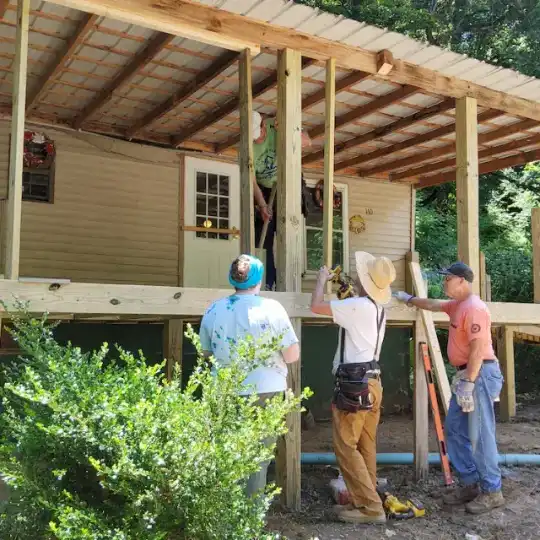
Helping Eastern Kentucky Recover from Devastating Floods
A capacity-building grant from Enterprise allowed HDA to hire a flood construction specialist to help communities recover faster.In July of 2022, a thousand-year flood swept through eastern Kentucky leading to the loss of 44 lives and destroying and damaging thousands of houses. One of the worst floods in the state’s history, 13 counties(link is external) were declared disaster areas, and the long, arduous recovery process began in this remote, impoverished region.These close-knit communities are turning to trusted local nonprofits like the Housing Development Alliance(link is external) (HDA) to help rebuild their homes and lives. Through a Section 4 capacity building grant from Enterprise, the 30-year nonprofit brought on a flood construction specialist to help manage the rehabilitation of the damaged homes.Deepening the Housing CrisisSince 1993, HDA has addressed the critical need for quality, affordable homes. Many families in Breathitt, Knot, Leslie, and Perry counties lived in substandard conditions—some without running water—and in overcrowded, unsafe homes before the floods.The disaster exacerbated already challenging conditions for many families. Nearly 75 percent of the housing damaged from the flood occurred in just four counties—Breathitt, Knott, Letcher, and Perry—which comprised 22 percent of the occupied homes. Many of the flood survivors are elderly, living on fixed incomes and earning less than $30,000 per year, making it difficult to replace or repair their homes on their own. About 95 percent of those affected in HDA’s service area did not have flood insurance because the premiums were cost-prohibitive to low-income homeowners.In many cases, seniors and families continue to live in their damaged homes, unable to find the resources to rebuild or relocate.Creating Housing Outside the FloodplainsOne of the challenges HDA faces in recovery is finding suitable land for new homes. While large tracts of land are being bought or donated, the sites are often undeveloped, and HDA has not been able to build new homes on higher-ground. HDA is now focused on scattered sites that they have in Perry County and other areas outside of the flood zone until larger parcels can be acquired. This challenge is made more difficult due to the rocky ground, traces of chemicals from strip mining, and a lack of topsoil for gardening, which people in the community rely on and love for their gardening needs.ImageDosha Combs, whose home was destroyed by floods in Lost Creek, received a used trailer from her daughter. HDA helped make it livable by building a porch, adding a ramp, installing new windows, doors, flooring, and an HVAC system. Despite these challenges, HDA has built 32 new homes for flood survivors on scattered sites and completed 102 rehabs, where homes required two to three major repairs. Of the 3,293 homes damaged(link is external) by the flood where HAD works, 500 were destroyed, and 11,480 people were directly impacted by the disaster.With less than 100,000 people in total across the region, HDA is working with over 150 flood survivors who still need assistance with home repairs.“At the time of the flood, we were not receiving direct federal funding for emergency repairs, and we had to scramble to find resources and capacity to handle the recovery work while continuing our ongoing affordable housing efforts,” said Mindy Miller, HAD’s director of development and communications. “That’s where the funding for the flood construction specialist position has made a huge difference.”The Section 4 capacity grant helped HDA retain a dedicated staff member who focuses exclusively on flood recovery, allowing the rehabilitation crews to work faster and more efficiently.Partnerships and Commitment to Housing ResilienceHDA is a key member of the Housing Can’t Wait(link is external) coalition, a grassroots initiative involving other nonprofit developers working to build new homes and rehab existing homes for flood survivors and low-income families across the counties they serve. This collaboration is crucial to tackling the housing crisis in the region, which has worsened since the flood.In the next 18 months, HDA plans to rehab 50 flood-damaged homes while continuing to focus on rebuilding stronger, safer communities at risk of future flooding. Their efforts will include flood-resistant designs and elevating homes where possible to ensure long-term resilience. The work aims to rebuild lives and create a path to safety, stability, and resilience for generations to come. Related Topics:Section 4Preservation and ProductionResilienceRural Communities
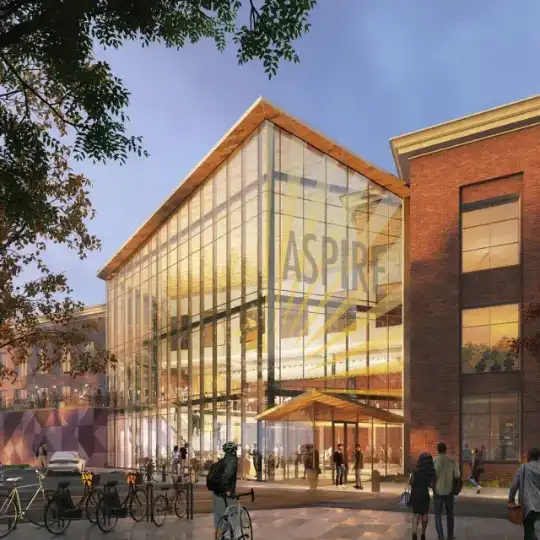
A Bid to Make New Markets Tax Credit Permanent
Last week, lawmakers introduced bipartisan legislation that would make the New Markets Tax Credit a permanent part of the tax code, solidifying a program that has supported more than 8,500 business and community-driven projects and created more than a million jobs across the country since it was created in 2000.Reps. Claudia Tenney (R-N.Y.) and Terri Sewell (D-Ala.), along with Sens. Steve Daines (R-Mont.) and Mark Warner (D-Va.), introduced(link is external) the New Markets Tax Credit (NMTC) Extension Act of 2025 (H.R. 1103 (link is external)/ S. 479(link is external)). The bill is identical to prior versions of the bill introduced in the 118th Congress (H.R. 2539(link is external) / S. 234(link is external)) and 117th Congress (H.R. 1321(link is external) / S. 456(link is external)). In addition to making the NMTC permanent, the bill would also establish a $5 billion annual allocation of tax credits, indexes that $5 billion allocation to inflation annually, and exempts future NMTC investments to the Alternative Minimum Tax (AMT) – as current NMTC investments are. The NMTC will expire at the end of 2025 without congressional action. An identical Senate bill is expected soon.“From rural towns to urban centers, the New Markets Tax Credit has transformed neighborhoods, funding essential projects like healthcare centers, schools, and workforce development facilities,” said Lori Chatman, president of Enterprise’s Capital Division. “A proven tool for catalyzing economic investment and growth in communities that need it the most, the NMTC must be made a permanent fixture in the tax code before it expires this year. We applaud Congresswoman Tenney for championing this legislation and urge Congress to act swiftly to safeguard the future of this vital program.”The GLOW Healthy Living Campus(link is external) in Rep. Tenney’s upstate New York district had its ribbon cutting(link is external) ceremony in December. It is one of over 100 NMTC deals Enterprise has financed since the program’s creation in 2000. The project’s 78,000 square feet includes a YMCA and a Federally Qualified Health Center (FQHC) operated by United Memorial Medical Center (UMMC) that serves the Batavia community in the state’s Finger Lakes region. GLOW contains a fitness center, a wellness center, and a full-service primary medical care facility. Its impact on the community includes:Creating 72 pre-development and construction jobs;Creating 18 new jobs and preserving 47 jobs at the YMCA;Creating 73 new jobs and preserving 182 jobs at UMMC;Doubling the YMCA’s capacity to serve 6,000 people annually, up from 3,000, in addition to serving 3,000 children yearly in preschool, after school, camp, and sports programs;Increasing UMMC’s patient base by 2,400 people, totaling 9,500 people served, including 8,400 patients plus non-patient participants in its programs across over 12,500 visits per year.Nationally, $81 billion in federal allocations has resulted in over 8,500 projects and created 1.2 million jobs. These NMTC projects include FQHCs, daycare centers, schools, treatment facilities, job training or apprenticeship programs, as well as manufacturing and industrial businesses. The NMTC Extension Act is one of Enterprise’s top federal policy priorities. Making it a permanent part of the tax code will increase the efficiency of and add stability to this proven public-private partnership for community revitalization by driving capital to communities frequently left outside of the economic mainstream. Making it permanent will also allow for the investor community to diversify, as well as grow businesses and community services, job creation, and increased economic opportunity.Last year, the Treasury Department’s Community Development Financial Institutions (CDFI) Fund, which administers the NMTC program, announced that the Calendar Year 2024 (CY24) and CY25 NMTC rounds would be combined into one $10 billion round, which Enterprise strongly supported. Combining the final two rounds before the program expires at the end of this year will help get these resources more quickly to distressed communities, creating jobs, growing local economies, and creating businesses and services. This double round will also help demonstrate to Congress why it is imperative that they make the NMTC permanent in the major tax legislation anticipated this year. Related Topics:New Markets Tax CreditPolicy

Three Years, Thousands of Repairs
Turriner Jackson with Renaissance of Hope Community Manager, Lance Woods, who supported her through repairs to her home.A Detroiter all her life, Turriner Jackson purchased her first home in 2011. Over the years, it grew harder and harder to keep up with the unexpected expenses needed to maintain her home, a bungalow where she and her husband raised their two kids. She would tap friends of friends who assured her they could provide repairs but ultimately only provided temporary fixes to worsening problems. "Then my husband passed in 2020, and it was something really different with just me. I'm on a fixed income, so there was no doing it myself,” Jackson shared. It wasn't until 2024 when she got connected to the Detroit Home Repair Fund (DHRF), that she finally found a reprieve. DHRF was able to provide Jackson with nearly $40,000 worth of critical health and safety repairs: new windows, gutters, downspouts, and a full roof replacement — just to name a few. “When they got done with repairs, I was so pleased. I was calling people, saying, ‘I need you to drive past my house.’ I am so grateful.”When the Detroit Home Repair Fund (DHRF) launched in 2022, Enterprise and program partners knew this $20 million initiative was not going to meet the overwhelming need(link is external) in the city on its own. But it was a major opportunity to provide immediate, tangible help for families like Jackson’s — more than 6,000 repairs in 532 homes so far — and build the capacity of organizations to address home repair needs in their communities.When funding to seed the program from Gilbert Family Foundation and DTE Energy was announced, DHRF received more than 125,000 calls to the home repair hotline. With technical assistance partner Green & Healthy Homes Initiative, Enterprise mobilized quickly to put together a program responsive to the urgent need on the ground, learning valuable lessons along the way.Lesson 1: Put Health and Safety FirstWhen you look at the home as a whole, it makes you pause and think about what's going to change residents’ lives the most. How am I going to better serve this client and give them better health? We don’t want to helicopter in and install a new furnace if their main drain is compromised. If it floods in six months, it’s been a disservice.Tim Bishop, Director of Home Repair Services, United Community Housing CoalitionMost households served by the home repair fund — half of which include a senior or resident with disabilities — are living with serious health and safety hazards in their homes, from exposed wires to unreliable heat or hot water. With training from Green & Healthy Homes Initiative, DHRF’s 13 community partners use a whole-home approach to assess health and safety issues, develop a scope of work, and coordinate with contractors for repairs. To help prioritize the most urgent hazards, DHRF established three tiers of home repair needs, requiring that every home meets a baseline health and safety standard.Lesson 2: Maximize Impact Through Flexible, Layered FundingWe did an assessment for one family with three kids where the toilet wasn’t working; the kitchen sink wouldn’t drain, and there was a hole in the roof. We brought in the city’s Lateral Sewer Line program to address the drainage issues, and DTE covered the mechanical systems. The Detroit Home Repair Fund is very flexible, so we were able to not only fix the bathroom but also make sure that the roof was secure. That coordination is what makes a safe and hazard-free home.Mike Walker, Program Associate, Green & Healthy Homes InitiativeDetroit has a variety of home repair resources—from the State’s Neighborhood Program to the City’s Senior Emergency Home Repair initiative—but each comes with different eligibility criteria, scope of work parameters, and requirements. The Detroit Home Repair Fund is designed to work alongside these programs, filling the gaps between existing supports. To date, the Detroit Home Repair Fund has invested $10.3 million in program funds and leveraged an additional $5.3 million from over 10 different sources. Lesson 3: Invest in Trusted Local Partners Our track record of success in this program has opened doors for us to receive other grants for home repair. THAW was mostly known for our utilities services, but our program has expanded into doing plumbing repair, housing repair, energy efficiency services—we’re expanding by leaps and bounds!Rozeta Rox, Program Service Manager, The Heat And Warmth Fund (THAW)DHRF has sparked growth and momentum for our community partners, a key aspect of the work Enterprise does in Detroit and across the nation. The fund has invested more than $3.5 million to support the staff implementing this program and provide up-front funding for repairs rather than reimbursements in order to reduce burdens on smaller nonprofits and contractors. The relationships DHRF partners have in the communities they serve are key to the program’s success. From larger organizations with extensive experience in home repair to grassroots groups newly trained in the work, partners combine personal with professional to foster community trust.Lance Woods, Community Manager for Renaissance of Hope, who guided Turriner Jackson through the program from beginning to end shared, “I came into the program without experience in home repair but a ton of experience in community development. I use that skillset to meet residents where they are, which matters when you’re going into someone’s home. I treat them like my grandparents, my aunties, make sure they feel supported.” Three years and thousands of repairs in, Enterprise and DHRF partners have built a strong program and incredible team, touching the lives of more than 1,000 residents. Now, the team is accelerating towards a goal of 1,000 homes repaired so more Detroiters can do what Jackson said she did when her repairs were complete, "I would leave the house just so I could walk back in again."ImageThe Detroit Home Repair Fund provided new windows, gutters, downspouts, a full roof replacement, and more for Jackson's home.Related Topics:Detroit
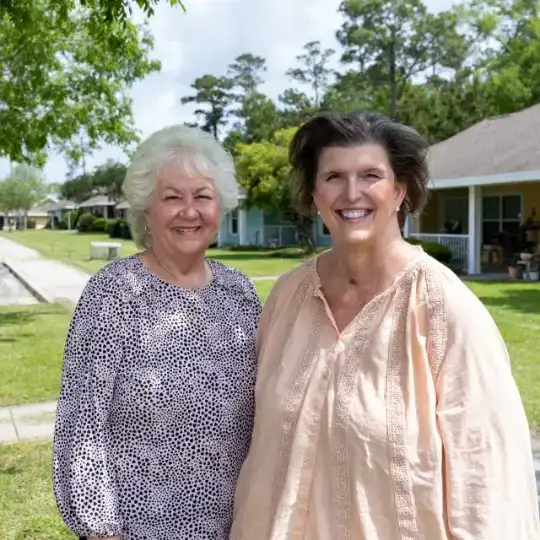
Caring for the People You Help: 20 Years After Katrina
Karen Ladner, former executive director of the Bay Waveland Housing Authority, with Janine Lee, current executive directorWhen Karen Ladner heard that a major hurricane was heading for her town in August of 2005, she immediately thought about the residents who lived in affordable homes at her housing authority in Waveland, Mississippi. “After we went and picked up everything in the yards, I wrote a little letter telling them I needed to know where they were going for evacuation,” said Ladner, who was executive director of Bay Waveland Housing Authority in this Gulf Coast community. “To this day, I don’t know where some of them went, but I do know they all survived.”The eyewall of Hurricane Katrina passed directly over the city, resulting in high winds and a massive storm surge that battered the community and destroyed all the area’s public housing. The damage was part of the broad destruction on the Mississippi Gulf Coast, where more than 60,000 homes were lost.We spoke with Ladner recently about her experience during the storm, her career that was bookended by major hurricanes, and how she persisted after Hurricane Katrina to oversee construction of resilient senior housing communities and the first public housing project rebuilt in Hancock County after the storms.ImageBefore the StormThis was always a quiet place. We had a lot of Louisiana people who lived here who had summer homes. I was running the Waveland Housing Authority, which had properties in Waveland, one on Camille Circle, one off Waveland Avenue. I'd been working in housing since I was just out of high school, starting after Hurricane Camille in 1969. [The Waveland Housing Authority merged to become the Bay Waveland Housing Authority after Katrina]Even before Katrina, I could see how hard it was getting for people. When I first started, rent was 25% of a person's income, then they increased it to 30%. It was hard on people —sometimes they had to choose between medicine or food. We'd send them to food banks to get help. The elderly especially lived on fixed incomes, and I saw how much they needed help. That's why, after the storm, I thought I was going to be smart and focus on building elderly units.ImageWhen Katrina HitWhen we heard hurricane, we had to get all the tenants settled. My maintenance went and picked up everything in the yards. We didn't find out till Friday night that there was a 60-foot wave coming.My family went to the NASA test site near us — my camper was packed to go camping for ten days. But when we got there, they said the buildings were full. I told the guy, "Don't you have a police department out here? Well, go get out 32 handcuffs cause you're going to need them." We were going in.ImageComing Back to NothingWe couldn't come back right away. There was nothing here. The water was everywhere. I had nine feet of water in my house. This property had about four feet, but my office had about six feet. They had boats on top of houses — you just wouldn't believe it.My house stood, but I had a tree in it and nine feet of water. Everybody did. We couldn't use phones. We'd have to go to the interstate or to the beach to get phone service. We slept on my sister's porch for two weeks. It was terrible.The RecoveryIt took a long time. We were just glad to have a roof over our heads. They gave us the little campers. Tommy Longo was the mayor of our town, and he sent me to a camper. I said, "Tommy, what am I going to do? We don't have any units - we're just taking them down."It took us until 2015 to close out the FEMA contract, ten years after the storm.ImageBruce Necaise is a resident at Oak Haven apartments in Waveland, Miss.Learning the Hard WayKatrina was a learning experience for everybody. I only rented units — I never built them before. When some guys from Atlanta came to my office and asked, "Where's your workers?" I said, "It's me." They said, "You have to get somebody to help you." I said, "No joke. I'm about to have a nervous breakdown."When you lose almost everything, and everybody that worked at the housing authority lost everything, and then you're trying to build back for people that needed help, it creates multiple layers of stress.The Breaking PointAt one point, I was coming to work one morning, driving by St. Ann's church right down the road from us. I pulled in front of the church, and I said, "Lord, I love helping people and I want to help people, but you have got to take this burden off of me so I can do what I have to do." I was managing eight insurance claims myself, trying to build back my own house and build public housing. When tenants would call me and say, "What am I going to do?" I'd give them advice: "Just stay where you are right now. You have to make it work. There's no place here to come back to right now."Rebuilding – FinallyWe did the tax credit application in 2007 but then lost our investor when the bottom fell out in 2008. The Mississippi Development Authority stepped in with a bridge loan until we found Enterprise as our investor. [Developers eventually closed on the financing in 2010 with the help of Enterprise and American Express Center for Community Development. The $15.8 million community was financed with Gulf Opportunity Zone housing tax credits from the Mississippi Home Corp. The tax credits provided roughly $7 million in equity from investor American Express through Enterprise.]Oak Haven was ready to lease in August 2010. Bay Pines got leased up in June 2011. We built really nice units - two and three bedrooms, some with garages.A lot of my former tenants came back. Believe it or not, many had my cell phone number. They'd call me and say, "Karen, I'm in Tennessee and I want to come home." I'd tell them, "We're building units - when we get them built, you can come back home."We had 50 FEMA campers on the Waveland property. I negotiated to make sure some of my displaced tenants could get trailers there. I told the officials, "I think the people that lived here should have a chance to come back to their little hometown."ImageWhat It All MeantI always told people that the housing is a steppingstone to get you on your feet and then move forward. I helped tenants learn to budget, and several got VA loans to buy their own homes.I started out in housing after Hurricane Camille in 1969, just out of high school. Don McIntyre hired me to be his secretary, and I never left. I loved helping people. When I was ready to retire, I wanted to train someone who had a heart to help people — that's what we're here for. Not just to do your job, but to care for the people you help.Twenty Years LaterNow we just hope we don't get another one like Katrina. It's hard to believe it's been that long. We've come a long way, but there are still places that have never been rebuilt.The insurance is killing us now - $250,000 a year just for wind and hail coverage on our developments. But you know what? You just move on.A hurricane is different from a tornado or earthquake because you know when it's coming. You can prepare. But Katrina taught everybody - residents, officials, agencies - lessons we'd never had to learn before.I'm enjoying my grandchildren now that I’m retired, but I still have former residents come up to me and say, "Miss Karen, how you doing?" Some of them were little kids when they lived in our housing, and now they're all grown up. That's the reward — seeing people move forward with their lives, knowing you helped them when they needed it most.Related Topics:ResilienceGulf Coast
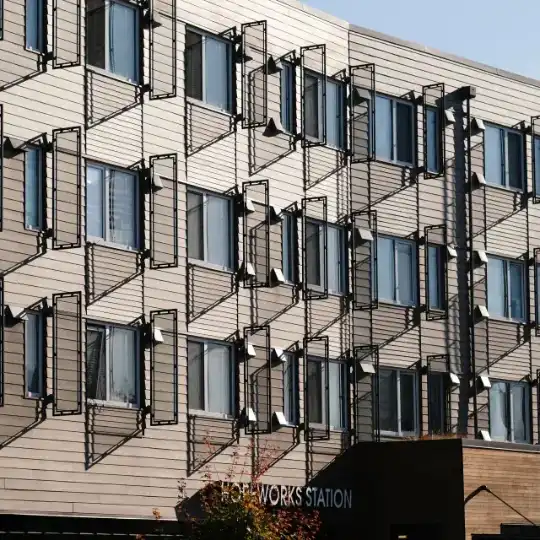
How the CDFI Fund Unlocks Capital that Drives Local Economic Development
In rural Vermont, investment dollars are helping to fund a mixed-use development with community facilities and restaurants that provide local jobs. Across the country in Everett, Washington, a unique mixed-use project combines affordable housing with job training and social services for low-income, formerly homeless, and veteran populations. In Oakland, California, loans helped keep rents affordable for 55 families, assuring they can stay in their homes for the long term.These high-impact projects represent thousands across the country that have received support from the Community Development Financial Institutions (CDFI) Fund(link is external), a U.S. Department of Treasury program that provides capital grants and equity investments through CDFIs and other community development organizations currently operating in every state across the country. The program generates keen bipartisan backing. Following an early 2025 executive order(link is external) calling for a reduction in CDFI Fund operations, U.S. Senators Mark Warner (D-Va.) and Mike Crapo (R-Idaho), co-chairs of the Senate Community Development Finance Caucus, issued letters in March(link is external) and August(link is external) — signed by the co-chairs and 23 other senators — to reaffirm their support and encourage deployment of funds for fiscal year 2025. We spoke with Elise Balboni, president of Enterprise's CDFI, to understand the full scope of the CDFI Fund’s impact. ImageElise Balboni, president of Enterprise Community Partner’s CDFILet’s start with the basics. What is the CDFI Fund?The Fund’s primary mission is to support Community Development Financial Institutions (CDFIs), which are mission-driven investors that provide affordable loans, equity investments, financial services, and technical assistance to people and communities often overlooked by traditional banks — think new small businesses, first-time homebuyers, and nonprofit organizations in lower-income areas. When it was created in 1994 with the Riegle Community Development and Regulatory Improvement Act, the CDFI Fund not only established federal funding sources, it also launched a certification process. Later, the CDFI Fund became responsible for allocating other resources to financial institutions for economic and community development, like the New Markets Tax Credit program, an economic development lifeline in communities across the country, and the CDFI Bond Guarantee Program, which makes long-term debt available to CDFIs. These programs have rigorous application and scoring processes, which help guarantee that federal funds go to organizations with the means and knowledge to deploy capital to the projects that will have the most impact. If private investors can support CDFIs, why are these federal dollars so important? For CDFIs like the Enterprise Community Loan Fund, the CDFI Fund provides foundational funding, helping us build our balance sheet strength, attract more investors and scale our activities. Just look at the data: For every federal $1 provided by the CDFI Fund, CDFIs bring in at least $8 in private sector investments. CDFI Fund grants also fuel financial innovation, allowing CDFIs to provide flexible, patient capital to new sectors and borrowers to establish a successful track record of repayment. For every federal $1 provided by the CDFI Fund, CDFIs bring in at least $8 in private sector investments. Without the CDFI Fund, I don’t think the industry would be operating at its current scale. There are now more than 1,400 certified CDFIs operating nationwide, delivering more than $300 billion in financial services every year, in every state and U.S. territory. That capital directly supports the creation of affordable housing, jobs, health clinics, community and commercial spaces, and other critical resources in the places that need them most. CDFI Fund support is necessary to ensure capital access for every community in the country and ensure broad-based economic development. What sets CDFIs apart from traditional banks that provide business loans?ImageHopeWorks combines affordable housing with job training in Everett, Washington, CDFIs are deeply embedded in the communities they serve — they operate with boots on the ground, meaning they understand local needs, challenges, and opportunities from the inside. They’re also built to take on risks conventional lenders can’t. CDFIs offer longer loan terms, higher loan-to-value ratios, and interest-only repayment periods, making community development projects more viable. That translates to grocery stores in food deserts, small business incubators in lower-income neighborhoods, and early childhood education centers in places where other schools have had to close. CDFIs have also emerged as financial first responders during times of crisis — we saw proof of that during the COVID-19 pandemic. When traditional banks needed to tighten their lending standards, CDFIs were able to continue lending, keeping businesses and community projects funded. For both investors and borrowers, CDFIs are a critical ally during times of economic uncertainty. Can you provide a real-world example of how CDFI Fund dollars make a difference?Yes, I can provide many! This past year, our Capital Magnet Fund award enabled us to provide a $1.1 million acquisition loan to refinance a 64-unit affordable housing project in Waynesboro, Georgia. Our CDFI’s loan helped preserve these units as affordable until the property could be repositioned via a Low-Income Housing Tax Credit resyndication. ImageA rendering of White Center Community HUB in Seattle.The Enterprise Community Loan Fund relied on other CDFI Fund awards to provide subordinate financing with Enterprise’s NMTC business. Along with Local Initiatives Support Corporation and Craft3, we served as the lead on $12 million in senior bridge and mini-permanent financing for the new construction of White Center Community HUB, a 26,000-square-foot community hub in Seattle. The property will offer leasable office and health clinic space, a commercial kitchen, a cafe, classrooms, and community event space. The CDFI Fund award provided critical gap financing that enabled this transaction to close.How do CDFIs contribute to long-term economic stability?CDFIs don’t just fund these important community-serving projects; they create sustainable economic ecosystems. By financing local businesses, affordable housing, and other essential services, CDFIs help stabilize communities and create jobs. They also improve borrowers’ credit scores and financial standings, opening pathways to future opportunities. CDFIs revolve and leverage the grant funds, too, meaning repayments fund future projects, ensuring long-term community investment. As far as public-private partnership vehicles go, CDFIs are really one of the most effective, durable economic development tools we have—and the CDFI Fund is foundational to their success. Related Topics:Community Development Financial InstitutionNew Markets Tax CreditPolicy